
Predictive Decongestion: Merging Social Networks with Multi-Agent Traffic Simulation
3073_Social Network Driven Traffic Decongestion Using Near Time Forecasting.
This paper proposes a multi-agent simulation framework that leverages social network data and near-time forecasting to decongest urban traffic. By integrating human social behavior with transport management systems, it enables proactive adjustment of transit resources based on predicted attendance at social events.
TL;DR
This paper introduces a holistic simulation framework that uses social network dynamics to forecast "near-time" traffic surges. By modeling how information about events spreads through a population, the system allows transport managers to adjust train schedules proactively. Experiments conducted on a simulated Singapore metro network demonstrate that social-driven forecasting can significantly reduce passenger wait times and optimize resource utilization.
Background & Motivation: Moving Past Reactive Management
Traffic congestion is typically handled reactively: sensors detect a crowd, and the system responds. However, by the time sensors pick up a surge, the congestion is already underway. The authors identify a missed opportunity in social metadata. Whether it is a science exhibition or a local "spot-sale," humans plan their travels based on social signals. If we can model the influence of these signals, we can predict traffic before it manifests on the road or at the station.
Methodology: The Anatomy of a Social-Aware City
The researchers built a modular, agent-based framework consisting of several interconnected layers:
- Human Agents: Diverse populations (Students, Professionals, etc.) with unique daily routine "trip" profiles.
- Social Influence Layer: Utilizing the Independent Cascade Model, agents influence their connections to attend events based on age similarity and location proximity.
- The Event Broadcaster: A centralized module acting as a proxy for news and social media feeds, triggering events that disrupt normal traffic patterns.
- The Transport Manager: This is the "brain" of the system, which monitors both current ridership and the predicted demand extracted from the social network model.
 Figure: The multi-agent architecture where transport systems and social networks interact.
Experimental Validation: The Singapore Case Study
The authors mapped their framework to the Singapore metro network (87 stations across 4 lines) with a population of 100,000 agents.
Social Influence Accuracy
The study first validated if the social model accurately predicted who would show up. For instance, a "Science Exhibition" event correctly saw a massive spike in the student agent category compared to senior citizens, proving the demographic-aware influence model was effective.
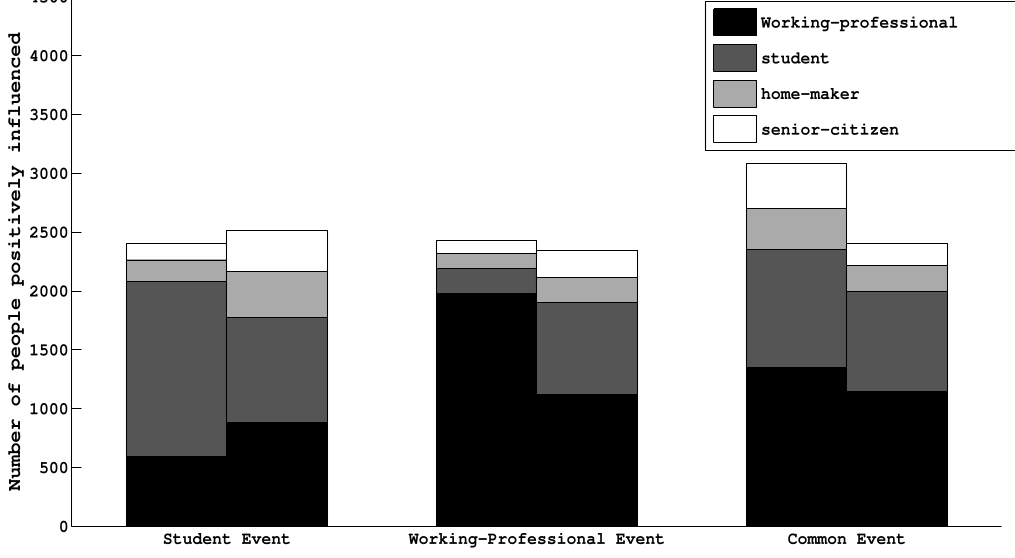 Figure 1: Comparison of human categories influenced by different event types.
Congestion Control Strategies
Two main strategies were tested during a simulated event:
- Greedy Capacity Control: The Transport Manager adds cars or increases frequency. This resulted in organized train usage but only a slight decrease in effective usage per car.
- Alternate Routing: Agents were given information to choose longer paths with less congestion. This led to a 7.5% reduction in average waiting time and a 4% reduction in total travel time.
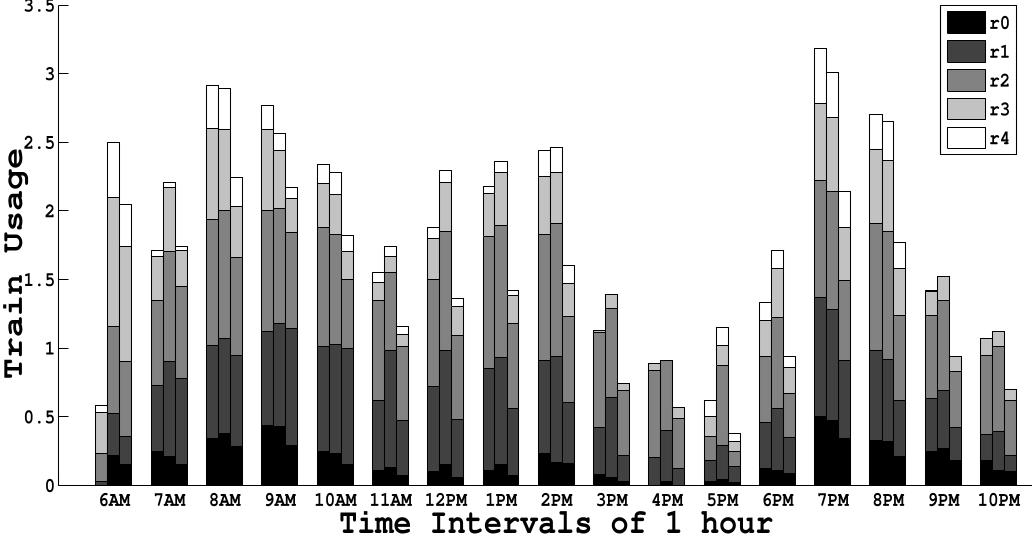 Figure 2: Heatmap of train usage across the East West (EW) line during event hours.
Critical Analysis & Takeaways
The true value of this work lies in its modular design. By separating the "Event Broadcaster" and "Social Network" from the "Transport System," researchers can swap out the Singapore map for New York, or replace the Independent Cascade Model with a Deep Learning-based influence predictor.
Limitations:
- The current model focuses primarily on rail networks. Roads (cars/buses) introduce much more stochastic behavior and "bottlenecks" that are harder to manage than fixed-rail schedules.
- The 10% adoption rate for alternate routing is a conservative estimate; real-world behavior might be more erratic.
Future Outlook: As we move toward "Smart Cities," integrating API feeds from platforms like Eventbrite or X (Twitter) directly into city-wide Multi-Agent Systems (MAS) will become the standard for preventing the gridlock caused by the modern "social-event" economy.