
Bridging the Distance: Restoring Sociability in E-Learning via SNS Integration
Social network integration to e-Ieaming environment A solution for dropout rate reduction and relationships recovery factor between different actors in distance education
The paper introduces a middleware-driven integration of Social Network Systems (SNS) with distance learning platforms (Moodle/BigBlueButton). It aims to reduce high dropout rates at the Virtual University of Senegal (UVS) by enabling real-time, bidirectional academic information sharing between the LMS and platforms like Twitter and Facebook.
TL;DR
The Virtual University of Senegal (UVS) faced a crisis: a 70-90% student dropout rate. The cause? A profound sense of isolation. This paper presents a technical middleware solution that fuses Moodle and BigBlueButton with Social Network Systems (SNS) like Twitter and Facebook. By allowing "nomadic" students to interact with university content via their favorite apps, the solution transforms isolated e-learning into a collaborative social experience.
Background & Motivation: The Loneliness of the Long-Distance Learner
While digital universities offer unprecedented access to education in emerging countries, they often fail the "human" test. At UVS, despite thousands of enrollments, the majority of students quit. The researchers identified three core pain points:
- Learner Isolation: The absence of physical presence creates a psychological barrier.
- Poor Ergonomics: Traditional LMS interfaces are often clunky and less engaging than modern apps.
- Low Interaction Poverty: Synchronous tools are rarely used outside of formal hours.
The authors' insight was simple: If students won't stay in the LMS, bring the LMS to the students. Given that most 18-year-olds are "nomadic" smartphone users, integrating education into social media is a strategic necessity.
Methodology: The Middleware Bridge
The researchers didn't just add "share" buttons; they built a structural bridge. The core of the system is a Middleware layer composed of several critical managers:
- Data Adaptor: This is the heart of the system. It maps the data models of academic platforms (sessions, posts, users) to the specific APIs of Facebook or Twitter.
- Session & Connection Managers: These handle the complex task of mapping a student’s Moodle ID to their SNS handles, ensuring that security and privacy are maintained within a controlled academic context.
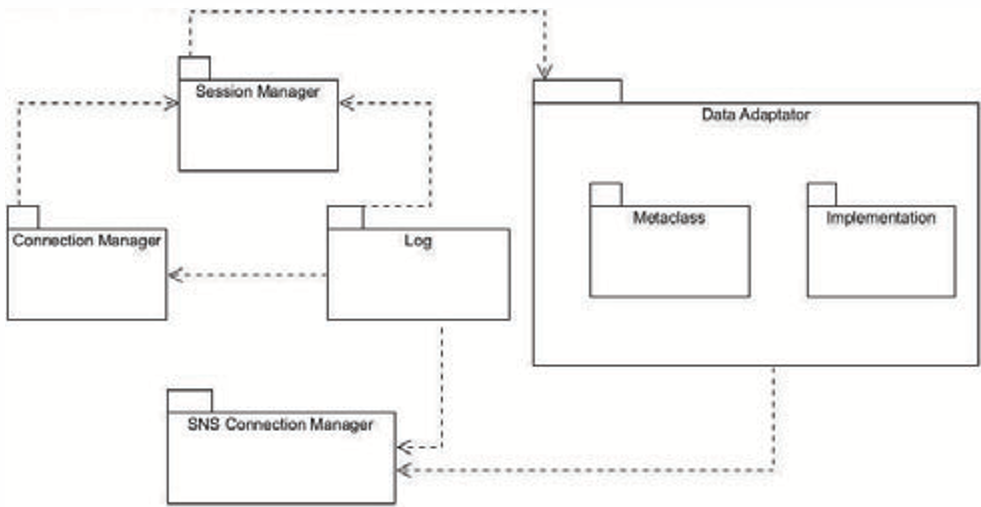 Fig 1: The architecture showing the Middleware facilitating communication between the LMS and SNS entities.
As seen in the Component Diagram, the middleware treats SNS as a service provider, converting classroom activities (like a chat message or an announcement) into a timeline update that a student can reply to using their mobile Twitter client.
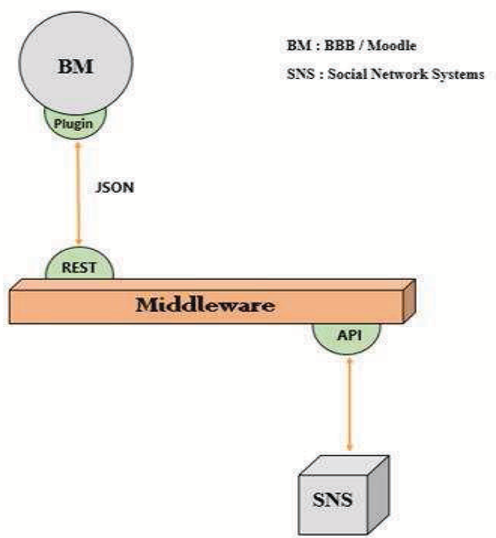 Fig 2: Detailed component interaction demonstrating how the Data Adaptor bridges Moodle and external APIs.
Results & Real-World Impact
The system was tested at UVS with Moodle and BigBlueButton (BBB). The plugin allowed for real-time interaction:
- Cross-Platform Messaging: A student posting in a BBB session could have their message forwarded to a Twitter thread.
- Nomadic Access: Non-connected students received notifications on their social feeds, allowing them to participate in the learning community without even logging into the LMS.
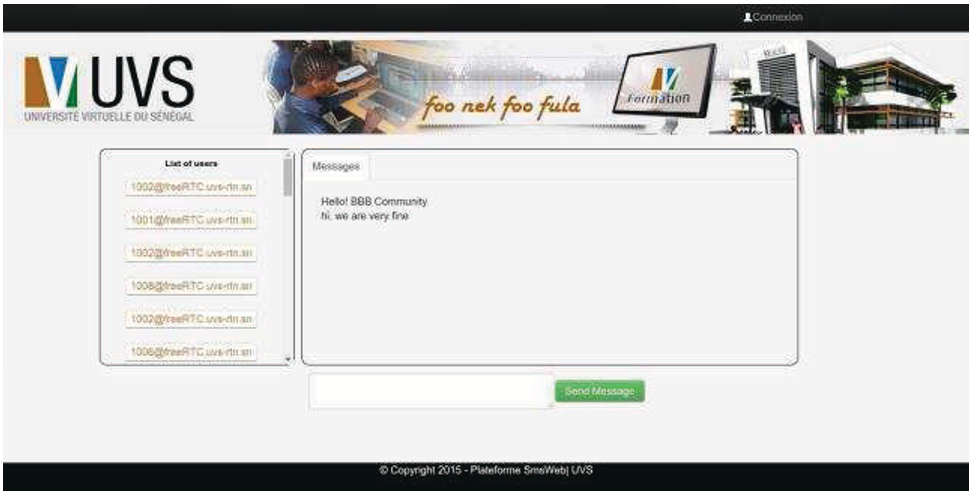 Fig 3: The BBB/Moodle plugin in action, showing a direct interface with Twitter for real-time collaboration.
The researchers observed that this "sociabilization" helped create emotional links between students and tutors, which is often neglected in favor of purely technical or pedagogical metrics.
Critical Analysis & Conclusion
Takeaway
The success of this work lies in its User-Centric Pragmatism. Instead of fighting against the distraction of social media, it leverages those platforms as a "Relationship Recovery Factor" to save distance education from high failure rates.
Limitations & Future Work
While the technical integration is sound, the paper does not provide long-term longitudinal data on exactly how much the 90% dropout rate decreased after implementation. Future research should prioritize:
- Learning Analytics: Moving from "interaction" to "intelligence" by using social data to flag students at high risk of academic failure.
- Privacy & Distraction: Balancing the informality of SNS with the privacy requirements of an educational institution.
In conclusion, the UVS case study proves that the future of e-learning in emerging markets isn't just about better content—it's about better connection.