
Beyond Mutual Friends: Precision Music-Based Recommendation via Implicit Social Graphs
Social Network Mining for Recommendation of Friends Based on Music Interests
This paper introduces a friend recommendation framework specifically tailored to music interests and user interactions on Facebook. It proposes an Interaction Score (IS) based on implicit social graphs and evaluates three specific algorithms—Addition (ASF), Division (DSF), and Subtraction (SSF)—to identify compatible friend candidates within social networks.
TL;DR
Most social media recommendations feel like a "friends of friends" loop. This paper breaks that cycle by introducing a specialized recommendation algorithm focused on Music Interests. By mining Facebook's implicit social graph and utilizing a Subtraction Scoring Function (SSF), the researchers achieved an impressive 88.37% correlation in predicting friendship closeness, far outperforming standard additive models.
Background: The Limits of "People You May Know"
We have all seen the "People You May Know" sidebar. Usually, it is a simple reflection of your existing social circle. However, true compatibility often stems from shared passions—music being one of the most powerful. The challenge lies in the fact that social data is noisy and multifaceted.
The authors argue that existing systems fail because they don't weigh how we interact or what we interact with. They shift the focus from "Do you know this person?" to "Do you share a musical soul with this person?"
Methodology: The Interaction Score (IS)
The core of the paper is the Interaction Score (IS). Instead of treating all interactions equally, it assigns importance factors () to different behaviors.
The Formula
The closeness between users is calculated as:
Where the factors include:
- Music Pages Liked (): Do you follow the same artists?
- Music Events (): Have you attended the same festivals/concerts?
- Interactions (): Direct engagement on music-related posts.
- Location (): Proximity matters for real-world friendship.
Three Ranking Strategies
The researchers tested three ways to rank the "friend of a friend" (A1) for a target user (B) through a source (A):
- Addition (ASF): Simply adding weights.
- Division (DSF): Looking at the ratio of closeness.
- Subtraction (SSF): Measuring the absolute difference in interaction levels between the source and the two candidates.
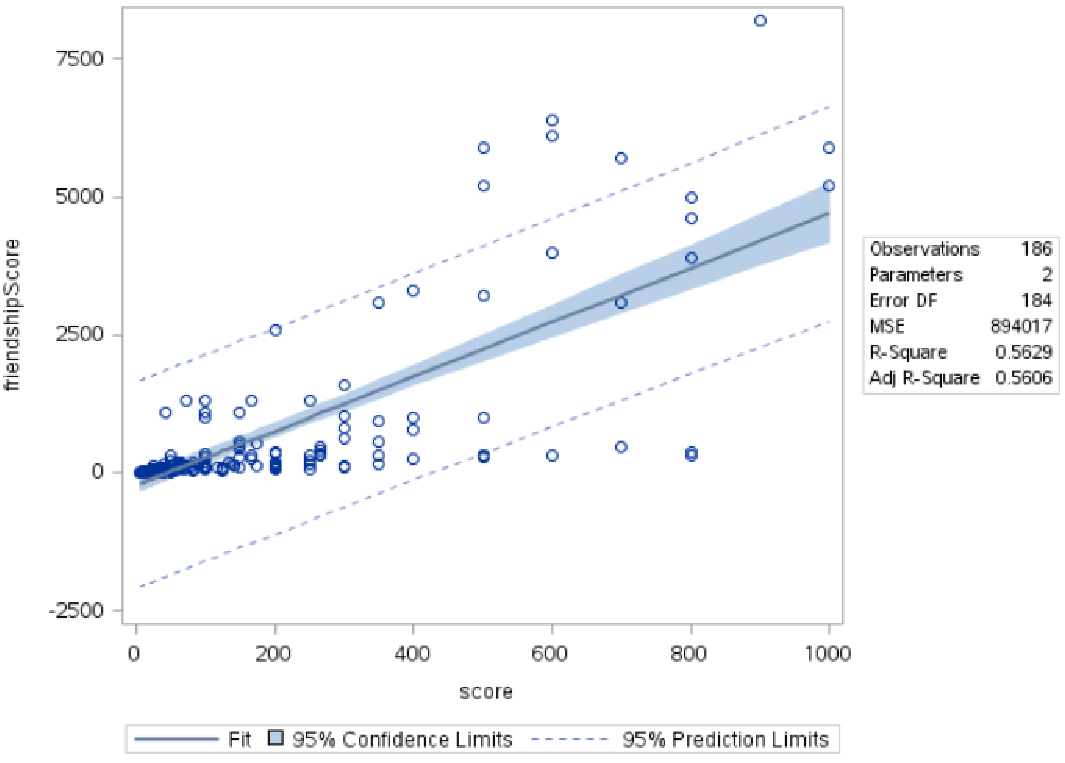 Figure 1: ASF Fit Plot showing the linear relationship between Ranking Score and Friendship Score.
Experiments: Why Subtraction Wins
The team collected data from 40 Facebook users, creating a dataset of 270 potential recommendation trios. Using SAS for regression analysis, they compared how well each algorithm's "Score" predicted actual "Friendship Closeness."
The Results Table
| Algorithm | R-Square (Accuracy) | Root MSE (Error) |
|---|---|---|
| Addition (ASF) | 0.5629 | 945.52 |
| Division (DSF) | 0.0972 | 65.00 |
| Subtraction (SSF) | 0.8837 | 19.46 |
The Subtraction Scoring Function (SSF) was the clear winner. While ASF was "okay," SSF's ability to capture the "absolute distance" between how User A treats User B versus how User A treats User A1 proved to be a nearly perfect proxy for how well B and A1 would get along.
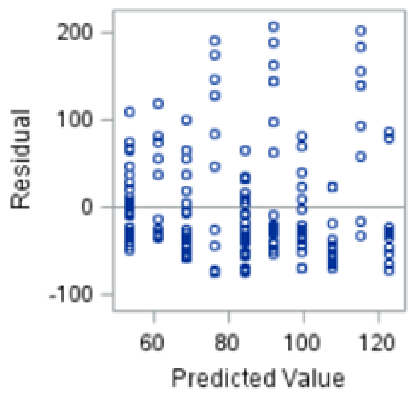 Figure 2: Statistical diagnostics for the SSF model, showing high consistency and low residual error.
Critical Insight: The "Closeness" Intuition
Why does subtraction work better than addition? In social dynamics, we tend to blend into "compatibility tiers." If you and I both interact with a mutual friend with the same intensity and frequency on similar topics (music), we likely occupy the same social "strata." SSF identifies these matching intensities.
Summary & Future Outlook
This work provides a robust blueprint for interest-based recommendation. By moving away from simple graph connectivity and toward weighted interaction mining, platforms can offer far more meaningful connections.
Limitations: The study relied on a smaller sample size (40 users) and required some manual data collection from Instagram due to API limitations. Future research should look into automating this cross-platform interest mapping using NLP to better categorize "music-related" content without manual tagging.
The Takeaway: If you want to connect people, don't just look at who they know—look at the cadence and context of their shared interests.