
Social Network Phishing: When Habit Becomes the Hacker's Best Friend
Social network phishing: Becoming habituated to clicks and ignorant to threats?
The paper investigates Social Network Phishing (SNP), exploring how user behaviors on platforms like Facebook and LinkedIn evolve into "bad habits." It highlights how behavioral priming and high-volume information updates lead to increased susceptibility to social engineering attacks using the Heuristic-Systematic Model (HSM).
TL;DR
Phishing has evolved from clunky emails into sophisticated social engineering on platforms like Facebook and LinkedIn. This paper argues that our daily social media rituals—liking, sharing, and rapid-fire clicking—create automatic habits that bypass our critical thinking. By using the Heuristic-Systematic Model (HSM), the authors explain why even tech-savvy users fall for scams when they are in a state of "information overload."
The Shift: From Inbox to Newsfeed
For years, cybersecurity focused on the "Catch" in the email inbox. However, social networking sites (SNSs) have created a "connected world" where privacy is a perception, not a reality. Phishers now exploit trust by:
- Impersonating Friends: Users are more likely to click a link from a "friend" than a bank.
- Contextual Bait: Using life events (holidays, tax season) to create urgency.
- Identity Cloning: Creating shadow profiles to redirect trust without actually "hacking" an account.
Methodology: The Psychology of a Click
The core insight of the paper lies in Information Processing Models. Why do we ignore red flags?
Heuristic vs. Systematic Processing
The authors utilize the Heuristic-Systematic Model (HSM) to explain cognitive vulnerability:
- Heuristic Processing (The Fast Lane): A low-effort mode where we use "rules of thumb." We see a familiar logo or a friend's name and click. It requires minimal mental energy.
- Systematic Processing (The Slow Lane): A high-effort mode where we scrutinize URLs, check for HTTPS, and analyze grammar.
Because SNSs are designed for "self-distraction and boredom relief," users are almost always in the Heuristic lane.
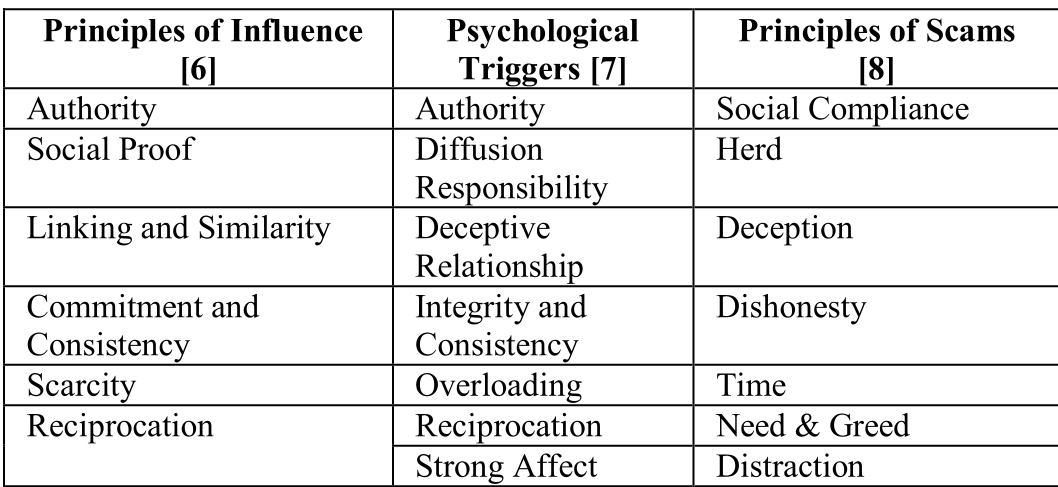 Table 1: The convergence of psychological triggers used by phishers to keep users in a heuristic state.
The "Bad" Habits of Social Networking
The paper highlights several activities that prime us for victimization:
- Visual Priming: We are conditioned to click the "Play" icon on videos or the "Like" button instantly. Phishers use spoofed media overlays to hijack these clicks.
- URL Shorteners: Services like Bit.ly hide the true destination of a link. On mobile devices with small screens, the security indicators (like the full URL bar) are often hidden, making systematic verification nearly impossible.
- Account Interconnectivity: Logging into e-commerce sites with Facebook credentials creates a single point of failure.
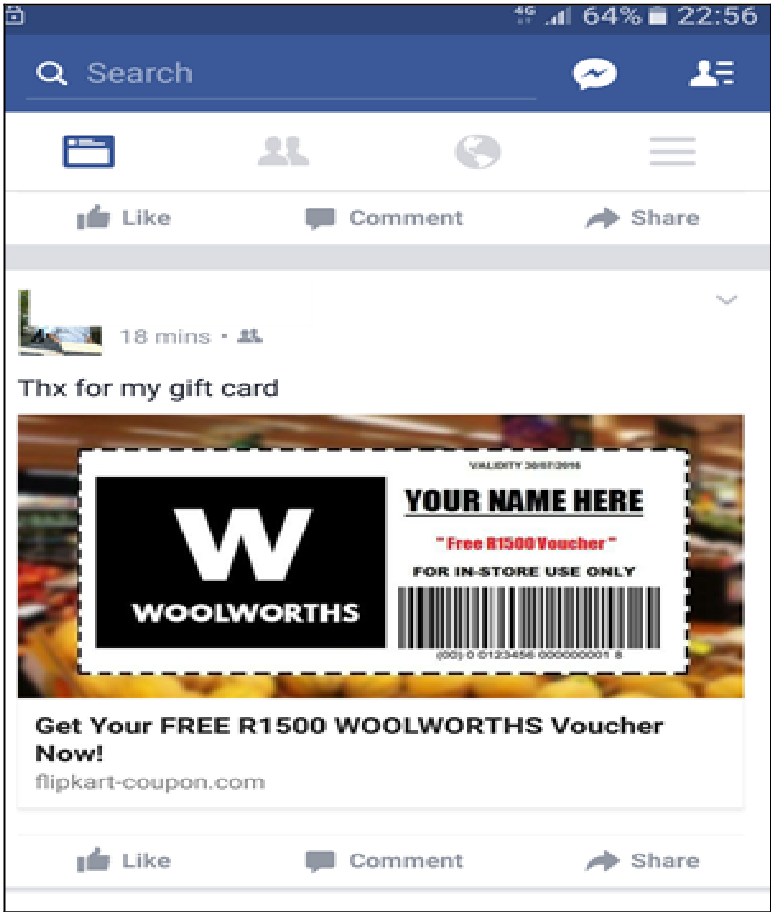 Fig 1: Statistics showing the high percentage of phishing attacks targeting Social Media platforms.
Critical Analysis: The Habit Loop
The most striking argument is the formation of Action-Scripts. When a behavior (like checking notifications) is repeated enough, it becomes subconscious. The author suggests that habit is a "type of mindset that enhances perceptual readiness for habit-related cues."
In plain English: If you spend 3 hours a day clicking "Next" on Facebook, you aren't just using an app; you are training your brain to stop thinking before you click. This "scary" realization means that traditional security awareness training—which assumes users are making conscious choices—might be fundamentally flawed.
Conclusion & Future Outlook
The paper concludes that we need a new User Susceptibility Model that links social engineering techniques directly to information processing habits.
Key Takeaways:
- Technical filters are not enough: Phishers exploit human "cognitive biases," not just software bugs.
- Mobile is the weak link: Limited screen real estate hides heuristic cues (like suspicious URLs).
- Habitual use = Higher risk: The more "active" you are on social media, the more likely you are to be "primed" for a click-based attack.
Future research must look at how to break these "action-scripts" and force users back into Systematic Processing at the precise moment a threat appears.