
Social Network Dynamics: The Hidden Architecture of Hostility
Exploring the Social Network Relationships on Hostility Behaviors
This study investigates how social network relationships—categorized into power-dependence, closeness-distance, mutual expectations, and cooperation/competition—impact hostility behaviors. Through semi-structured interviews and a six-minute anger recall task with 75 participants, the research identifies specific relational dynamics that trigger expressive versus suppressive hostility, revealing significant statistical correlations in power and closeness dimensions.
TL;DR
Why do we yell at our partners but remain silent when our boss treats us unfairly? This research delves into the social structures that dictate emotional expression. By analyzing 75 real-world anger events, the study reveals that power-dependence, closeness, and cooperation are the primary levers that determine whether hostility is "vented" or "suppressed."
The "Atmosphere" of Anger: Why Social Context Matters
Most people view anger as a personal flaw or a simple reaction to a bad event. However, this paper argues that hostility is a product of our "social network atmosphere." The researchers identify a critical gap in prior literature: we lack a granular understanding of how relationship quality—defined by strength and expectations—governs the transition from feeling angry (cognition/affect) to acting on it (behavior).
The study focuses on the "ventilation hypothesis"—the idea that expressing emotion is healthy—while acknowledging that social norms (especially in Chinese culture) often force a strategic choice between "Anger In" and "Anger Out."
Methodology: Recalling the Heat of the Moment
The researchers recruited 75 adults and utilized a six-minute anger recall task. Participants were asked to relive a specific event from the last six months, answering: Who made you angry? What did you think? What was your behavior?
The data was then coded into four dimensions:
- Hostility Cognition: Thoughts of betrayal, unfairness, or resentment.
- Hostility Affect: Pure emotional states like rage or temper.
- Expressive Hostility: Verbal or physical aggression (Anger Out).
- Suppressive Hostility: Withdrawal, silence, or crying (Anger In).
Key Insights: Power and Proximity
1. The Proximity Paradox: Couples vs. Family
The data shows that we are most "expressively hostile" toward those closest to us—specifically spouses. Couples were significantly more likely to engage in verbal aggression (scolding, yelling, arguing) than other family members.
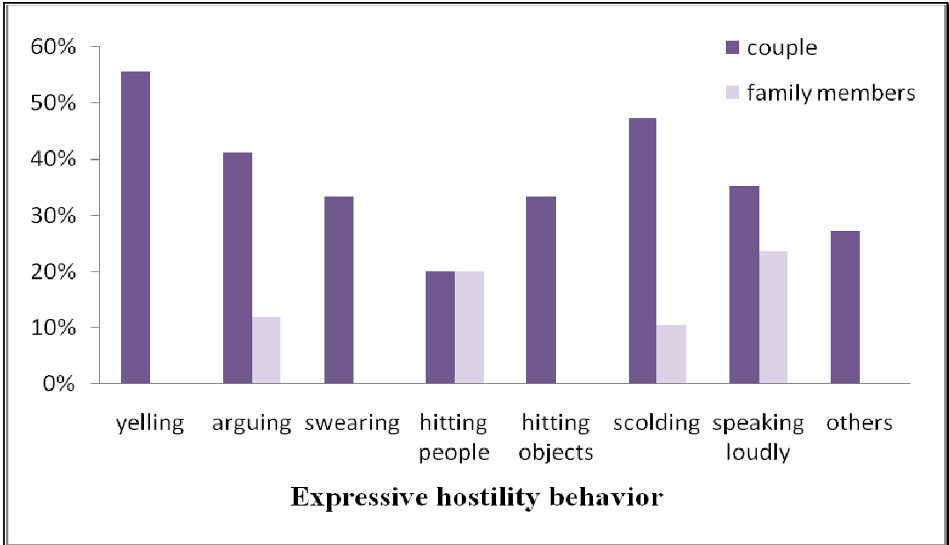 Figure 1: Comparison of expressive hostility dimensions between couples and family members.
2. The Power Silence: Authority and Suppression
One of the most striking findings concerns the Power-Dependence axis. In relationships where the participant was a subordinate to an authority figure (e.g., employee to boss):
- Hostility Cognition was at its highest (feelings of dissatisfaction and unfair treatment).
- Suppressive Behavior was the dominant response.
Subordinates choose "forbearance and submission" to maintain the relationship, even when they feel deeply betrayed—a behavior heavily influenced by the cultural context of preserving "face."
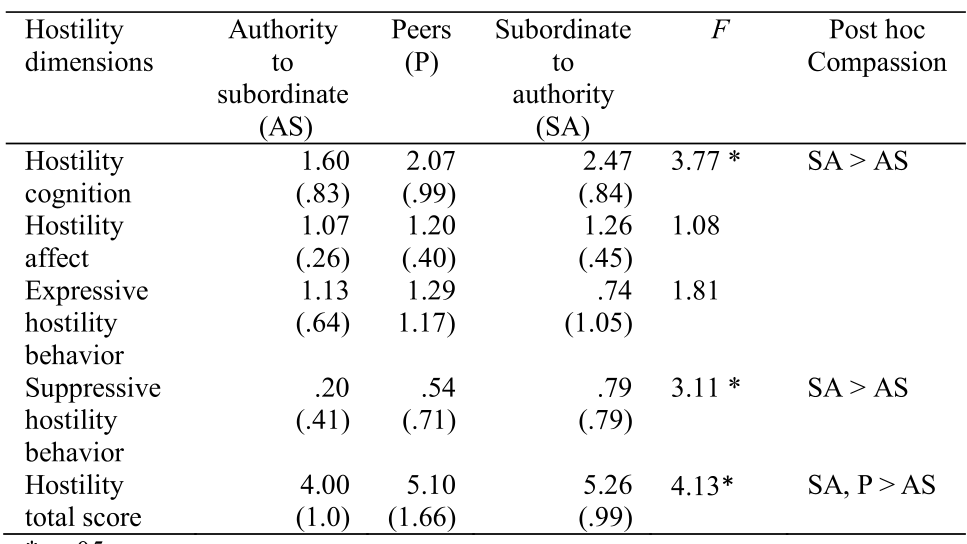 Table 2: Statistical significance of hostility dimensions across power roles (Authority vs. Peers vs. Subordinate).
3. Cooperation Breeds More "Feeling"
Contrary to what one might expect, cooperative relationships exhibited higher levels of hostility affect (80.77% reported anger) than competitive ones. This is likely because cooperation requires mutual expectations; when a partner fails to meet those expectations, the emotional sting is sharper than when dealing with a known competitor.
Critical Analysis: Beyond the Lab
The study provides a robust framework for understanding interpersonal conflict, but it has a few limitations:
- Sample Bias: The male-to-female ratio (nearly 4:1) may skew results, as gender often moderates emotional expression styles.
- Culture Specificity: Much of the suppressive behavior is linked to Chinese cultural values (Confucianism). A comparative study in Western cultures might yield more expressive results in "subordinate-to-authority" roles.
Future Outlook
This research has significant implications for Social Network Support Systems. By understanding these dynamics, AI and social platforms could better predict when a "hostile event" is likely to occur or provide targeted interventions based on the type of relationship involved (e.g., workplace mediation vs. marital counseling).
Takeaway: Anger is never just about the event—it's about the "Who" and the "Power" behind the interaction.