
PrEP on Twitter: A Dual Reality of Public Education and Illicit Markets
Social Network Representation and Dissemination of Pre-Exposure Prophylaxis (PrEP): A Semantic Network Analysis of HIV Prevention Drug on Twitter
This study employs semantic network analysis to examine the representation of Pre-Exposure Prophylaxis (PrEP) on Twitter. By analyzing 447 unique tweets containing "Truvada," the research identifies two primary discourse themes: collective public health interpretation and the aggressive marketing of illicit online pharmacies.
TL;DR
This study investigates the semantic landscape of PrEP (HIV prevention) on Twitter. It reveals a split reality: while influential users foster legitimate public health discourse, a massive "underground" network of illicit pharmacies uses the platform to sell prescription drugs without medical oversight.
Problem & Motivation
The approval of Truvada for PrEP was a landmark in HIV prevention, but its implementation is medically complex, requiring regular HIV testing and kidney monitoring. The researchers identified a critical gap: social media acts as a double-edged sword. While it democratizes health information, it also bypasses the "gatekeeping" role of healthcare providers, leading to potential drug resistance and fatal side effects if patients source medication via illicit channels.
Methodology: Mapping Meanings with Semantic Networks
The authors didn't just count keywords; they mapped the social reality constructed by users.
- Data Cleaning: They moved beyond simple de-duplication to "semantic clustering," ensuring that minor variations in tweet text didn't skew the network.
- Edge Weighting: Using a 7-word window, they calculated the strength of association between terms like "Truvada" and "Prescription."
- Network Comparison: They categorized tweets into sub-graphs based on:
- Propagation Rate: How many times was the message retweeted?
- Source Authority: How many followers does the sender have?
Key Insights: The Bifurcated Network
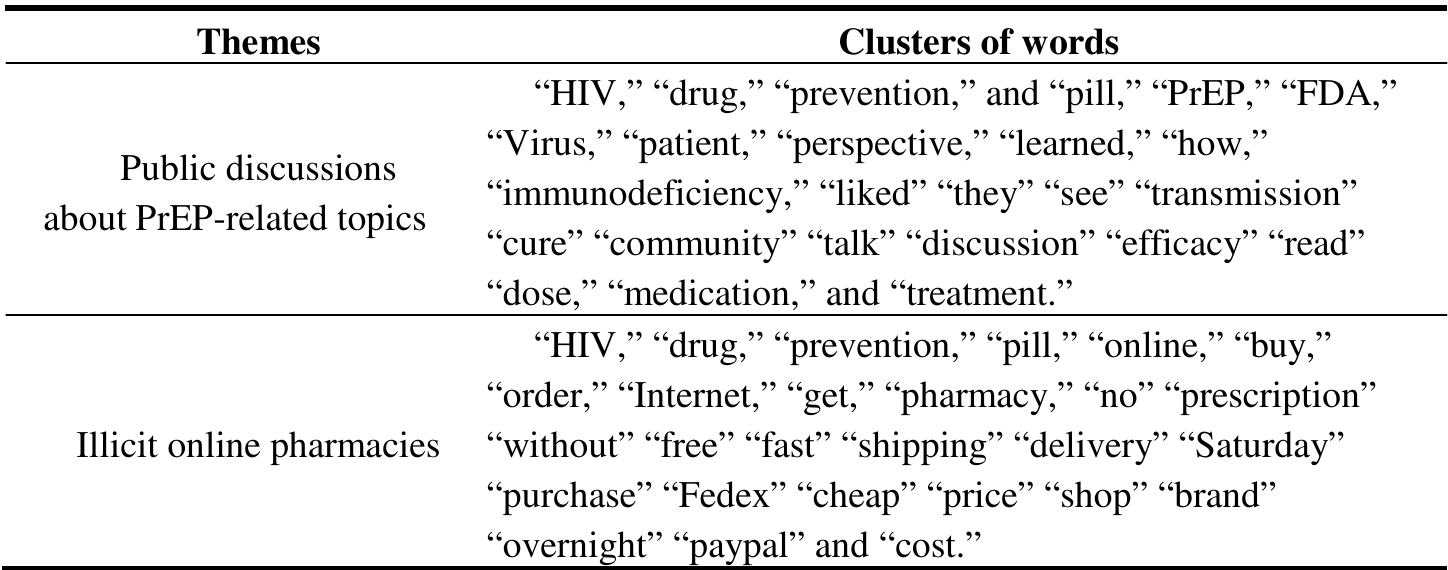
The study found that the "Top Tier" (influencers/high retweets) and "Bottom Tier" (low followers/bot-like behavior) inhabit different semantic universes.
1. The Discourse of Public Health (High-Propagation)
In networks with high engagement, the conversation was sophisticated. It touched on:
- Regulatory milestones (FDA).
- Social Justice (Impact on Black and Gay communities).
- Accessibility (Insurance coverage and Healthy SF plans).
2. The Discourse of Evasion (Low-Propagation)
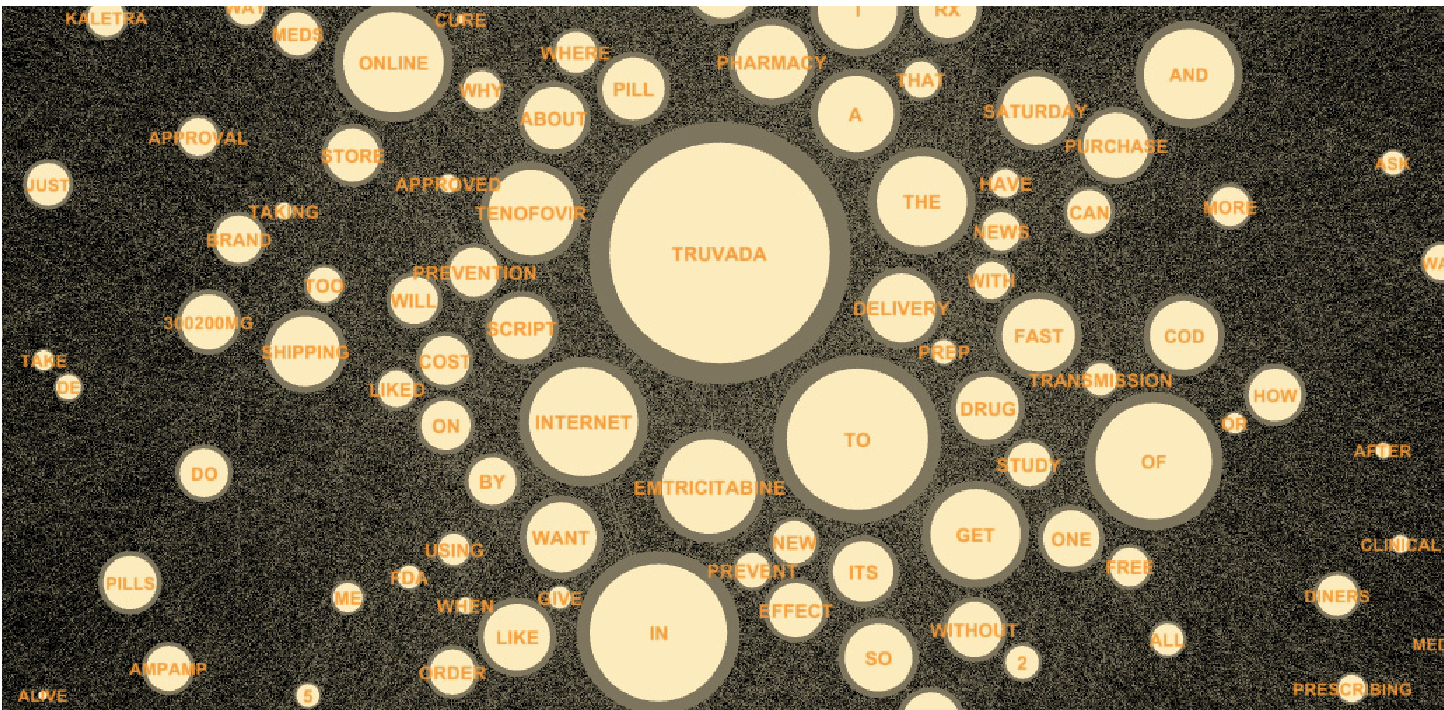
This is where the risk lies. The semantic network here was dominated by commerce-centric nodes: "PayPal," "No Script," "Free Shipping," and "Overnight." These tweets, while individually less popular, represent a high overall volume of the PrEP-related digital footprint.
Experiments & Critical Results
- Low Structural Symmetry: The QAP Correlation Pearson’s was only between .32 and .35. This means the illicit market and the health discussion are structurally distinct—they don't "mix," suggesting that public health messaging may not be reaching users targeted by illicit sellers.
- Illicit Dominance: Despite having fewer followers per account, the sheer variety and recurrence of illicit pharmacy clusters suggest a coordinated "long-tail" marketing strategy.
Critical Analysis & Future Outlook
Contribution: This paper is a wake-up call for public health officials. It proves that the "Million Follower Fallacy" applies to health: having high-authority accounts tweet about PrEP is not enough if the "hidden" network of illicit ads remains unchecked.
Limitations:
- The Language Barrier: The study only analyzed English tweets, missing potentially large illicit markets in Spanish-speaking regions.
- Static Snapshot: Collected in 2012, it captures the initial reaction to PrEP; current platforms like TikTok or Instagram likely show even more sophisticated visual-based illicit marketing.
Takeaway for 2026: As we move toward digital-first healthcare, the "Semantic Network" of a drug on social media is just as important as its clinical trial results. Regulatory bodies need automated, AI-driven surveillance to flag the "no-script" networks that thrive in the shadows of the digital health revolution.