
The Currency of Reciprocity: How Social Capital and Disclosure Drive Engagement on Flickr
An empirical study of a social network site: Exploring the effects of social capital and information disclosure
This empirical study explores the determinants of engagement on Flickr, specifically investigating how social capital and information self-disclosure influence the reception of "comments" and "favorites." Using a content analysis of 558 photos from Flickr’s Explore page, the researchers identified significant positive correlations between social capital indicators and user engagement metrics.
TL;DR
In the digital ecosystem of Flickr, your "social wealth"—the contacts you have and the groups you join—is the primary driver of the attention your work receives. This study analyzes 558 high-performing photos to prove that social capital is a robust predictor of engagement (favorites and comments), while sharing personal information offers diminishing or even paradoxical returns.
Problem & Motivation: Beyond the "Like" Button
Why do some photos go viral while others, of similar quality, languish in obscurity? Traditionally, researchers have pointed to two psychological pillars:
- Social Capital: The resources and "favors" stored within your network.
- Information Self-Disclosure: The act of making yourself "known" to reduce uncertainty and build trust.
The authors observed that while we know these factors matter, we don't fully understand their weight in a specialized, photography-driven social network. Does revealing your hometown actually make people more likely to "favorite" your sunset photo, or is it the fact that you favorited ten of their photos first?
Methodology: Quantifying the Social Experience
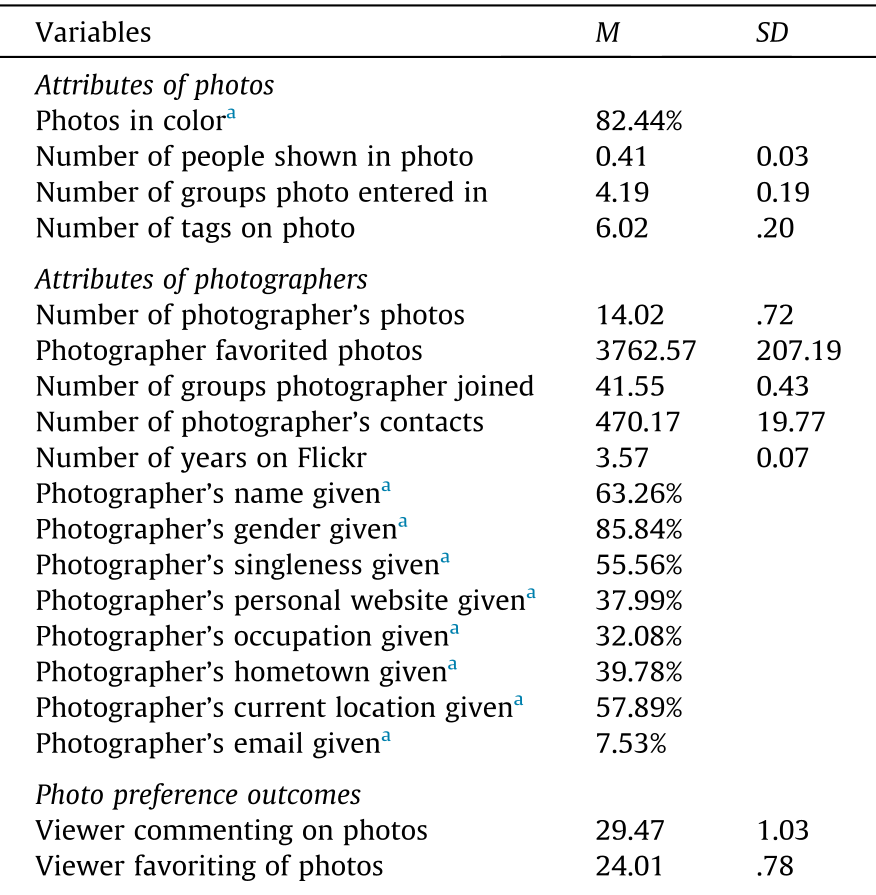
The study utilized a rigorous content analysis of the Flickr Explore page. By sampling 80 photos per day over a "constructed week," the researchers gathered a dataset of 558 unique images.
The Variable Breakdown:
- Social Capital Indicators: Number of contacts, number of groups the photographer joined, and—crucially—how many photos the photographer had favorited from others (an indicator of reciprocity).
- Self-Disclosure Indicators: Eight binary categories including Name, Gender, Occupation, and Personal Website.
- Controls: Technical aspects like tags, whether the photo is in color, and the number of people depicted.
Core Insights: The Mastery of Reciprocity
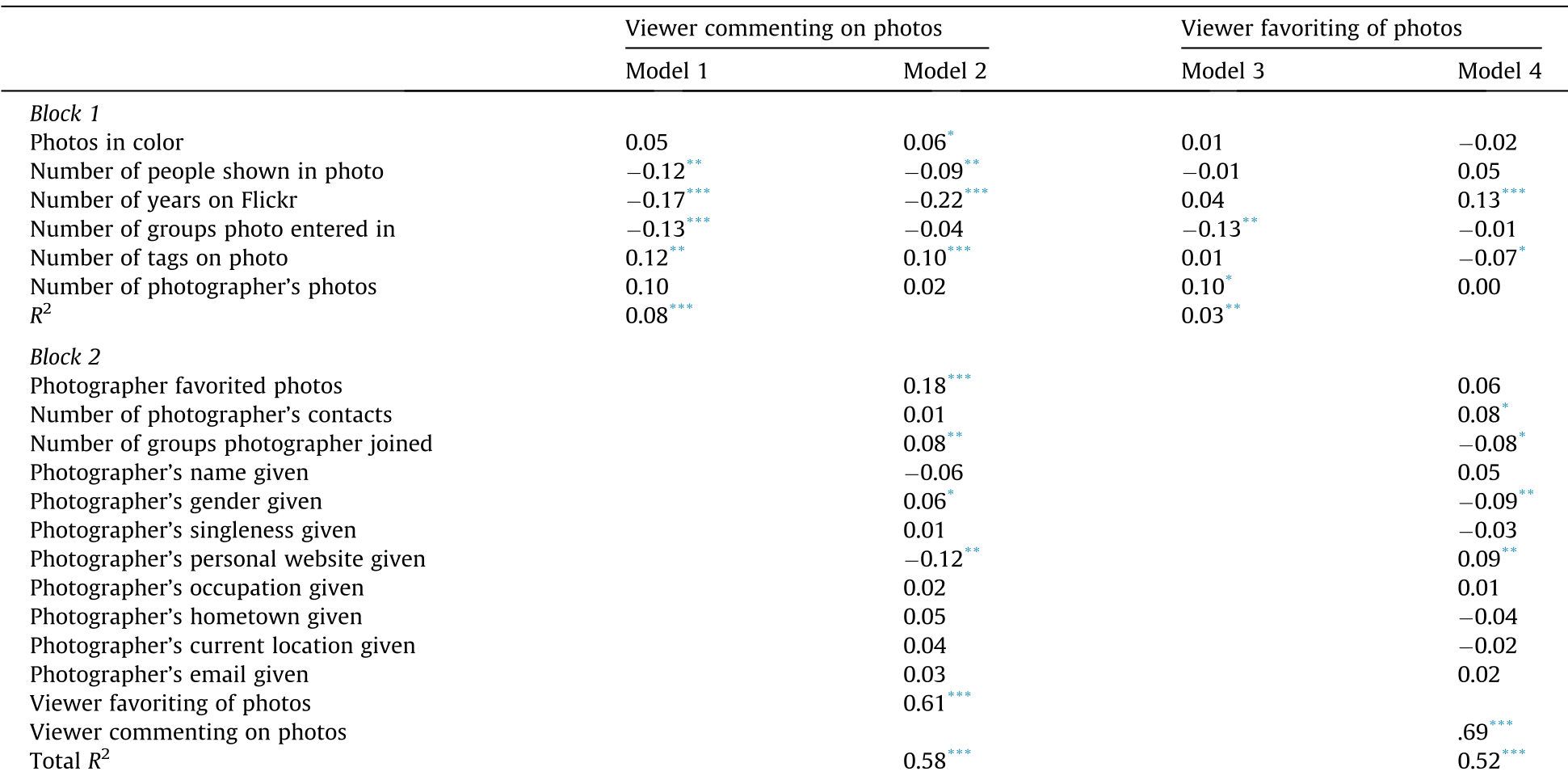
The results from the OLS regression models revealed a clear hierarchy of influence:
1. The Power of "Fav-for-Fav"
The strongest predictor of receiving comments was the number of photos the photographer had favorited from others (b = .18). This confirms that Flickr operates on a "norm of reciprocity." By validating others' work, users build social capital that is eventually repaid in engagement.
2. The Paradox of Professionalism
Interestingly, while "Self-Disclosure" generally helped, it had a "double-edged sword" effect. Providing a personal website actually negatively predicted comments (b = -0.12). This suggests that users might perceive profiles with external links as "too professional" or "promotional," potentially stifling the intimate, social vibe that encourages commentary.
3. Comments vs. Favorites
Hypothesis 1 was strongly supported: Comments and Favorites are synergistic. If a photo starts getting favorites, comments usually follow (and vice versa), creating a positive feedback loop of visibility.
Critical Analysis & Conclusion
This research highlights a fundamental truth about social internet architecture: Platforms are social first, and technical second. The "quality" of the photo (represented by controls) was often less influential than the photographer's social activity.
Limitations to Consider:
- The "Elite" Bias: The data comes from the Explore page (the top 0.1% of photos). The behavior of these "distinguished users" may not reflect the average user's experience.
- Static vs. Dynamic: The study measures what is on the profile, but not how the user messages others privately.
Final Takeaway
If you want to grow on a social network, don't just fill out your bio and post high-quality content. Invest in others. The social capital built through joining groups and favoriting others' work is the most reliable path to community recognition. In the digital world, as in the real one, the "aggregate of resources" is found in the relationships we maintain.