
The Facebook Effect: Is Social Media a Marriage Killer or a Support System?
Social network sites, marriage well-being and divorce: Survey and state-level evidence from the United States
This study investigates the link between Social Network Sites (SNS) use, marital satisfaction, and divorce rates in the U.S. using a dual-method approach: a state-level longitudinal analysis of Facebook penetration and an individual-level survey of married adults. It reveals a robust positive correlation between high SNS usage and increased divorce rates or decreased marital happiness.
TL;DR
This study provides empirical weight to the anecdotal "Facebook Divorce" phenomenon. By analyzing both aggregate U.S. state data and individual surveys, researchers found that higher social media penetration and usage are consistently linked to lower marital quality and higher divorce rates. Whether it's a tool for infidelity or a sanctuary for the lonely, the digital age has fundamentally altered the marital landscape.
Background: Beyond the Anecdotes
For years, matrimonial lawyers claimed that Facebook was a leading "evidence" source in divorce petitions. However, academic rigor was missing. This paper positions itself as the first comprehensive study to bridge the gap between sensationalist headlines and statistical reality, examining if SNS use is a symptom or a cause of marital distress.
Problem & Motivation: The Causality Quandary
The authors face a classic "chicken or egg" problem. Does the constant stream of ex-partners and "suggested friends" on Facebook induce jealousy and facilitate cheating (The Negative Effect Hypothesis)? Or do people in failing marriages turn to Facebook to seek the emotional support they lack at home (The Self-Selection Hypothesis)?
Methodology: A Two-Pronged Attack
The researchers didn't rely on a single data source. They combined macro and micro perspectives:
- Macro (State-Level): They tracked Facebook penetration across 43 U.S. states from 2008 to 2010. By using Fixed-Effects Models, they could ignore stable differences between states (like local culture or laws) and focus solely on how changes in Facebook use correlated with changes in divorce rates.
- Micro (Individual-Level): They analyzed a representative survey of 1,160 married individuals (ages 18–39). This allowed them to control for variables like extramarital sex, religiosity, and household income.
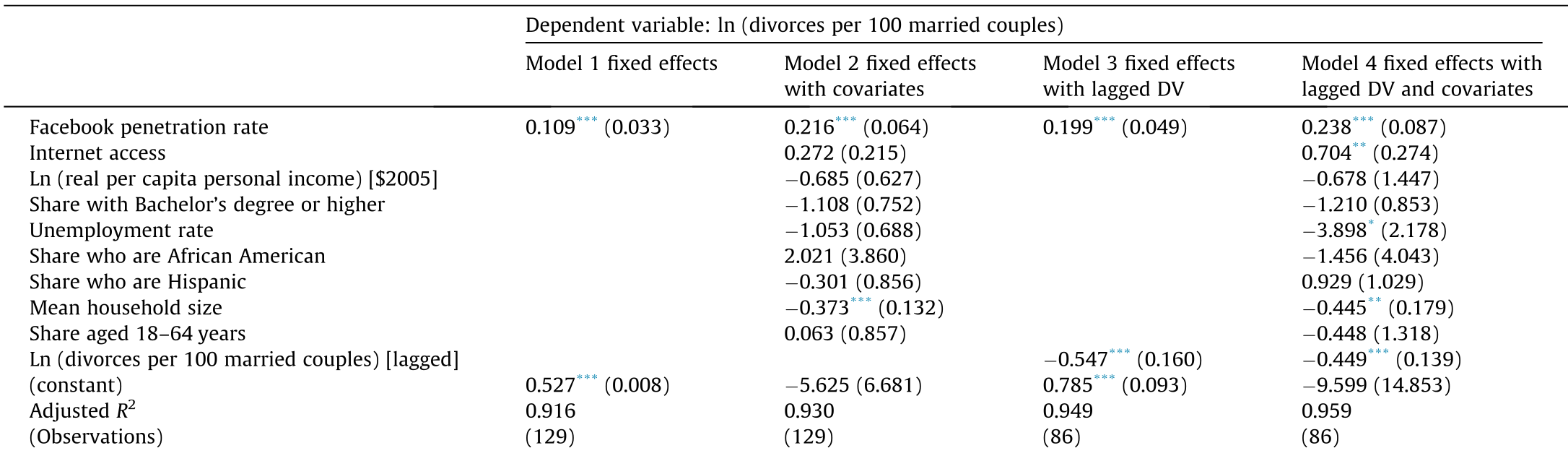 Table 3: The positive correlation between Facebook penetration and divorce rates across U.S. states.
Key Insights: Why SNS Impacts the Altar
The methodology revealed several "Red Flags" for digital-age marriages:
- Reduced Search Costs: Facebook makes finding a "replacement" partner significantly easier and cheaper than traditional social settings.
- The Green-Eyed Monster: The platform creates a high-surveillance environment that fuels jealousy and suspicion.
- Addictive Habituation: Compulsive usage (FAD - Facebook Addiction Disorder) leads to the neglect of real-world partners.
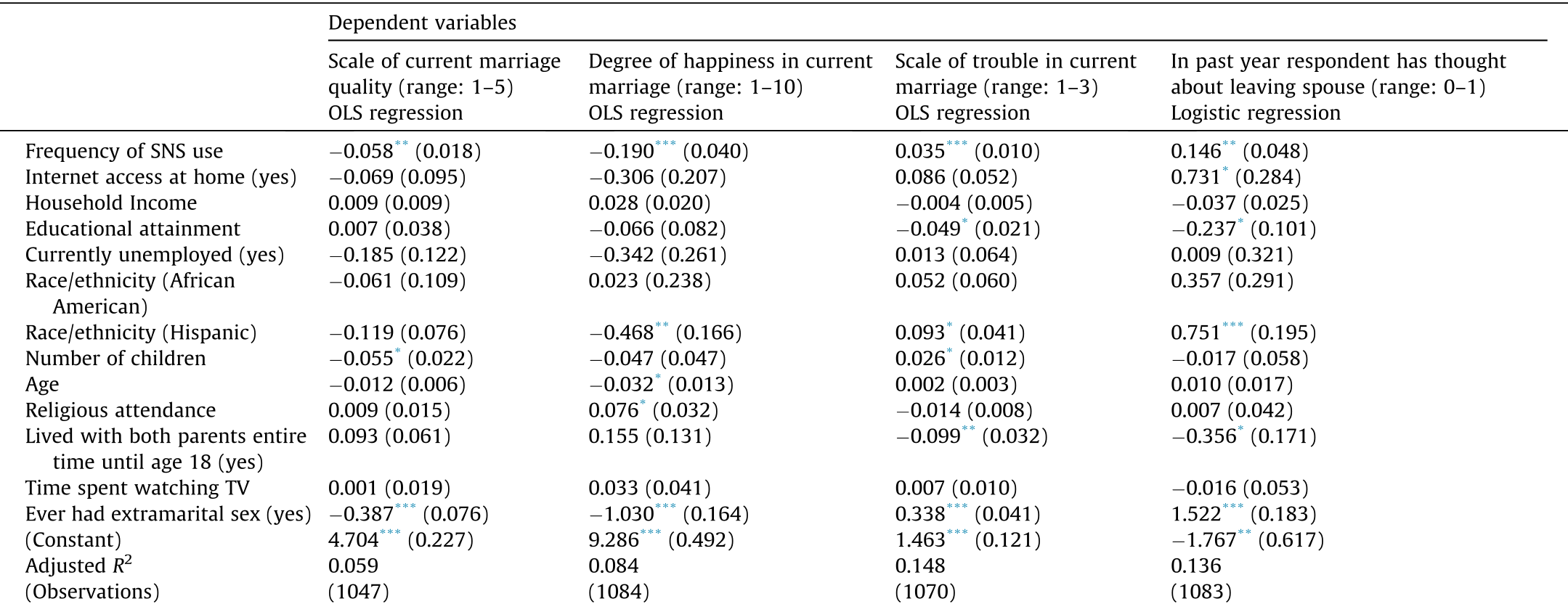 Table 4: Individual usage of SNS significantly predicts thinking about leaving a spouse.
Experiments & Results: The Bitter Truth
The numbers are stark. At the state level, the growth of Facebook was a reliable predictor of rising divorce rates, even when controlling for economic factors. At the individual level:
- Happiness Gap: Non-users were 11.4% happier in their marriages than heavy users (4+ hours/day).
- Divorce Ideation: High SNS users were twice as likely (31.9% vs 16.3%) to have thought about leaving their spouse in the past year.
Critical Analysis & Conclusion
Takeaway
The relationship between SNS and marriage is undeniable. However, the authors wisely note that this isn't necessarily a "death sentence" for married users. The impact often depends on the Rational Actor—is the user looking to "escape" their spouse, or simply stay connected with family?
Limitations
- Correlation != Causation: Since the survey was cross-sectional, we can't definitively say Facebook caused the unhappiness.
- Self-Reporting: Survey data can suffer from social desirability bias (people lying about how much they use SNS or their marital happiness).
Future Outlook
As we move into an era of more immersive social tech (VR/Metaverse), the "search costs" for affairs and the potential for "digital escapism" will only decrease. Research must now pivot toward understanding how high-quality marriages can build "digital resilience" against these algorithmic temptations.