
Social Networks: The Hidden Catalyst in E-Learning Adoption
Social Network Sites as a Moderating Factor in E-Learning Platform Adoption: An Extension
This paper investigates the adoption of e-learning platforms by extending the UTAUT model with specific antecedents (awareness, self-efficacy, convenience, assistance) and examines the moderating role of Social Network Sites (SNS) use. Utilizing Structural Equation Modeling (SEM) via SmartPLS on a sample of 155 students, it identifies that SNS usage significantly weakens the impact of effort and performance expectancies on the intention to use these platforms.
TL;DR
This study bridges the gap between informal social media habits and formal educational technology. By extending the UTAUT (Unified Theory of Acceptance and Use of Technology) model, researchers found that students who are heavy users of Social Network Sites (SNS) perceive e-learning platforms as easier to use, effectively lowering the barrier to digital education adoption.
Perspective: Beyond the Formal Classroom
In the traditional view of Educational Technology (EdTech), we often focus on the platform's features: Is it fast? Is it useful? However, this paper argues that adoption does not happen in a vacuum. The modern student is a "digital native" whose behavior is shaped by Facebook, Instagram, and other SNS. The central insight here is that SNS usage is a personal attribute that changes how a student perceives a formal e-learning tool.
Problem & Motivation: Why Do Students Resist E-Learning?
Existing models often fail to explain why some students embrace platforms like Moodle or Blackboard while others ignore them. While the UTAUT model is a standard, its high-level constructs (Performance Expectancy, Effort Expectancy) are too broad. The authors identify a need to dig deeper into the "Why":
- Prior Work Limitation: Most antecedent research (Awareness, Trust, etc.) was conducted in e-Government, not Education.
- The Social Gap: Previous studies ignored how "external" social habits moderate "internal" school platform usage.
Methodology: The Extended UTAUT Framework
The researchers didn't just look at "Intention"; they mapped out a complex web of antecedents that feed into the core UTAUT drivers.
The Structural Architecture
The model analyzes how precursors like Self-efficacy (confidence in tech) and Convenience (time/effort) lead to Effort Expectancy. Crucially, it introduces SNS Use as a moderating variable that sits between your thoughts about the platform and your actual decision to use it.
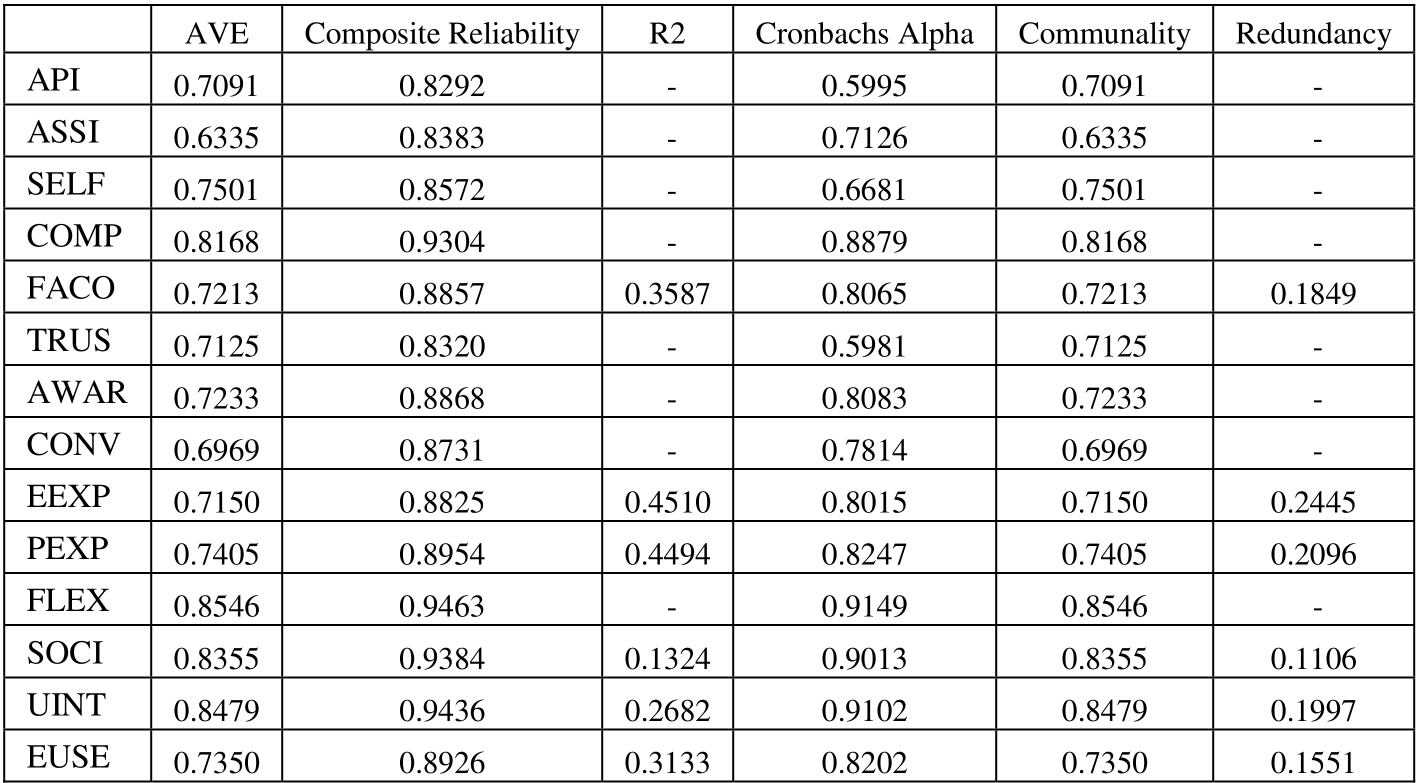 Note: The table above highlights the reliability and validity (AVE > 0.5) of the constructs used in the SEM analysis.
Key Findings: The "SNS Effect"
The study yielded several counter-intuitive and vital results:
- Performance Doesn't Drive Intention: Surprisingly, students don't use the platform just because they think it will make them "better" students (Performance Expectancy was non-significant).
- Effort is Everything: The ease of use (Effort Expectancy) and what peers think (Social Influence) are the real drivers.
- The Moderation Insight: As SNS use increases, the impact of Effort Expectancy on intention decreases.
Physical Intuition: If you spend all day navigating complex social interfaces, a formal e-learning platform feels "trivial." Your SNS experience creates a "technological literacy" that acts as a buffer.
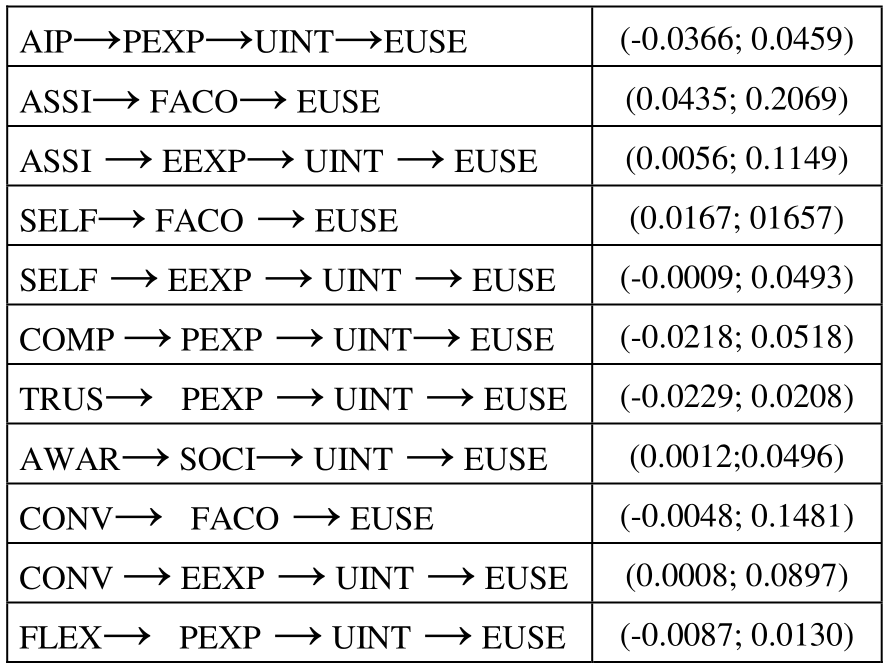 This table confirms that the interaction effects (SNS as a moderator) are statistically significant, particularly for Effort and Performance Expectancy.
Critical Analysis & Conclusion
Takeaway
The success of digital education relies on participation and social interaction. If a platform feels like a lonely silo, it fails. By integrating SNS-like features or acknowledging the SNS habits of students, institutions can reduce the perceived "friction" of new technology.
Limitations
- Sample Size: With 155 students from a single context, global generalization requires caution.
- Self-Reporting: The study relies on Likert-scale surveys, which can suffer from social desirability bias.
Future Outlook
The next frontier is Not just moderating with SNS, but integrating them. Can we leverage "Subliminal Learning" through SNS to drive students back into the formal E-Learning environment? This paper provides the empirical foundation to say: Yes, the two worlds are irrevocably linked.