
Social Capital: The Real Engine Behind Organizational Knowledge Sharing
Social network, social trust and shared goals in organizational knowledge sharing
This study integrates Social Capital Theory with the Theory of Reasoned Action (TRA) to examine factors influencing organizational knowledge sharing. Using a survey of 190 managers in Hong Kong and Confirmatory Factor Analysis (CFA), it identifies that social networks and shared goals are primary drivers for knowledge-sharing intention.
TL;DR
Why do some organizations bubble with innovative ideas while others remain silos of isolated information? This paper argues that the secret isn't in the software used, but in the Social Capital—the networks, shared visions, and trust—between employees. By surveying 190 managers, the authors found that having common goals and strong networking ties are the strongest predictors of whether an employee will actually hit "send" on that valuable piece of expertise.
Background: Beyond the Database
For years, "Knowledge Management" was synonymous with "Buying a Database." However, technology is only a pipeline; the "water" (knowledge) only flows if people want it to. This study moves the focus from the digital to the social, using the Theory of Reasoned Action (TRA) to understand the psychological mechanics of why people share.
The Core Challenge: Motivating Volition
The researchers identified a persistent pain point: knowledge is "sticky" and resides within individuals. Previous work often failed to distinguish which social factors actually drive behavior. Is it because I trust you (Relational), because I know you (Structural), or because we want the same thing (Cognitive)?
Methodology: Mapping Social Capital to Psychology
The authors integrated three dimensions of Social Capital into a TRA framework:
- Social Network (Structural): The density of connections.
- Social Trust (Relational): The belief in others' reliability.
- Shared Goals (Cognitive): Common vision and ambition.
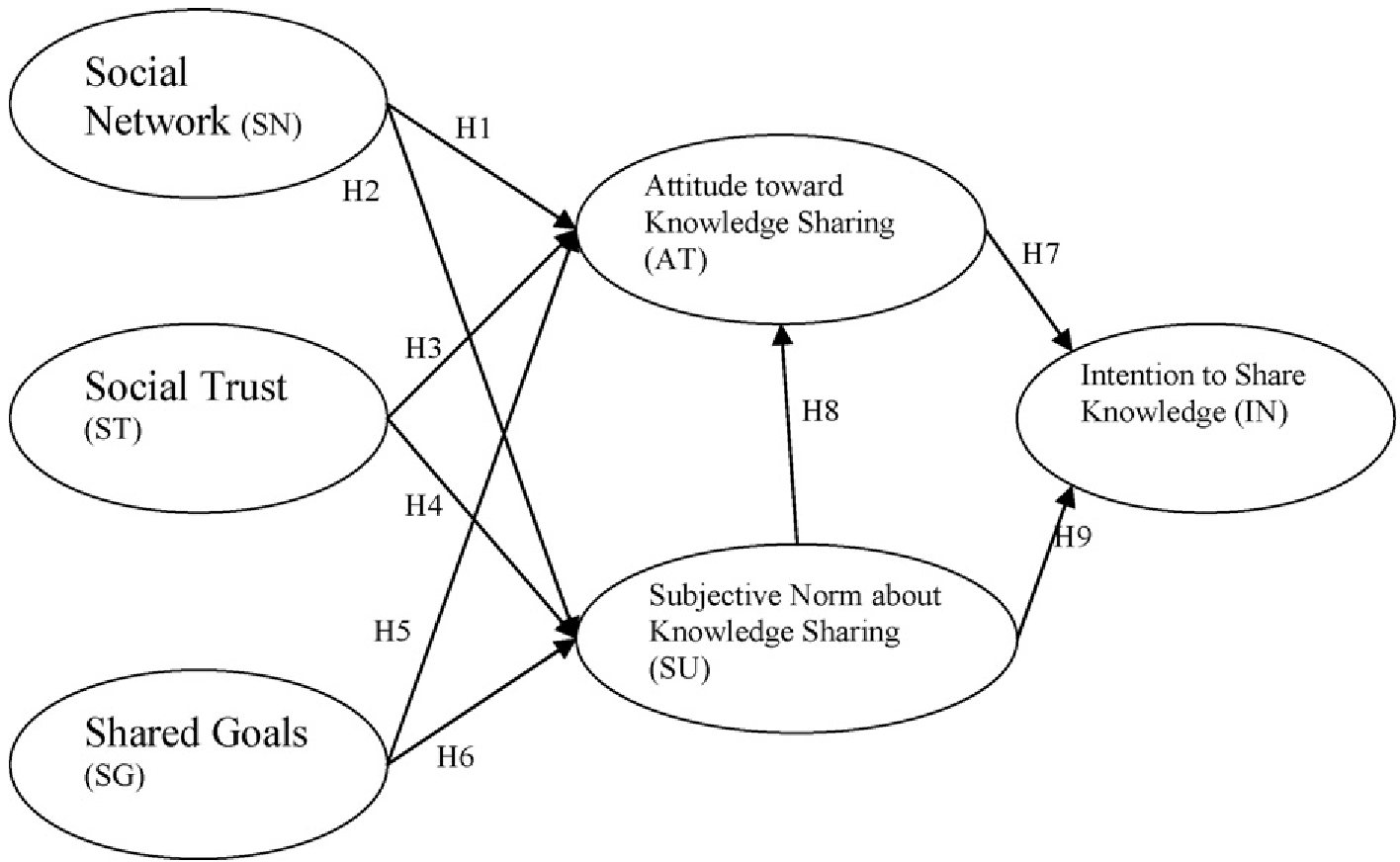
The team used Structural Equation Modeling (SEM) to analyze data from 190 managers across various Hong Kong industries (Banking, Manufacturing, Logistics, etc.).
Key Insights & Experimental Results
The study produced several "Aha!" moments that challenge traditional management intuition:
1. The Unity of Knowledge
Interestingly, the data showed that managers do not differentiate between Tacit (know-how) and Explicit (documents) knowledge when it comes to sharing. If they are willing to share one, they share both.
2. The Power of Shared Goals
"Shared Goals" had the highest impact on the "Attitude toward Sharing." When employees feel they are on the same mission, sharing knowledge becomes a "wise move" rather than a loss of personal power.
3. The Trust Paradox
Surprisingly, Social Trust did not have a significant direct path to sharing intention. While trust is "nice to have," it was the social pressure of the network and the alignment of goals that actually moved the needle.
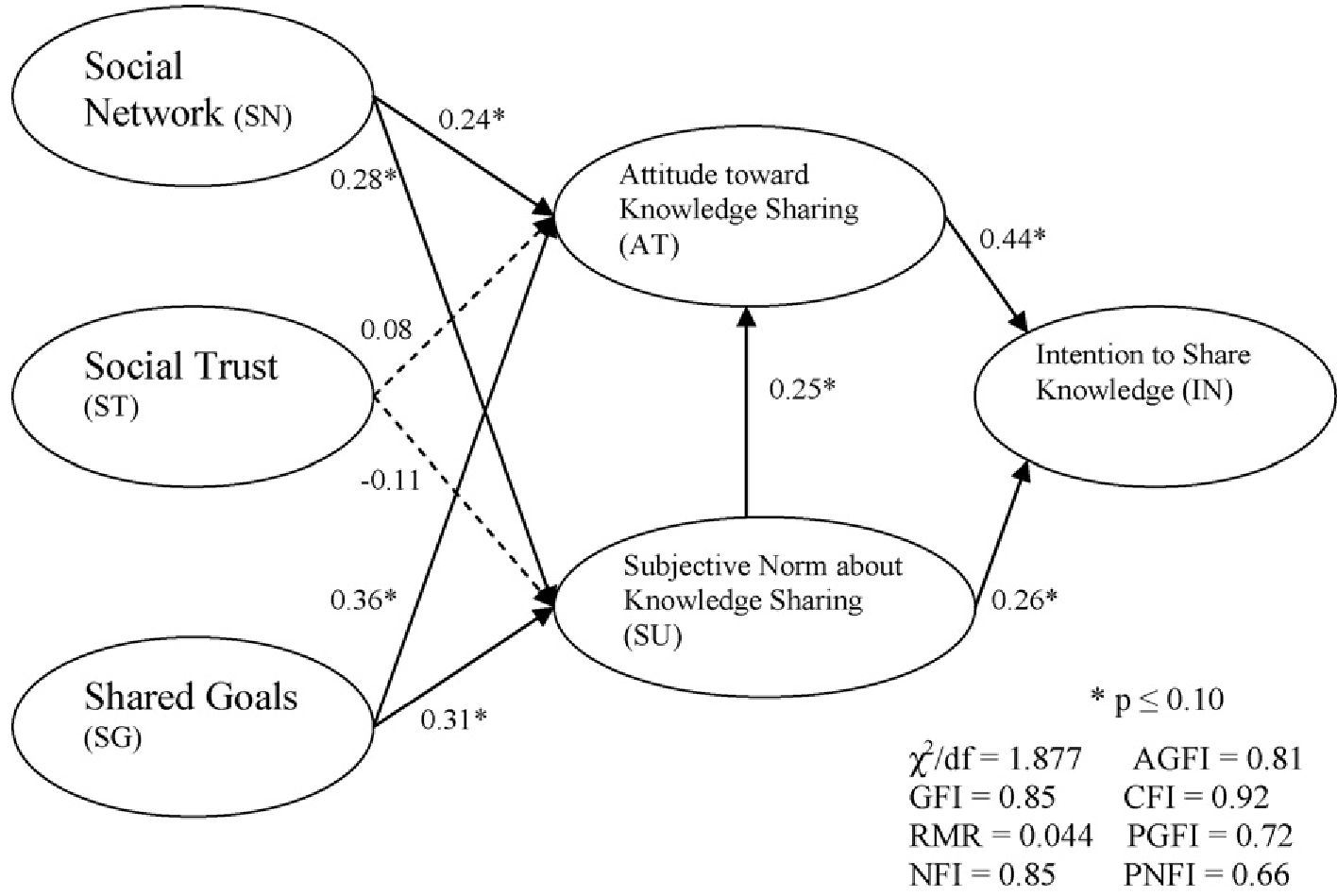
| Path | Coefficient | Result |
|---|---|---|
| Shared Goals → Attitude | 0.37 | Supported |
| Social Network → Norm | 0.27 | Supported |
| Social Trust → Attitude | 0.06 | Not Supported |
Critical Analysis & Conclusion
Takeaway
If you want your team to share more, don't just host "trust-building" retreats. Instead:
- Align Visions: Ensure everyone knows the "Why" of the organization.
- Flatten the Structure: Increase the "Social Network" by making it easier for different departments to talk.
Limitations
The study focused solely on Hong Kong managers. Cultural nuances, such as the concept of Guanxi, might play a role that isn't as prevalent in Western corporate structures. Future research should look at how "Organizational Culture" as a broader construct interacts with these social ties.
Final Thought
Knowledge sharing is a social act. By focusing on the structural and cognitive bonds between employees, companies can turn individual expertise into a powerful, collective competitive advantage.