
Mapping the DNA of Software Engineering: A 34-Year Social Network Odyssey
The social network of soware engineering research
This paper presents a longitudinal social network analysis of Software Engineering (SE) research collaboration from 1976 to 2010. By constructing Software Engineering Research Collaboration Networks (SRCN) from 11,429 papers across 10 major venues, the authors identify that the field has evolved into a "Small World" social network characterized by increasing interconnectedness and power-law degree distributions.
TL;DR
Is software engineering research just a collection of ivory tower solos, or a thriving, interconnected ecosystem? By analyzing 34 years of publication data (1976–2010) from top-tier venues like ICSE and TSE, this paper reveals that SE research has evolved into a "Small World" social network. Collaboration is no longer the exception—it is the rule, with single-author papers nearly vanishing and the "Giant Component" of researchers growing tenfold.
The "Missing Past" and the Birth of a Discipline
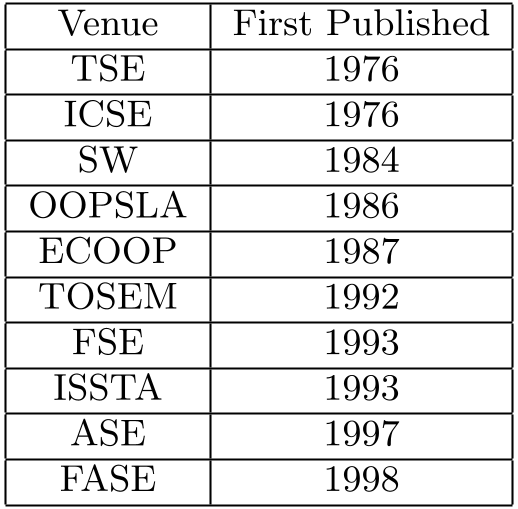
One of the greatest challenges in Network Science is the "missing past"—starting a study when a field is already mature makes it hard to understand how it actually grew. Software Engineering (SE) is unique because we can trace its formal origins to roughly 1976. By capturing the data from the very beginning, the authors avoid "phantom nodes" and provide a pure look at how a scientific community self-organizes from scratch.
Methodology: More than Just Co-authorship
The study isn't just counting papers; it applies the mathematical rigor of Complex Network Theory. The researchers built the Software Engineering Research Collaboration Network (SRCN) where:
- Nodes: Authors.
- Edges: Co-authored a paper together.
They evaluated the growth across 11 cumulative time-steps to see if SE research follows Preferential Attachment—the "rich get richer" phenomenon where famous authors attract more collaborators.
Key Findings: The Shift to a Social Network
1. The Death of the Solo Researcher
In the late 1970s, nearly 23% of new authors were "singletons." By 2010, that number plummeted to less than 5%. Software engineering has become an inherently team-based endeavor.
2. Emerging Small World Properties
A "Small World" network occurs when most nodes are not neighbors, but can be reached in a small number of steps. The study found:
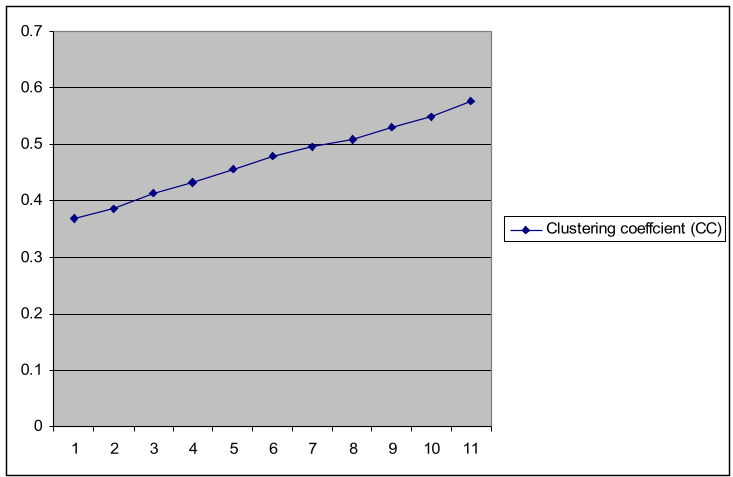
- Clustering Coefficient: Increased steadily, hitting the "Small World" threshold (>0.5) after 2000.
- Average Separation: Settled at approximately 7 degrees, meaning you are likely only seven "handshakes" away from any other major SE researcher.
3. The Power Law and the "Giant Component"
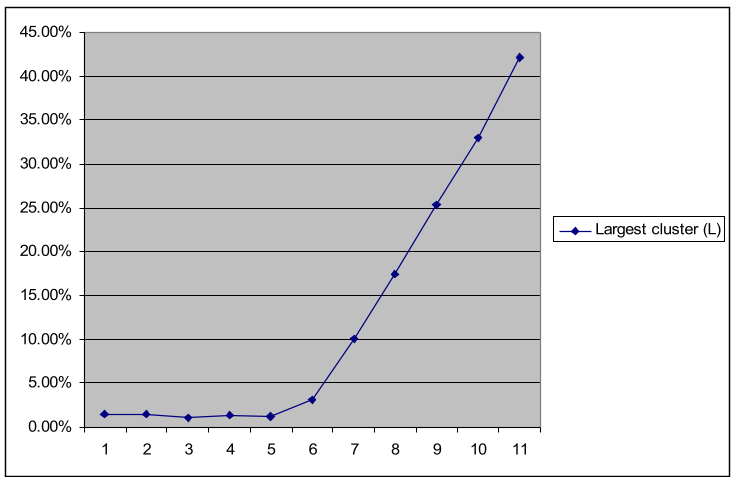
In the first 20 years, the largest cluster of connected researchers represented less than 5% of the total network. However, starting in the mid-90s, the network hit a "tipping point." Isolated clusters began merging rapidly. By 2010, the Giant Component encompassed over 42% of all researchers in the field.
Critical Insight: Why the Sudden Integration?
The authors pose a fascinating conjecture: Beyond the rise of the internet, the Object-Oriented (OO) paradigm might have influenced how we collaborate. As the research focus shifted toward "interacting objects" and modularity in the late 80s and 90s, the researchers themselves began to mirror these interactive patterns in their collaboration habits.
Conclusion
This paper proves that Software Engineering is no longer in its infancy. It has reached a "mature" state of social connectivity, similar to mathematics or physics, yet retains its own unique topological signature—specifically a lower than average giant component size compared to biology, suggesting it remains slightly more fragmented into specialized sub-communities.
Future Outlook: As we move into the era of AI-driven coding and Massive Open Research, will these "degrees of separation" shrink even further, or will the "Giant Component" finally reach the 80-90% levels seen in other empirical sciences?