
Decoding the Digital Student: How Social Media Usage Predicts Academic Success
Analyzing different aspects of social network usages on students behaviors and academic performance
This study utilizes Education Data Mining (EDM) to analyze the impact of Social Network (SN) usage patterns on student academic performance at MNNIT, Allahabad. By categorizing websites into "Academic" and "Non-Academic" sub-types, the author identifies gender-specific behaviors and develops a Decision Tree model to predict student performance (CPI) with 80% accuracy.
TL;DR
Is social media a parasite on academic productivity? This research suggests the answer is more nuanced than a simple "yes." By mining proxy server logs and academic transcripts, the study reveals that female students actually increase social media use during exams to manage stress, and high-achieving students are often the most frequent users. A Decision Tree model built on this data can predict student performance with 80% accuracy.
Background Positioning
In the landscape of Education Data Mining (EDM), this work moves beyond traditional pedagogical metrics (like test scores) to explore the behavioral digital footprint of students. It bridges the gap between IT infrastructure management and academic counseling.
Problem & Motivation: The "Non-Academic" Anxiety
Universities face a dilemma: provide high-speed internet to foster research, or restrict it to prevent distractions. The author argues that we cannot manage what we do not measure. Existing website classifications (like ODP or Wikipedia) are too generic for an engineering campus. The motivation here is to understand the topology of student browsing and its real-world correlation with the Cumulative Performance Index (CPI).
Methodology - The Core
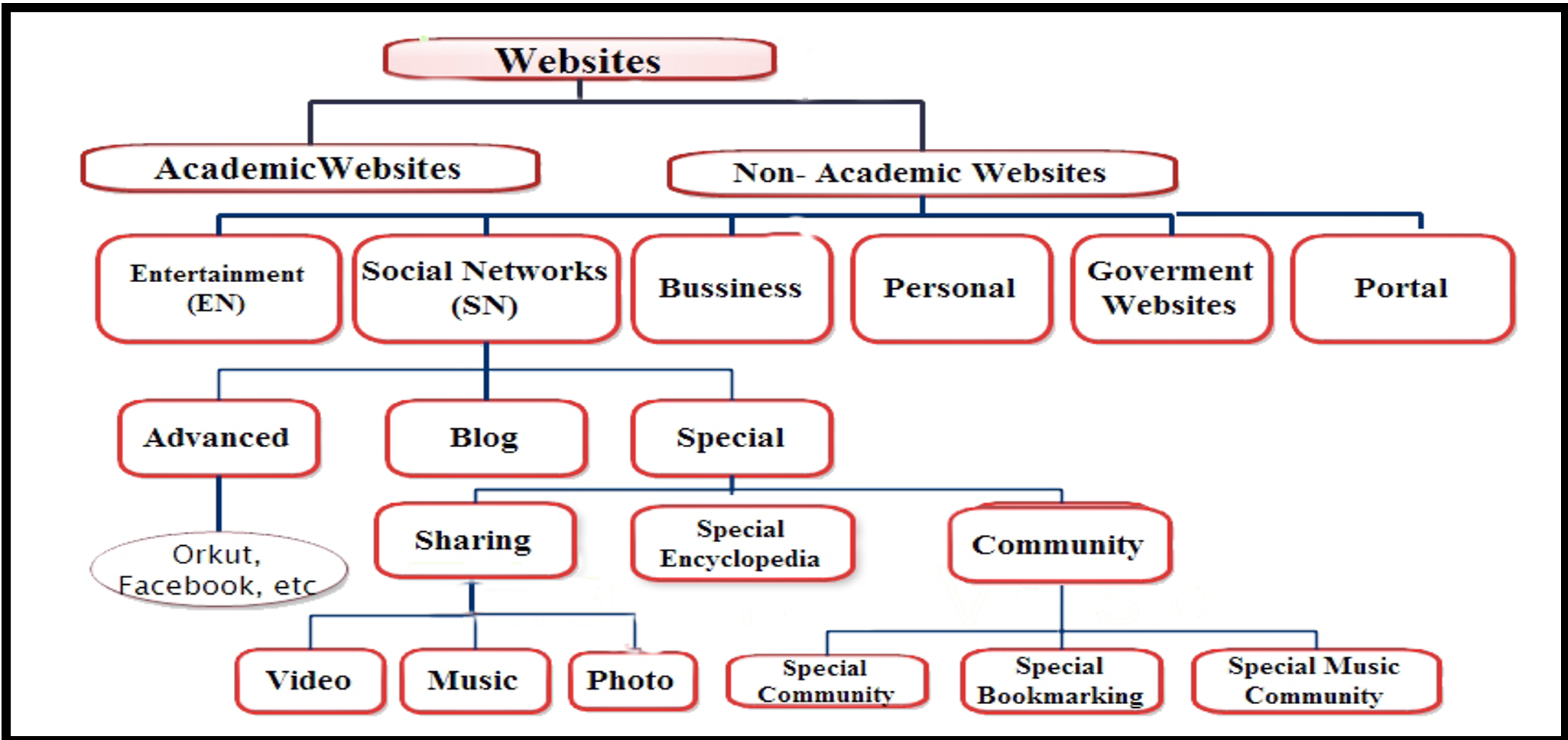
The author proposes a specialized taxonomy for the academic environment:
- Advanced SN: Platforms like Facebook/Orkut for generic interaction.
- Special SN: Niche communities for sharing music, photos, or specific knowledge.
- Blogs: Chronological, individual-maintained entries.
By processing a year's worth of "Squid" proxy logs, the research calculates the "Time-of-connection" and maps it to specific user IDs, departments (CSE, IT, MBA, etc.), and academic periods (Final Exams vs. Holidays).
Predictive Modeling
The core analytical engine is a Decision Tree built using Rapid Miner. It takes inputs such as Gender, Time_Spent, Visited_Category, and Program to classify students into grade brackets (A, B, C, or D).
Experiments & Results: The "Stress-Relief" Insight
The findings challenge the stereotype of the "distracted student":
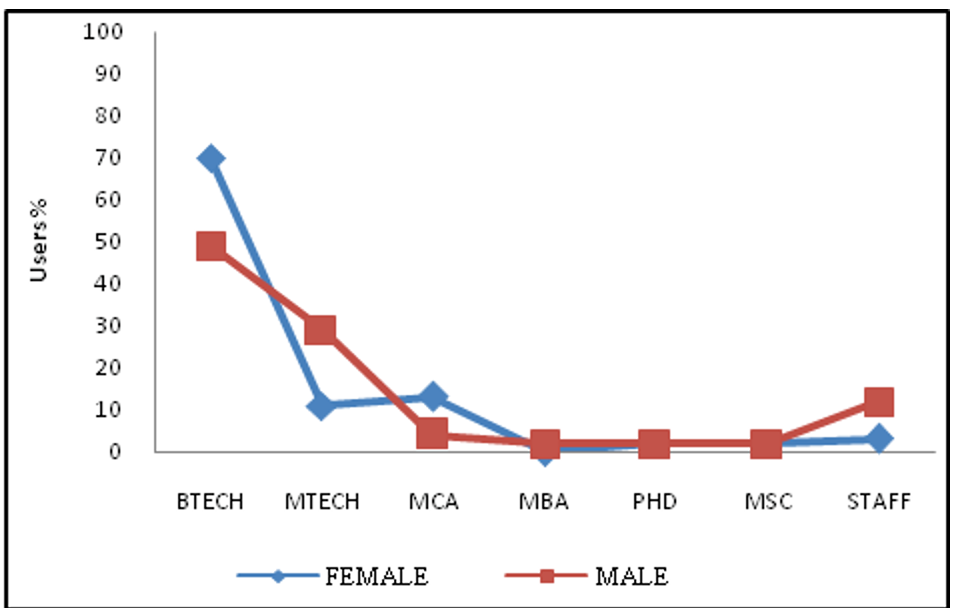
- Gender Divergence: 37% of female users are continual SN users compared to 19% of males.
- The Exam Paradox: Female students reported increased SN usage during finals to "cope up with stress," while male students decreased their usage.
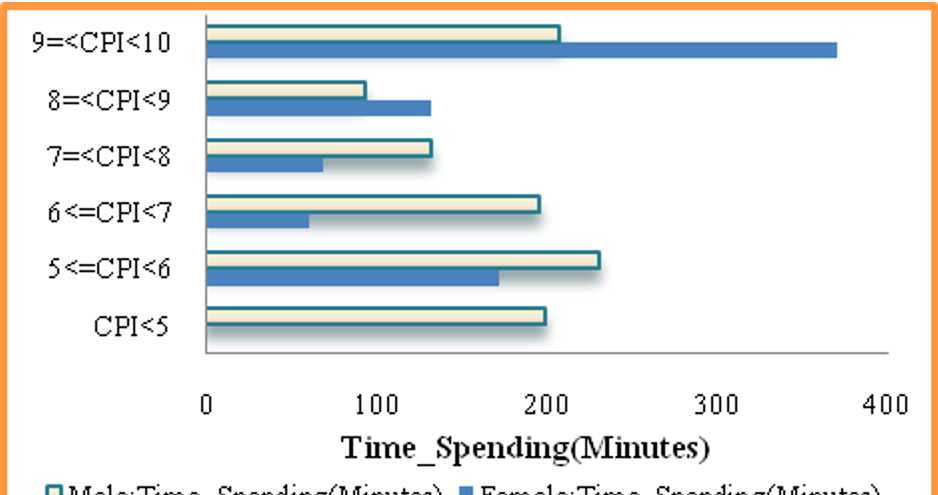
- High Achievers: Most SN users were "good students" with a CPI >= 7. Weak students (CPI < 5) actually spent less time on the internet overall, suggesting that digital literacy and academic success are positively correlated.
Critical Analysis & Conclusion
Takeaway
The research proves that social networks are integrated into the modern student's life as a coping mechanism and a social utility rather than just a distraction. For administrators, the 80% accuracy of the prediction model suggests that browsing patterns are a leading indicator of academic health.
Limitations
- Static Taxonomy: The classification of "Advanced SN" vs "Special SN" is vulnerable to the rapidly changing web landscape (e.g., where does a multi-functional app like Discord fit?).
- Anonymity vs. Intervention: While the study used "virtual IDs," implementing such a system for active intervention raises significant student privacy and surveillance concerns.
Future Outlook
Future work should explore the content of social interactions via sentiment analysis to see if specific types of social engagement (collaborative study groups vs. pure entertainment) have different impacts on the CPI.