
SocialMirror: Leveraging Trusted Networks to Bridge the Independence Gap in Autism
Designing a social network to support the independence of young adults with autism
The paper introduces SocialMirror, a novel assistive technology combining a physical interactive mirror with a private online social network. It aims to support young adults with High-Functioning Autism (HFA) in achieving independence by facilitating real-time life-skill advice from a trusted care network.
TL;DR
Independence for young adults with autism is often hindered by difficulties in "initiating" tasks and understanding "social context." SocialMirror is a design intervention that transforms a standard household mirror into a window to a trusted support network. By combining visual queries (photos) with shared calendars, it allows users to receive situated advice from family and mentors, shifting the burden from a single caregiver to a distributed "trust committee."
The "Prompting" Paradox: Why Static Tech Fails
For years, the gold standard for supporting independence in autism involved Prompting Systems—digital to-do lists that buzz at specific times. However, the authors identify a critical flaw: Generalization. Knowing how to do laundry is different from knowing when to do it, or realizing your shirt is inappropriate for a job interview.
Current interventions are often "islands of automation" that don't account for the messiness of real life. The authors' insight? Social support is the key to adaptive life skills. Instead of an algorithm telling you you're messy, why not let a mentor explain the social "why" behind personal hygiene?
Methodology: The SocialMirror Ecosystem
The researchers followed a three-phase design process (observation, interviews, and focus groups) to arrive at the SocialMirror concept.
1. The Home Interface
The system is anchored by a physical mirror equipped with a display.
- The Mirror Metaphor: It serves as a natural prompt for self-reflection.
- Visual Queries: Users can take a photo of themselves and send it to their network with a simple question (e.g., "Is this okay for church?").
- Contextualized Content: The system attaches the user’s calendar to the photo, so the caregiver knows exactly where the user is going.
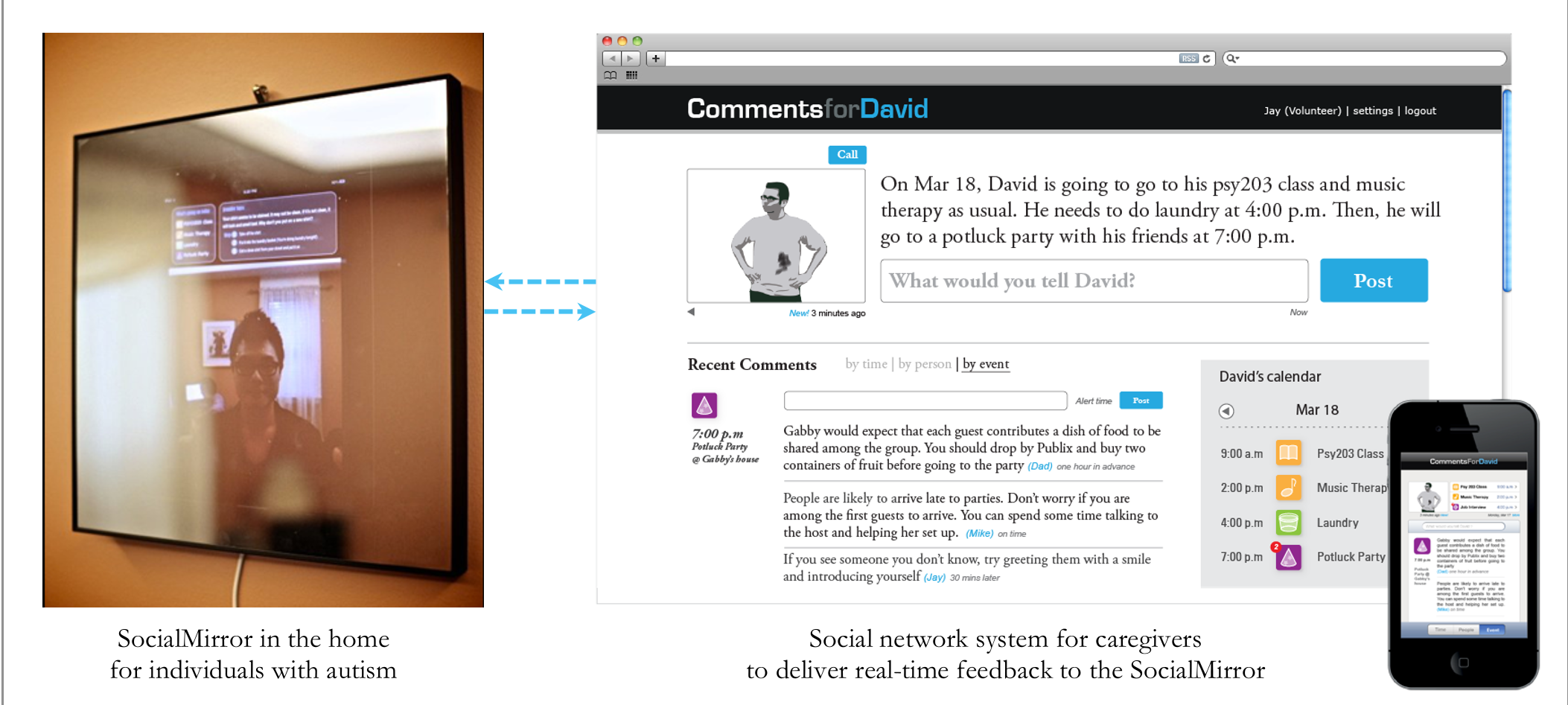 Figure 1: The SocialMirror deployed in a bedroom (left) and the caregiver's mobile view (right).
2. The Trusted Network
Unlike Facebook or Twitter, SocialMirror is a "walled garden."
- Scaffolded Recruitment: Primary caregivers act as gatekeepers, vetting members.
- Labor Distribution: By involving siblings, cousins, and coaches, the "mother’s burden" is reduced. If Mom is busy, a cousin can confirm that "Sandals with socks" is a fashion faux pas.
Key Findings: More Than Just Advice
The focus groups revealed that SocialMirror functions as a "Reflection of Social Norms." One participant noted that while he didn't mind wearing certain clothes, seeing that his entire trusted network advised against it helped him internalize the social rule better than a single lecture from a parent.
The Design Matrix
The researchers identified four key areas for system refinement:
| Feature | Benefit | Stakeholder Insight |
|---|---|---|
| Photo-Mediation | Lowers communication barrier | "Seeing the problem helps me feel useful" (Caregiver) |
| Calendar Integration | Reduces anxiety regarding transitions | "Helps me anticipate what to expect" (User) |
| Sub-Commenting | Prevents information overload | Aggregates advice to reach a community consensus |
| Portable Version | Supports on-the-go learning | Essential for tasks like grocery shopping or school |
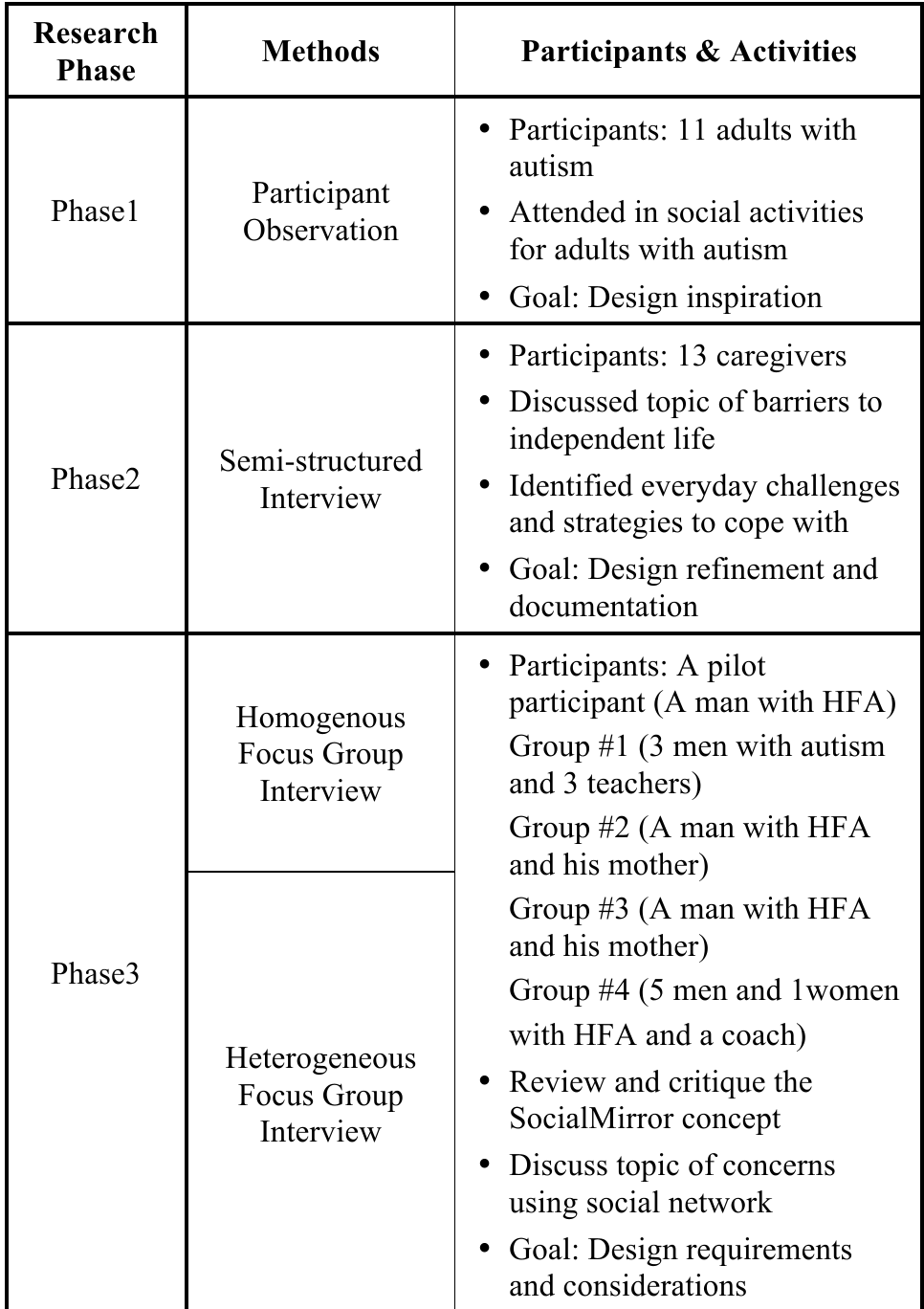 Table 1: The 3-phase research workflow used to validate the SocialMirror concept.
Critical Insight: Balancing Autonomy and Surveillance
The paper doesn't shy away from the tensions inherent in "collaborative care."
- The Surveillance Trap: Users expressed concern that a networked mirror could feel like a "spy camera."
- The Autonomy Conflict: There is a fine line between a parent being a "gatekeeper" and a "warden." The authors argue for a layered network—where sensitive queries (finances) go to parents, but style queries go to peers, preserving the user's dignity.
Conclusion: A Blueprint for Distributed Care
SocialMirror represents a shift from "Assistive AI" to "Assistive Communities." By using technology to bridge physical distances within a care network, it provides the "scaffolding" necessary for young adults to take the leap into independent living.
The takeaway for the industry? Design for the network, not just the user. The success of an assistive tool is often determined by how well it empowers the entire ecosystem of people surrounding the individual.