
From Analytics to Agency: Turning Social Networks into Ambient Health Displays
Social Networking
This research introduces "Social Network Displays," a pervasive computing intervention that transforms abstract social-network models into ambient, real-time behavioral feedback for older adults. By leveraging wireless sensor networks and e-centric "solar system" visualizations, the study aims to improve social health through enhanced self-awareness and empowered engagement.
TL;DR
Intel’s research team has reimagined social networks not as static data points for sociologists, but as living feedback displays for the elderly. Using a "Solar System" metaphor driven by real-time sensor data, these displays help older adults visualize their social connectivity, combatting the "social helplessness" that often accompanies aging. The result is a shift from passive isolation to active, intentional engagement.
The Motivation: Loneliness is Not an Inevitable Part of Aging
"Loneliness is part of old age, there ain't a damn thing you can do about it." This quote from an 82-year-old participant captures the core problem: social helplessness.
Most existing health tools for the elderly focus on physical metrics—heart rate, falls, and medication. However, social engagement is a critical predictor of everything from the common cold to dementia. Contemporary clinical tools fail here because:
- Manual logs are tedious: Patients hate documenting every interaction.
- Stability Bias: People perceive isolation as a permanent state rather than a temporary, changeable variability.
- Stigma: Most "assistive technologies" remind users of their decline.
Methodology: The Solar System Metaphor
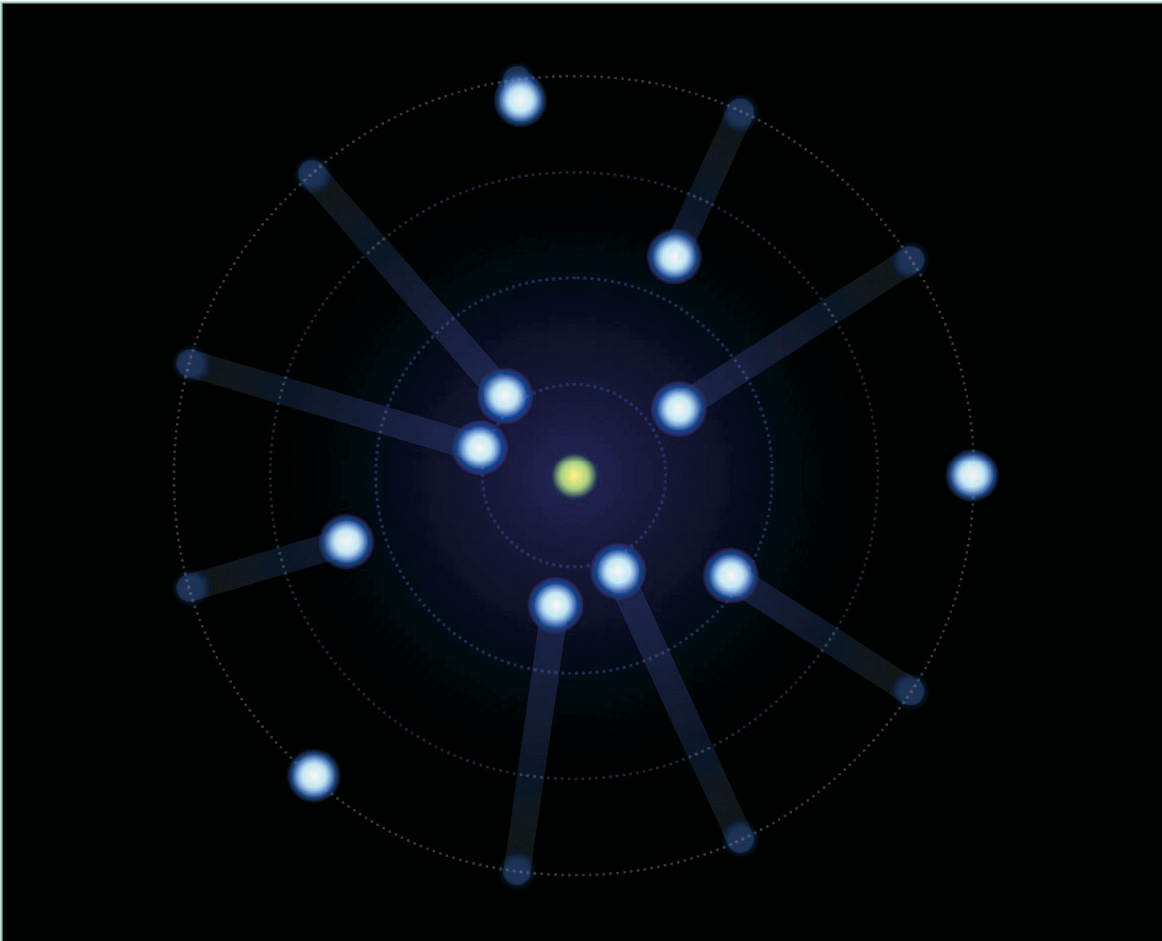
To move away from stigmatizing interfaces, the researchers settled on a Solar Design Metaphor.
The Egocentric Model
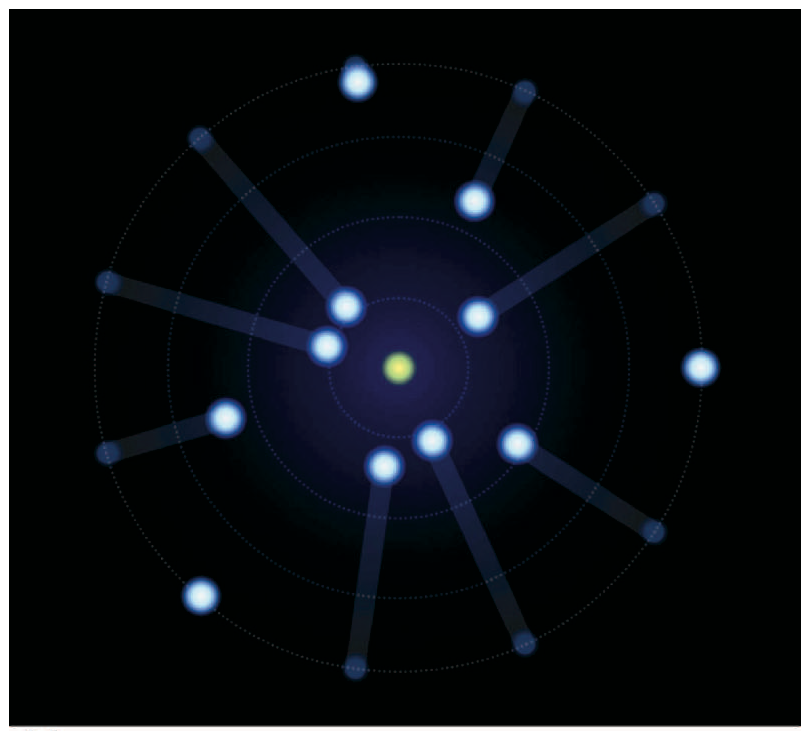
In this model, the elder sits at the center as the Sun. Family and friends are represented as Planets. Their movement is not random:
- Inward Movement: Reflects increased frequency and duration of contact, providing a "gravitational" sense of closeness.
- Sensor Integration: Data is pulled from phone sensors and infrared (IR) badges to update planetary positions hourly.
- Suggestive Mirroring: Instead of telling the user "Call your daughter," the display shows the daughter's planet drifting away. This preserves the user's cognitive agency—the elder must decide how to react.
Designing for Both the Elder and the Caregiver
A unique aspect of this study is the Dyad Approach. The display is placed in both the elder's home and the caregiver's (often an adult daughter) home.
- For the Elder: It’s a "game-like" stimulus and a tool for mindfulness.
- For the Caregiver: It provides a high-level view of the "social index." It validates the caregiver's effort or reveals when they are becoming overburdened, encouraging them to distribute social responsibilities among other family members.
Results: Beyond Numbers
The three-month in-home trials yielded fascinating qualitative results:
- Spotting Trends: Elders were surprised by the variability in their social lives. Seeing a "downward trend" allowed them to intervene before falling into a depressive state.
- Perceptual Resolution: One participant stopped referring to groups by activities (e.g., "The Dominoes Club") and began identifying individuals by name and personality traits again, prompted by the specific "planets" on her board.
- Behavioral Shifts: Participants began taking small but significant actions, like preparing food for visitors or initiating calls rather than waiting to be reached.
Deep Insight: Success is a Movement Away
One of the most profound findings involved an overburdened daughter. By seeing herself as the only planet close to the "Sun" (her mother), she realized she was neglecting her own life. Success for her wasn't bringing herself closer; it was watching other family members' planets move toward the center, allowing her own planet to move slightly outward. This visual validation allowed her to rebalance her role as a caregiver without guilt.
Conclusion & Future Work
The Intel research demonstrates that Embedded Assessment—marrying health monitoring with motivating feedback—is a powerful tool for aging in place.
Future directions include:
- Adding "Weak Ties" (acquaintances) to the model, as they are crucial for cognitive health.
- Integrating mapping tools so users can contrast their actual network with their ideal network.
- Measuring interaction outside the home via mobile pervasive systems.
This research reminds us that in the age of pervasive computing, the most valuable data isn't just about how long we live, but how connected we feel.