
Social Networking: The Evolution of the Internet into a Social Utility
17617_Social Networking.
This paper explores the evolution of the Internet from a static information repository to a dynamic social platform, facilitated by user-centric Web applications. It categorizes major social networks like MySpace and Facebook, emphasizing the paradigm shift from top-down content delivery to bottom-up, user-generated interaction.
TL;DR
The Internet has undergone a fundamental transformation: it is no longer just a digital library, but a "social utility." By shifting from a top-down content model to a bottom-up, user-generated paradigm, platforms like MySpace and Facebook have redefined human interaction. This paper explores how these "Social Networking" ecosystems leverage human social instincts to create value that exceeds the sum of its parts.
Background: From Information Repository to Connection Hub
In the early days of the World Wide Web, the Internet was viewed as a static repository. Information flowed from large corporations (producers) to users (consumers). However, a cultural shift has occurred. The current Web is a "breeding ground" for collaboration, where the power has shifted entirely into the hands of the individual user.
The urgency of this shift is best illustrated by the 2007 Virginia Tech tragedy. While official channels relied on conventional radios, students turned to Facebook to broadcast their safety status. This marked a turning point where social platforms proved more efficient than institutional communication for real-time human connection.
Methodology: The Architecture of Social Success
The paper identifies that a successful social network is defined by its "Value Proposition"—a user must see a return on their investment of time and energy.
The Case Study Matrix
The authors break down the landscape into four distinct models:
- Media-Based (MySpace): Focuses on self-expression and media snippets (music/video), thriving on "informal social contracts."
- Relationship-Based (Facebook): Positions itself as a platform, providing APIs for third-party developers to embed applications into the social fabric.
- Collaborative (Wikipedia): A socially-motivated, not-for-profit model where knowledge is democratized through collective editing.
- Content-Sharing (YouTube): A community-governed network centered on video democratization.
Core Insight: The Push for Standardization
A critical challenge identified in the paper is the fragmented nature of these networks. Each platform acts as a silo. The introduction of OpenSocial by Google represented a landmark effort to standardize the code base for the "Social Internet." By using common HTML and JavaScript, developers could write one application that runs across MySpace, LinkedIn, and others, effectively turning the disparate Web into a unified social ecosystem.
Results & Growth Dynamics
The scale of adoption is unprecedented. The paper notes that more than half of Americans aged 12 to 17 are active on these sites.
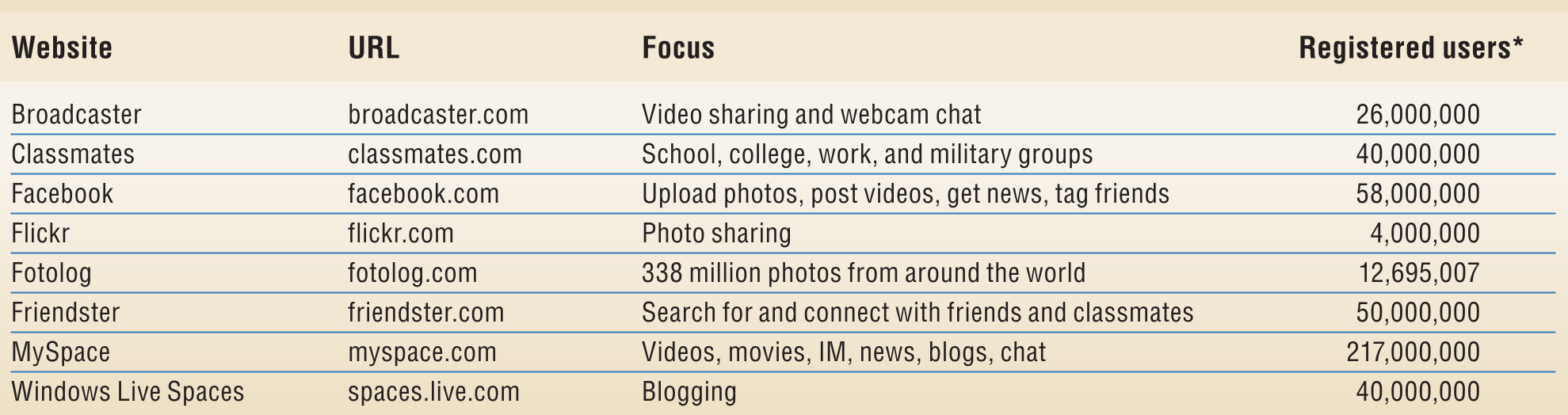
- MySpace: Dominates with over 217 million users, successfully capturing the 16-to-34 demographic.
- Facebook: Evolved from an exclusive Harvard-only network to a massive ecosystem with 58 million users (at the time of the study).
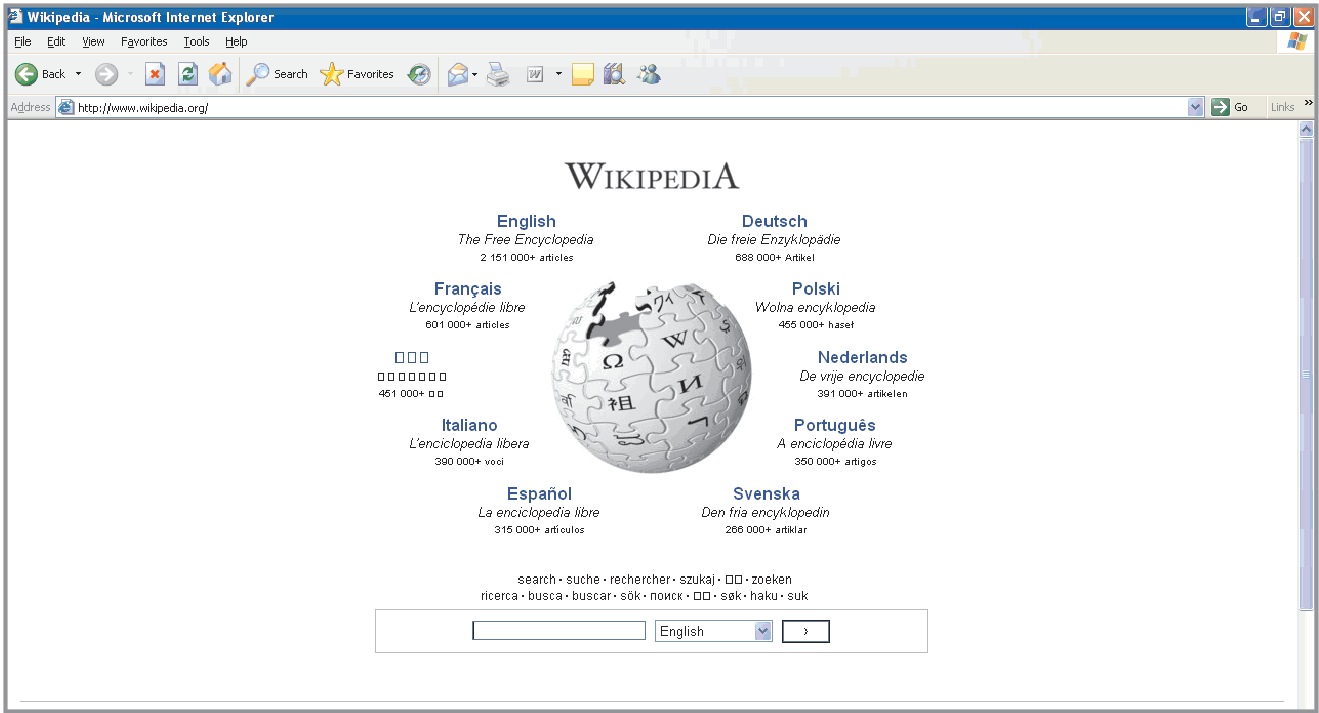
- Wikipedia: Proved that volunteer contributors could build a multilingual repository of 9 million articles through massive collaboration.
Critical Analysis: Privacy and Friction
Despite the success, the authors warn of "growing pains," particularly regarding privacy. As social networks become more transparent, the boundary between private life and public record blurs. The controversy surrounding school administrators using Facebook photos as evidence of misconduct highlights a critical tension: as we connect more, we risk losing the "legitimized interaction" that occurs when privacy boundaries are respected.
Conclusion: The Final Maturity of the Web
Social networking is not a fad; it is the logical extension of human tendencies toward togetherness. The future of the Internet lies in its ability to connect people across distance and time in ways previously impossible. As standards like OpenSocial take hold, the Internet will finally mature from a giant encyclopedia into a living, breathing social platform.
Takeaway: The value of information is no longer in its storage, but in its flow between connected individuals.