
Beyond the Distraction: How "Net Benefits" of Social Media Link to Better Grades
Social networking and academic performance: A net benefits perspective
This study investigates the link between Social Networking Sites (SNS) and academic performance using the Information Systems (IS) Success Model. By analyzing a sample of 169 college students, the research discovers that "Net Benefits"—comprised of perceived usefulness and enjoyment—is a significant positive predictor of academic achievement (R-Score), challenging the purely negative narrative of SNS use.
TL;DR
Is Instagram ruining your GPA? For years, the academic consensus has been a confusing "maybe." This study pivots away from counting hours spent scrolling to measuring the value students get from social networking. Using the Information Systems Success Model, the authors find that when students perceive SNS as useful and enjoyable ("Net Benefits"), it actually correlates positively with their academic performance.
The "Intensity" Trap: Why Prior Research Failed to Give Answers
For a decade, the narrative around Social Networking Sites (SNS) in education has been dominated by the "distraction hypothesis"—the idea that every minute spent on Facebook is a minute stolen from Calculus. However, empirical data has been frustratingly inconsistent.
The authors argue that prior work has been stuck in a Direct Link Paradigm, focusing almost exclusively on "Usage Intensity." By ignoring the psychological and functional rewards of use, researchers missed the bigger picture: not all scrolling is created equal.
Methodology: The IS Success Model
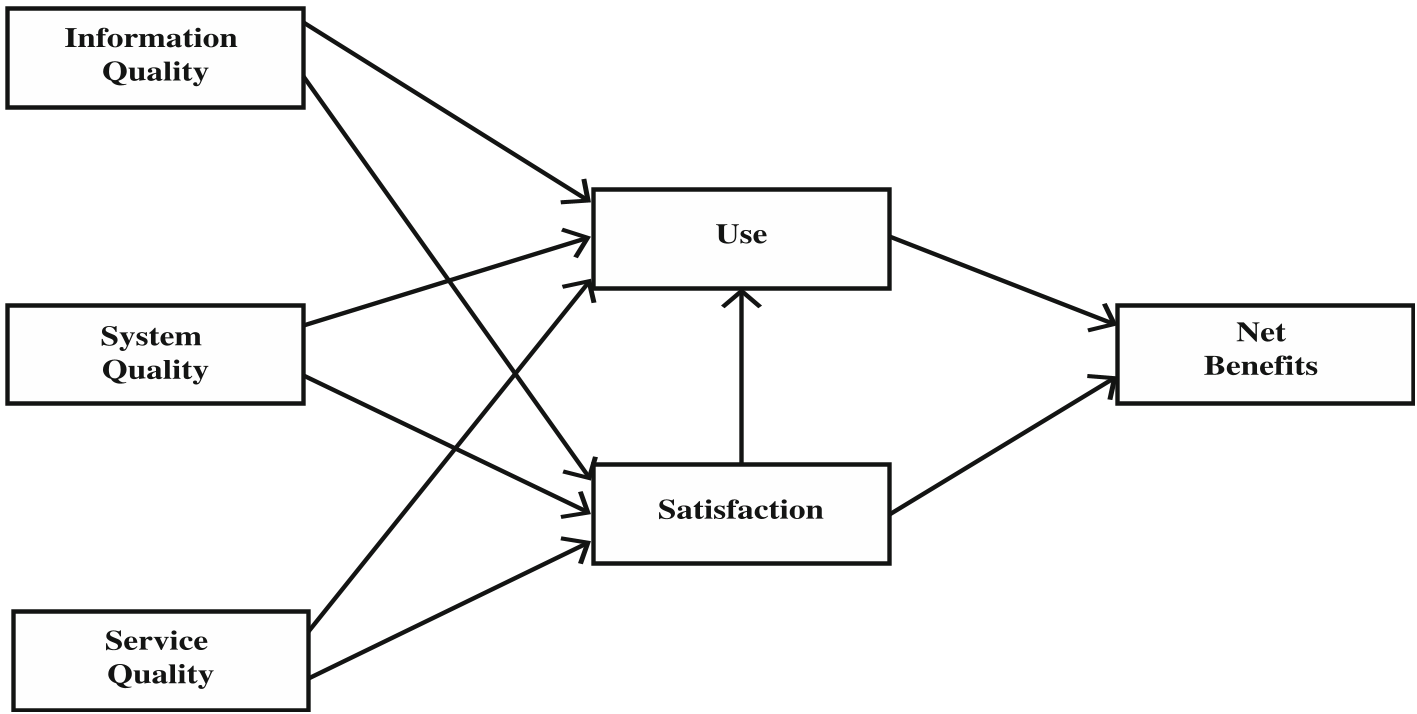
To solve this, the researchers looked toward the field of Information Systems, adopting the DeLone and McLean IS Success Model. This framework suggests that a system's "success" isn't measured by how much it is used, but by the Net Benefits it provides to the user.
The Research Framework
The authors hypothesized a chain reaction:
- Qualities: System, Information, and Service quality.
- Attitudes: User Satisfaction and Use.
- Outcomes: Net Benefits (Usefulness + Enjoyment).
- Final Impact: Academic Performance (R-Score).
Key Findings: Satisfaction is the Real Engine
The analysis, performed via PLS-SEM on 169 pre-university students in Canada, revealed several "Aha!" moments:
- The Positive Link: Hypotheses H10 was supported. Net Benefits positively influence academic performance (β = 0.176).
- Quality Matters: System Quality (ease of use) and Service Quality are powerful drivers of Satisfaction. Interestingly, simply having "accurate information" (Information Quality) didn't significantly increase usage, but it did increase satisfaction.
- Satisfaction > Usage: Satisfaction had a much higher effect size on Net Benefits (f² = 0.480) than actual Use (f² = 0.204). This implies that a happy, purposeful user gains more benefit than a heavy, mindless user.

Academic Intuition: Why does this work?
Why would "enjoying Facebook" lead to a better R-Score? The authors offer several sophisticated technical insights:
- The "Selection Effect": High-performing students might use SNS to befriend other high-performing peers, creating a digital "influence loop" that reinforces academic standards.
- Informal Learning: Platforms serve as hubs for discussing course-related problems and peer support, which are known to boost achievement.
- Adaptive Use: Students who perceive high "usefulness" are likely managing their time strategically, using the platform as a tool rather than a pitfall.
Critical Insight & Limitations
While the study provides a refreshing counter-narrative to "SNS as a villain," the authors remain objective. The R² for academic performance was 3.1%. While statistically significant, it reminds us that grades are influenced by a hundred different variables—SNS benefits are just one small piece of the puzzle.
Furthermore, the study is cross-sectional, meaning it shows a correlation, not necessarily a 100% causal "use-SNS-get-As" relationship. It is equally possible that students who are already doing well academically are simply better at finding the "benefits" in the tools they use.
Final Takeaway
The takeaway for educators and developers is clear: Don't just build or monitor for engagement (time spent). Focus on Net Benefits. If a platform provides genuine utility and healthy enjoyment, it can coexist with—and perhaps even support—academic excellence.