
Unlocking Corporate Value via Social APIs: A Deep Dive into the Facebook Open Graph
Social networking APIs for companies — An example of using the Facebook API for companies
This paper explores the integration of social networking platforms into corporate environments, specifically focusing on the Facebook Open Graph API. It details how companies can leverage Facebook Apps, Fanpages, and SDKs to establish authentic brand presence and facilitate direct customer engagement.
TL;DR
Social networks have evolved from simple profile pages into sophisticated development platforms. This paper analyzes how companies can move beyond mere presence by utilizing the Facebook Open Graph API, SDKs, and Social Plugins to automate customer engagement, secure brand authenticity, and derive actionable business intelligence.
Background: The Shift from Identity to Integration
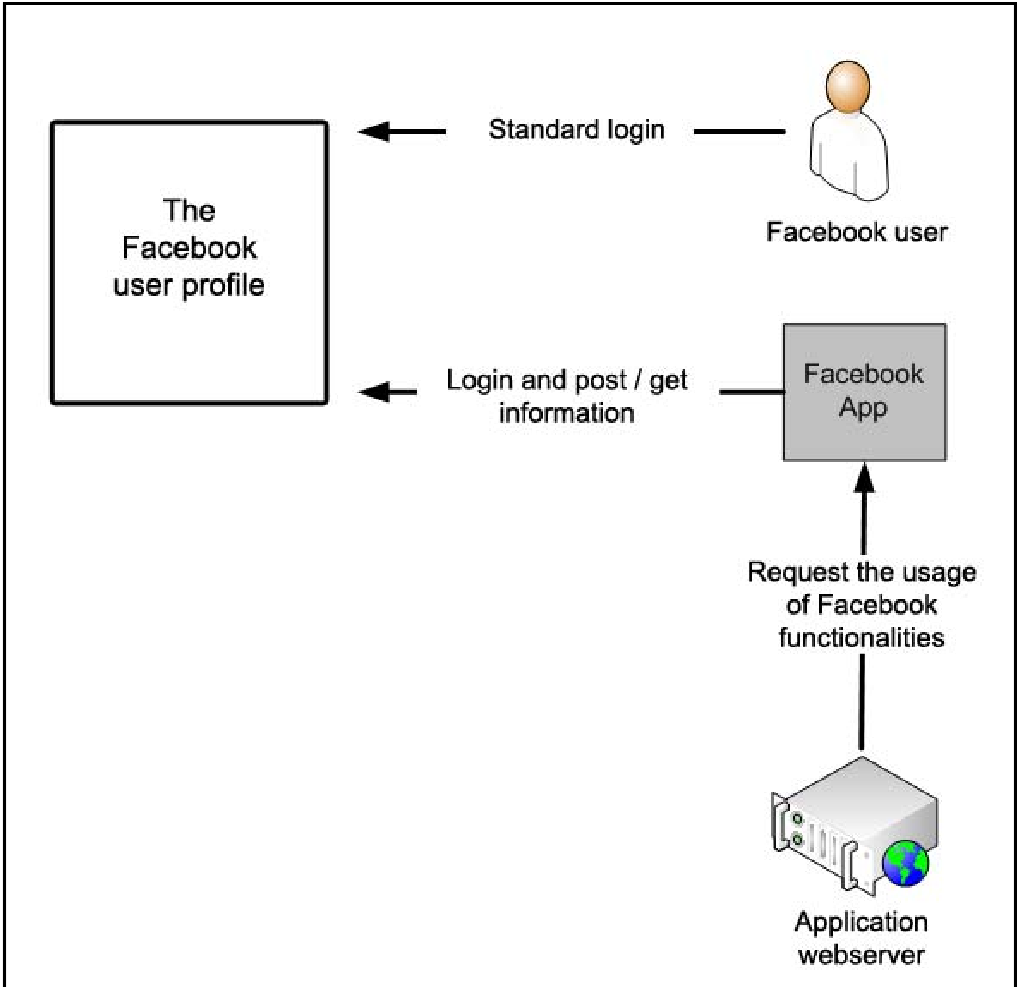
By 2011, Facebook had reached over 600 million users, becoming a critical infrastructure for corporate communication. However, the manual administration of profile pages is insufficient for enterprise-scale needs. The core challenge for modern companies is "functional integration"—the ability to merge social media activities directly into internal software systems.
The Problem: Authenticity and Automation
Companies face two primary hurdles in the social era:
- Brand Integrity: The ease of creating profiles leads to "faked pages," as seen in the case of the fashion brand Tamaris.
- Scalability: Manually posting updates and tracking feedback is inefficient. Without an API, companies cannot easily extract statistics or create interactive experiences like contests or specialized management tools.
Methodology: The Architecture of Open Graph
The paper posits that the Facebook Open Graph API is the solution to these bottlenecks. It treats every entity—a user, a post, or a photo—as an "Object" with a unique ID.
1. The Interaction Model
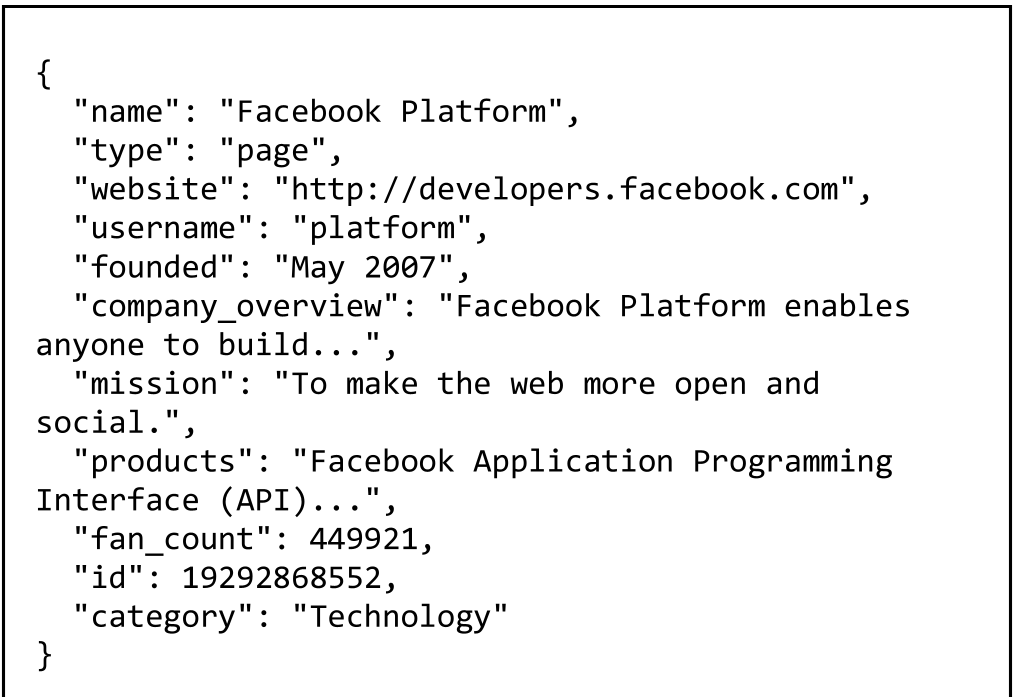
The API operates on a simple but powerful HTTP-based request system. By making a GET or POST request to https://graph.facebook.com/<ID>, developers receive a structured JSON (JavaScript Object Notation) response.
2. Security and Authorization
To protect user data, the API utilizes OAuth 2.0. Companies must register a "Facebook App" to obtain:
- App ID / API Key: To identify the application.
- Application Secret: A hexadecimal value acting as a password.
- Access Token: A dynamic credential used to authorize specific requests.
Implementation: SDKs and Social Plugins
To lower the barrier to entry, Facebook provides Software Development Kits (SDKs) for languages like PHP, JavaScript, and Python. These kits abstract the complexity of HTTP requests into simple class methods.
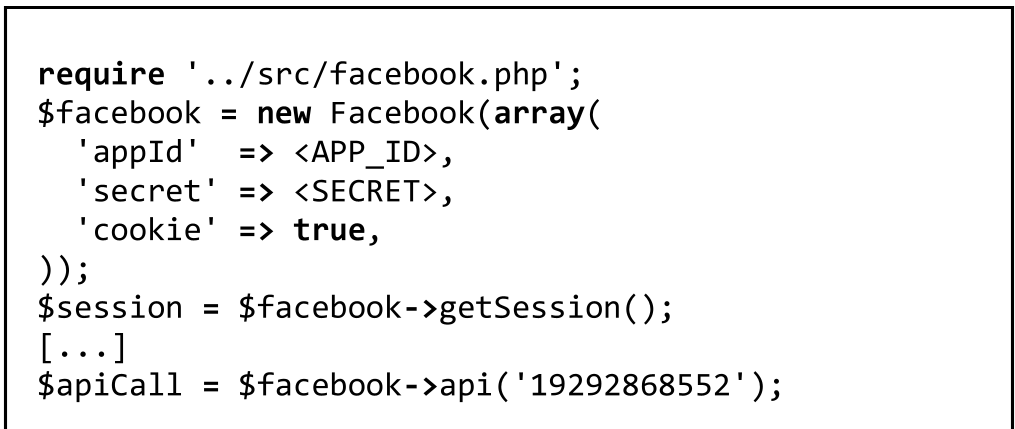
Example of an API call via the PHP SDK.
Furthermore, the paper explores Social Plugins, which are low-code HTML snippets (like the "Like Button" or "Comment Box"). These allow companies to embed social functionality directly into their independent corporate websites with minimal effort.
Experiments & Results: The Impact of Connectivity
The study references data indicating that companies with active social engagement achieve higher profits than their less-active competitors. The primary drivers are:
- Customer Loyalty: Direct dialogue makes customers feel valued and heard.
- Marketing Efficiency: Custom apps allow for targeted advertising and specialized contests.
- Data Structure: The JSON response provided by the API (shown below) allows companies to programmatically parse and store customer feedback for sentiment analysis.
Critical Insight & Conclusion
This paper serves as a foundational roadmap for corporate digital transformation. While it focuses on the early 2010s "Open Graph" era, its principles remain relevant: the transition from treats social networks as billboards to treating them as programmable nodes in a business ecosystem.
Takeaway: Effective social networking is no longer a marketing job alone; it is a software engineering challenge. By leveraging APIs, companies can build authentic, scalable, and data-rich relationships with their global customer base.