
Health 2.0: Navigating the Privacy Minefield of Medical Social Networks
Social networking applications in health care: threats to the privacy and security of health information
This paper provides a comprehensive survey of the privacy and security threats inherent in "Medicine 2.0"—the integration of social networking applications into health care. It evaluates current Personal Health Record (PHR) platforms like Google Health and Microsoft HealthVault and maps the landscape of emerging protective methodologies from software engineering.
TL;DR
The transition from static Web 1.0 health portals to interactive "Medicine 2.0" platforms offers revolutionary patient collaboration but introduces existential risks to data privacy. This paper analyzes how the social graph—the very thing that makes these apps useful—becomes a vector for unauthorized health profiling, and why traditional software security isn't enough to protect your medical DNA.
Background: The Information Asymmetry Shift
Historically, the physician-patient relationship was a "fiduciary" one, defined by a massive gap in knowledge. Web 2.0 has flattened this hierarchy. With platforms like Microsoft HealthVault and Google Health, patients are no longer just passive recipients; they are active curators of their own Personal Health Records (PHR). However, this empowerment comes at the cost of moving highly sensitive data from regulated clinical environments to the "Social Web."
The Core Challenge: Why Health Data is Different
The paper identifies several "domain-specific" threats that make health-related social networks (HSNs) far more dangerous than Facebook or LinkedIn:
- Inquiries as Signals: Simply searching for "Chemotherapy" or joining a "Type-2 Diabetes" support group acts as a digital signal that allows third parties to infer your health status without ever seeing your actual records.
- Secondary Damage: Because health is genetic, if your mother or sibling discloses information on a shared family tree (like MyFamilyHealth), they are effectively leaking your medical probabilities.
- Irreversibility: Unlike credit card fraud, medical data breaches are not "compensable." You cannot get a new "medical history" once your chronic condition is leaked to potential employers or insurers.
Methodology: Mapping the Leakage
The author proposes a formal model of an Online Social Network (OSN) as a dynamic graph where nodes (users) are connected by binary relations.
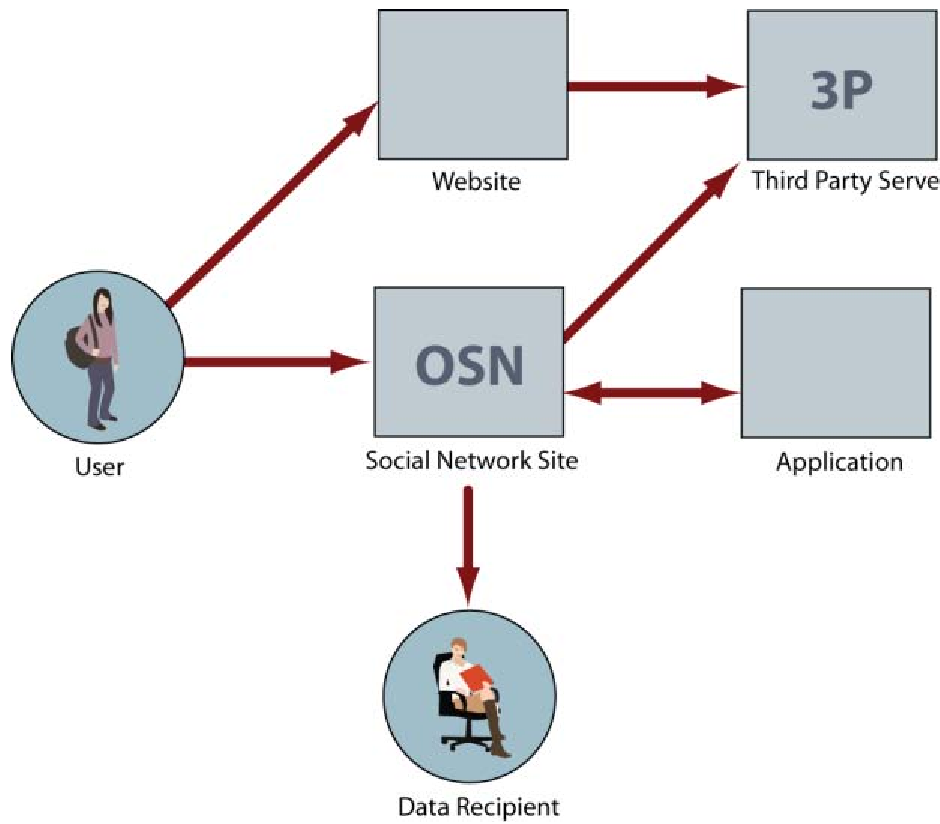 Figure 1: The information flow between users, site operators, and third-party data recipients.
The vulnerability lies in the Third-Party Ecosystem. Applications launched within the platform often "over-privilege" access, consuming not just the user’s data but also the data of everyone in the user’s "Care Team."
Current Defensive Strategies (SOTA Survey)
The paper reviews several cutting-edge (as of its publication) engineering attempts to plug these leaks:
1. Secure Application Frameworks
- Privacy by Proxy: External apps receive "placeholders" instead of real data. The central server swaps in the real data only at the final rendering stage, so the third party never "sees" the raw info.
- FaceCloak: A client-side architecture that replaces real sensitive data with fake dictionary-generated content on the server, while the real data is encrypted and stored elsewhere.
2. Radical Access Control
Traditional Access Control Lists (ACLs) are too static. The paper discusses Social Attestations, where relationship certificates (Issuer, Recipient, Key) are used to prove a "Friend" or "Doctor" status before granting access.
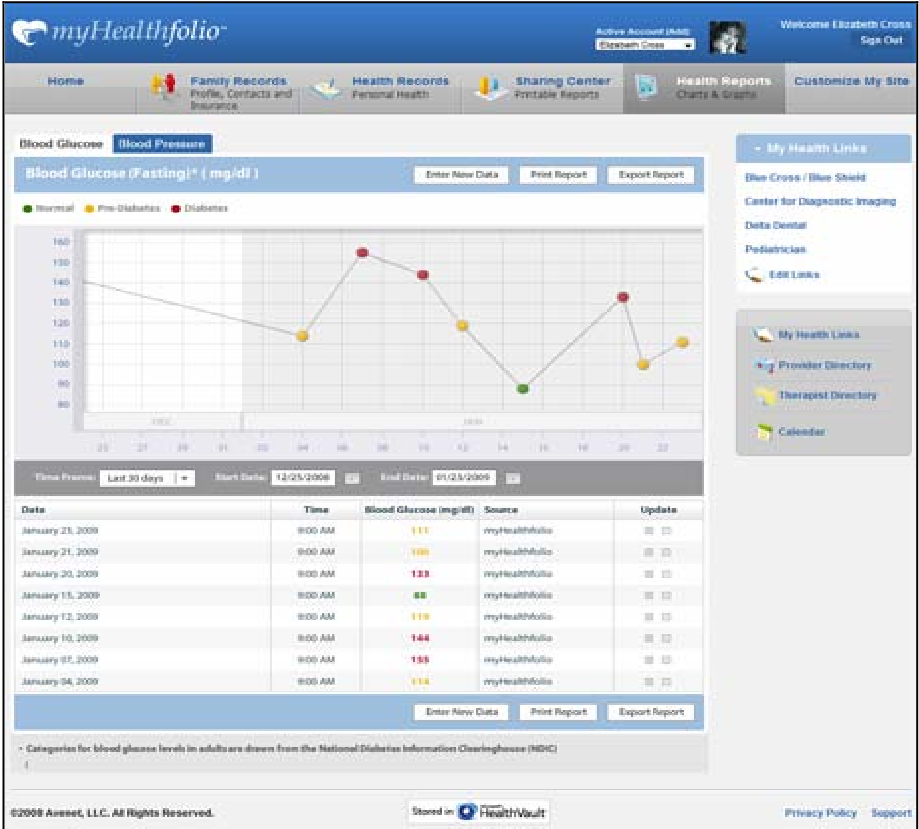 Figure 2: Example of a "Care Team" interface in HealthyCircles, a precursor to modern collaborative health management.
Critical Analysis & The "Privacy Paradox"
The most striking insight is the Human Factor. Even when sophisticated privacy tools are provided, users rarely use them.
- Default Bias: Most users never change default settings.
- Sunken Costs: Once you've spent years building a "Care Team" and history on one platform, you are unlikely to leave, even if the site’s privacy policy worsens. This is "Vendor Lock-in" via personal data.
Future Outlook: Beyond Static Anonymization
The author concludes that we must move toward:
- Visualization Tools: Users need to "see" their network to understand who can see them.
- Transactional Anonymization: Protecting the user during the interaction, not just the static database.
- Temporal Intelligence: Recognizing that the order and timing of friendship connections in a health network are themselves data points that need protection.
Conclusion
This paper serves as a foundational warning for the HealthTech industry. As we move toward more decentralization and AI-driven health insights, the lessons of 2010 remain: technology can facilitate connection, but without rigorous, automated software engineering safeguards, it also facilitates the ultimate loss of personal autonomy.