
From Web 2.0 to Enterprise 2.0: Motivating the Knowledge Worker through Psychological Design
SOCIAL NETWORKING & COLLABORATION
The paper introduces a novel design framework for Enterprise 2.0 based on "Social Computing Interactivity" (SCI). By linking specific interface features to Self-Determination Theory (SDT), the author demonstrates how social platforms can foster intrinsic motivation and knowledge sharing among enterprise workers.
TL;DR
Why do people spend hours on Facebook or YouTube for free, but ignore internal corporate wikis? This paper argues that the secret lies in Social Computing Interactivity (SCI). By designing interfaces that satisfy the human needs for Autonomy, Competence, and Relatedness, organizations can transform passive employees into active contributors.
The "Motivation" Crisis in the Enterprise
When Web 2.0 emerged, it was defined by the "Network Effect": more participation created more value. Enterprises tried to replicate this internally (Enterprise 2.0), but they hit a wall. In the public sphere, use is voluntary and driven by intrinsic joy; in a company, use is often mandated.
The author points out that traditional system design follows the mantra "form follows function"—an objective, cold approach that ignores how the user feels. To fix this, we need a design paradigm that prioritizes emotional and psychological fulfillment.
Methodology: The Social Computing Interactivity (SCI) Framework
The core contribution of this work is the expansion of "Interactivity." Traditional interactivity was about a medium being responsive. The author expands this into a 6-dimensional construct:
- Control: Personalizing layout/content.
- Responsiveness: Speedy, timely feedback.
- Reciprocal Communication: User-to-user and user-to-system exchange.
- Self-Presentation: Features for sharing identity.
- Social Presence: Feeling the digital "breath" of others.
- Deep Profiling: Accessing archival data and reputation.
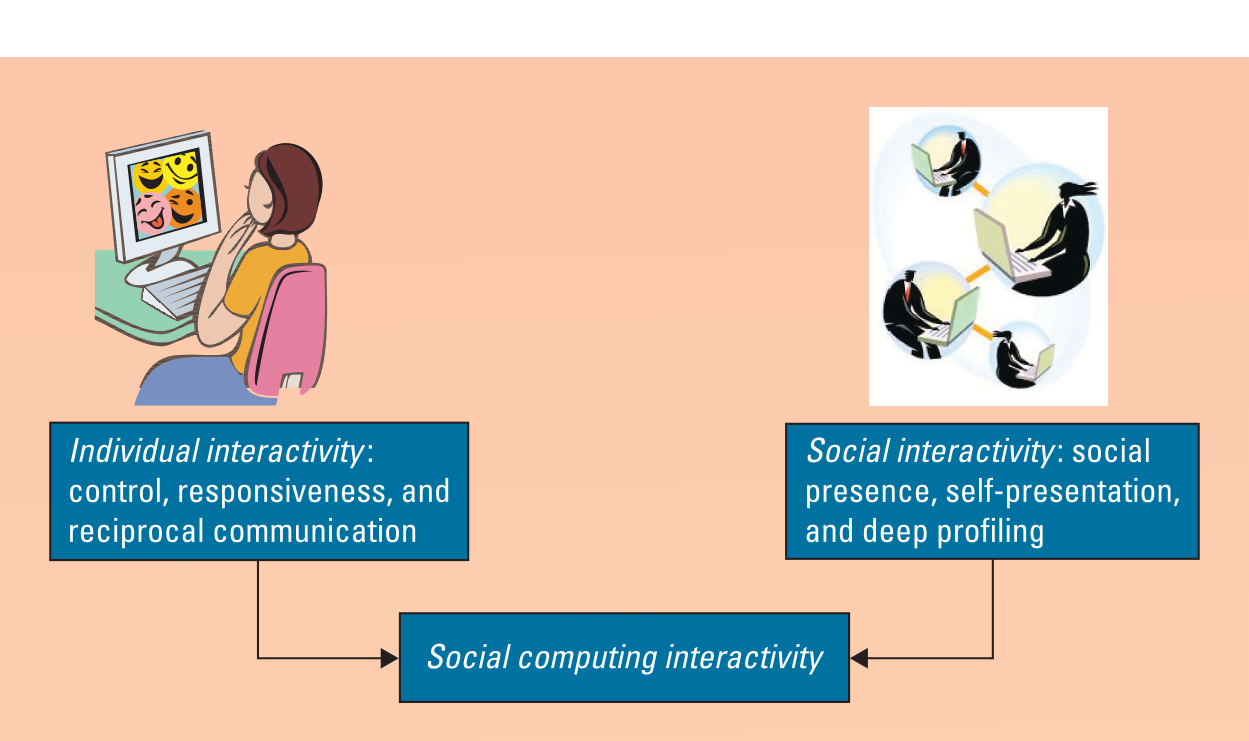
These dimensions are mapped to Self-Determination Theory (SDT). SDT posits that people are motivated when three needs are met:
- Autonomy: The need to be the origin of one's behavior.
- Competence: The need to interact effectively with the environment.
- Relatedness: The need to feel connected to others.
Experimental Insights
The study involved 225 users of social sites (primarily Facebook and MySpace) and used Partial Least Squares (PLS) path modeling to see if these interface features actually triggered need fulfillment.
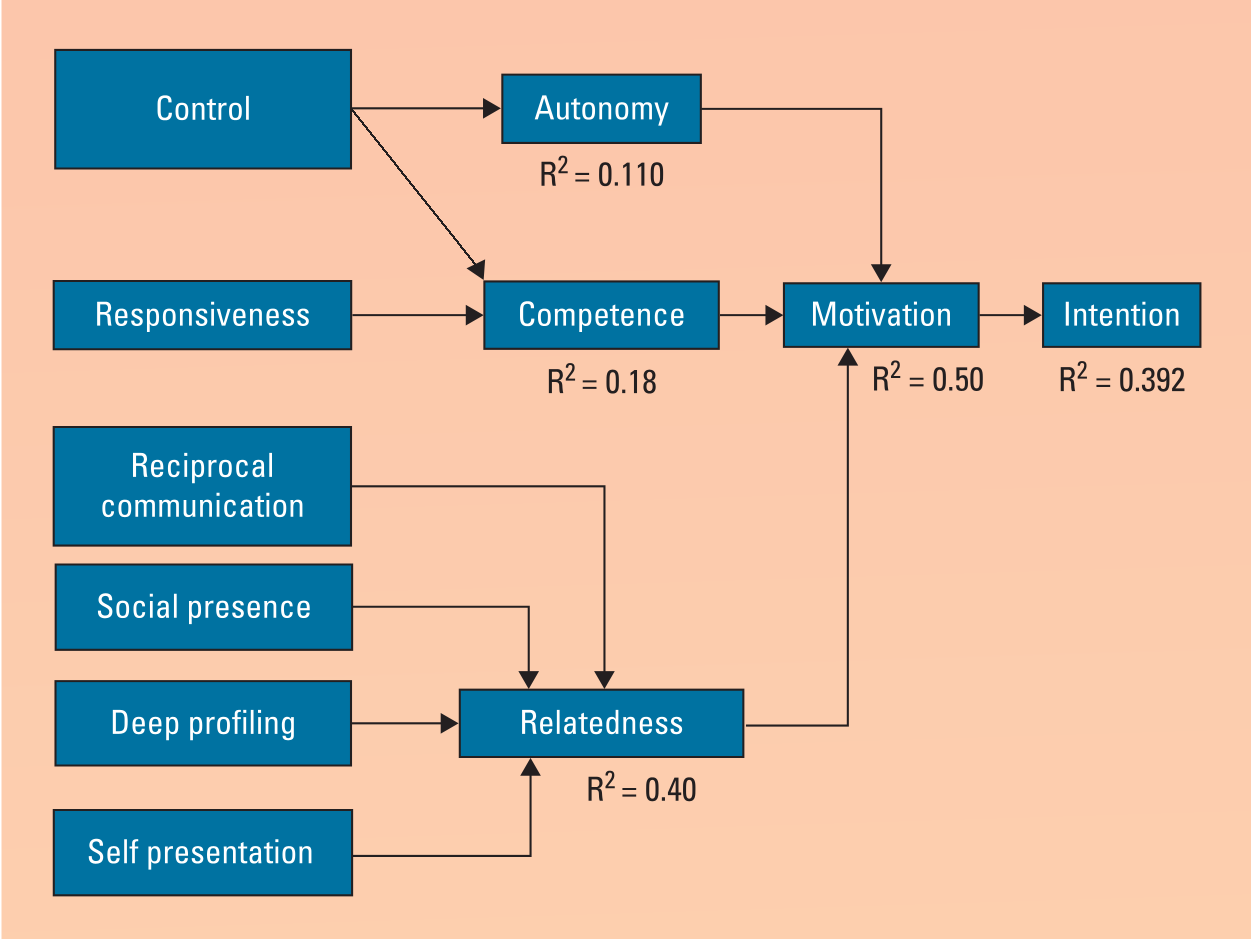
Key Findings:
- Control over data and privacy is non-negotiable for Autonomy.
- Responsiveness and Ajax-based interfaces (no page refresh) make users feel more "Competent" because the system reacts instantly to their mastery.
- Social Presence (e.g., seeing who else is watching a video) and Self-Presentation are the primary drivers of Relatedness.
- Surprisingly, Deep Profiling did not significantly impact Relatedness, suggesting that for these users, archival data matters less than real-time social cues.
Managerial Implications: Designing for Intrinsic Motivation
For managers building internal collaboration tools, the takeaways are clear:
- Don't Overcomplicate: While control is good, too many options (high cognitive load) can alienate users with a low "Need for Cognition." Facebook famously simplified its privacy settings for this reason.
- Simulate Presence: Use "status updates" or "available now" indicators to make the digital workspace feel like a thriving social environment.
- Identity Matters: Allow employees to present themselves—likes, books, expertise—to foster a sense of belonging (Relatedness).
Conclusion
The transition from Web 2.0 to Enterprise 2.0 is not just a technological shift; it is a psychological one. By leaning into the SCI framework, developers can move beyond "utility" and create platforms that employees want to use, rather than have to use. The future of enterprise productivity lies not in stricter mandates, but in interfaces that satisfy our fundamental human needs.