
Social Media for Global Classrooms: Beyond Friendships to Cultural Intelligence
Social networking as a vehicle to foster cross-cultural awareness
This paper investigates the use of a closed online social network (the Cultural Exchange program) to foster cross-cultural awareness among teenagers (ages 14-17) across the USA, India, and Mexico. By employing a mixed-methods approach including social network analysis and co-design sessions, the study demonstrates that active media sharing and specific student roles significantly correlate with the formation of international "friendships."
TL;DR
This study explores a custom-built social network designed for 14-17 year olds to bridge cultural gaps between the US, India, and Mexico. It finds that high engagement—specifically through visual media sharing—is the most reliable predictor of international connections, suggesting that "visuals, not text" should be the primary language of global education.
Contextualizing Digital Cultural Bridges
While Facebook and LinkedIn redefined social and professional networking, their application in formal education remained a "taboo" for years due to privacy and control issues. This paper positions itself as a critical bridge, evaluating whether the mechanics of social networking can be repurposed to facilitate Cross-Cultural Awareness—the ability to interact with different backgrounds with authenticity and respect.
The Problem: The Textual Barrier
Before the rise of modern SNS (Social Network Sites), cross-cultural exchange was limited to "e-pals" or bulletin boards. These relied heavily on text, which is often an insufficient vehicle for "culture," which is inherently sensory—comprised of music, fashion, and visual norms. The authors argue that current tools are either too disconnected (pen pals) or too open (standard Facebook), lacking the safety and directed curriculum needed for deep cultural immersion.
Methodology: Quantifying "Friendship"
The study deployed a closed network for the Carnegie Hall Weill Music Institute’s Cultural Exchange (CE) program. To move beyond qualitative observations, the researchers introduced:
- The Activity Quotient (): A formula to weight various interactions (blogs, photos, videos, friend requests) against the mean activity level.
- Cross-Cultural Scoring: A specific metric to distinguish between "clique-ish" local behavior and genuine international reaching out.
 The mathematical approach used to normalize student engagement across different media types.
Key Insights: Why It Worked
The data revealed a striking "Surprise Connection": Indian and Mexican students, who did not share a direct curriculum strand, still formed strong relationships through the shared digital space.
- The Power of Visuals: Users with international friends posted more media. Images and videos bypassed language barriers that often stifle text-based discussions.
- The Ambassador Effect: Designating "Student Ambassadors" was highly effective; these peers acted as the social "glue," showing significantly higher engagement (p < .001) and paving the way for others.
- The Gravity of Existing Networks: A critical finding was that students quickly tried to move their new international friends from the "educational" network to Facebook. This suggests that educational tools shouldn't fight against existing social habits but rather integrate with them.
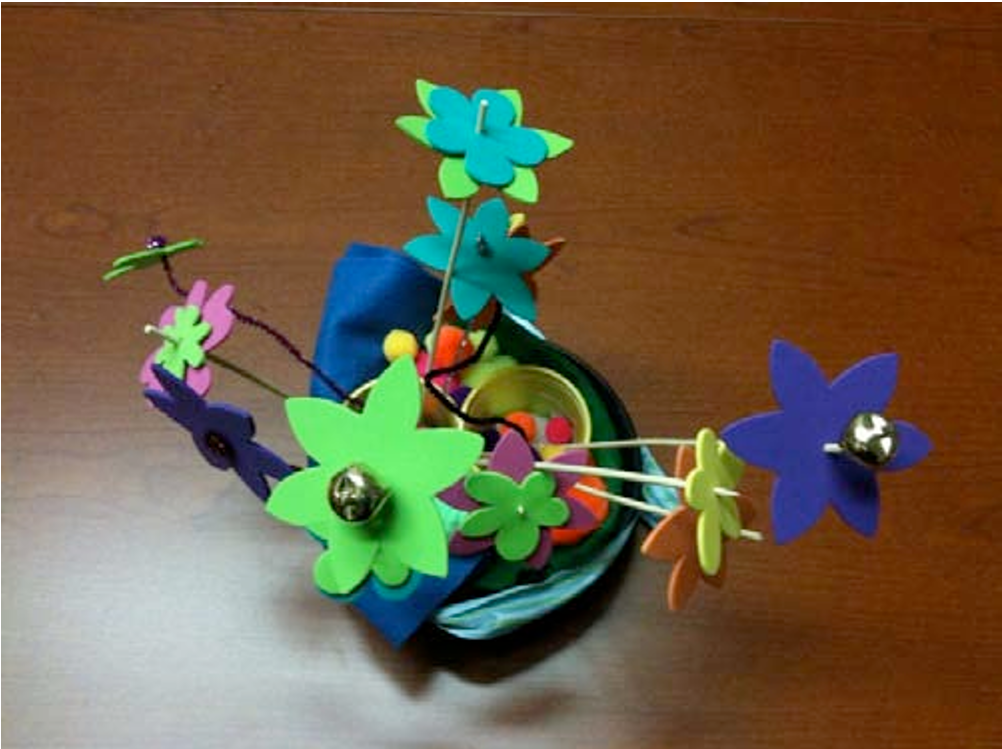 A design artifact from co-sessions: representing friendships as a growing plant—a metaphor for the need for continual interaction to prevent cultural ties from "withering."
Critical Analysis & Future Outlook
The study concludes with three radical recommendations for the EdTech industry:
- Stop Rebuilding the Wheel: Don't build a new social network; build a "safe island" application inside the networks students already use.
- Lingua Franca of Media: Text should no longer be the default. Music, drawing, and video should be the primary ways students communicate culture.
- The "Friendship Plant" Logic: Move away from static "Follow" or "Friend" buttons toward visualizations that show the health and depth of a connection over time.
Takeaway: To foster true global awareness, we must stop asking students to report on their culture and start giving them tools to show it through shared creative interests.