
Connected Green: How Executive Social Networks Drive Corporate Sustainability
Social Networking Influence on Environmental and Corporate Performance
This paper investigates the nexus between board-level social networking and organizational sustainability using data mining on 310 US companies. It identifies two distinct clusters ("Connected Green" vs. "Independent Polluters") and demonstrates that higher executive connectivity correlates with superior environmental governance and financial performance.
TL;DR
Is being "green" a solitary choice or a product of social influence? This study reveals that US companies with highly connected boards are significantly more likely to adopt formal environmental policies and achieve higher financial returns. By analyzing the "board interlocks" of SP1500 companies, the research identifies a "Connected Green" elite that leads the market in both sustainability reporting and Return on Equity (ROE).
The Missing Link: Social Capital and Sustainability
For years, academics have debated whether environmental responsibility helps or hurts the bottom line. However, most studies treat companies as isolated islands. The authors of this paper argue that social networking—the formal and informal ties between directors—is the "hidden hand" shaping corporate behavior.
The core insight is that information regarding climate strategies, regulatory trends, and "green" governance doesn't just appear in annual reports; it flows through professional networks. If a director sits on multiple boards, they act as a bridge, transferring sustainability "know-how" from one organization to another.
Methodology: Mapping the Corporate Web
The researchers utilized a sophisticated data-mining approach to link three disparate realms:
- Social Connectivity: Metrics like Betweenness Centrality and Degree were calculated to determine how "central" a company is in the web of US executives.
- Environmental Performance: Data from the Carbon Disclosure Project (CDP) was used to measure emissions and the maturity of "green" governance.
- Financial Health: Compustat data provided the ROE and Total Assets to ground the findings in economic reality.
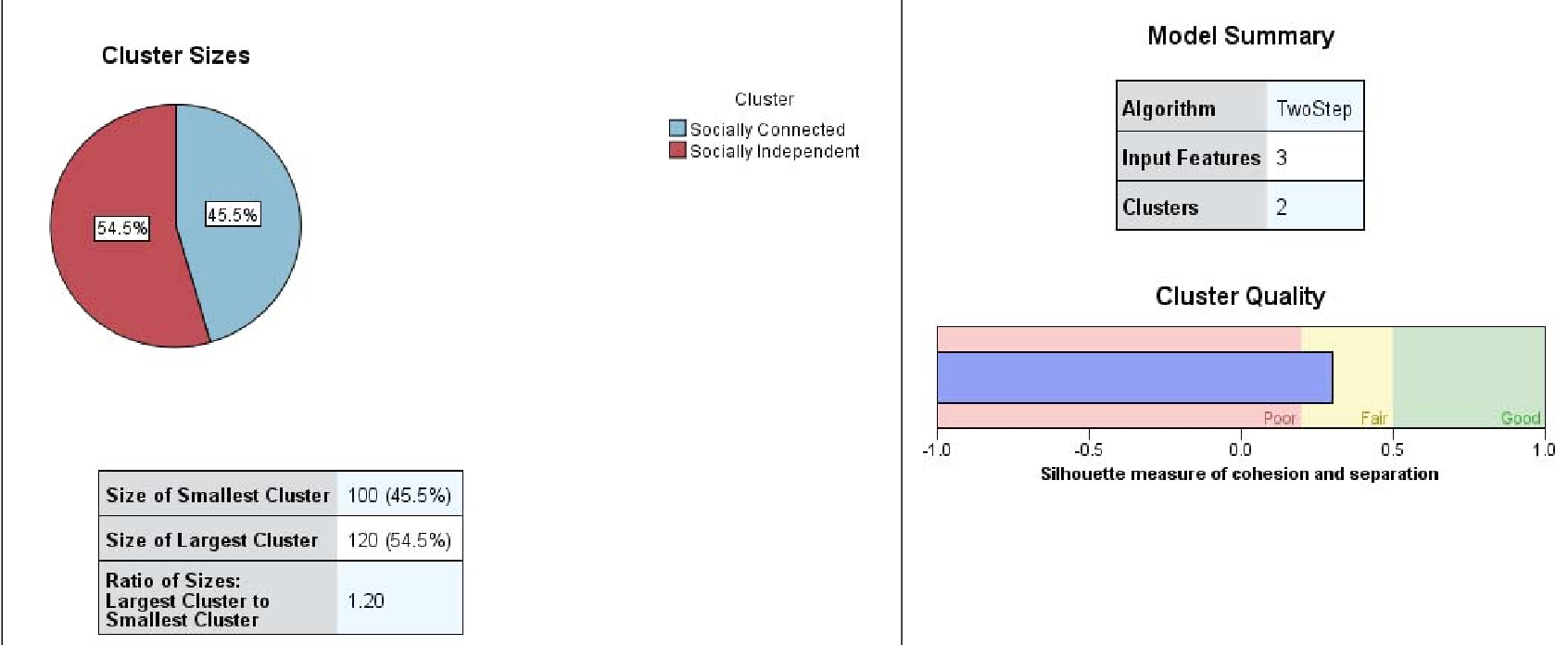 Figure 1: The initial clustering phase identifying high vs. low connectivity groups.
Key Findings: "Connected Green" vs. "Independent Polluters"
The unsupervised TwoStep clustering algorithm naturally split the sample into two distinct groups, revealing a stark contrast in corporate profiles.
1. The "Connected Green" Cluster
- Network Position: These firms are "hubs." They have high Eigenvector Centrality, meaning they are connected to other influential people.
- Environmental Sophistication: 95% have formal climate change committees. They don't just talk; they have individual incentive plans for meeting "green" targets.
- Financial Advantage: This group boasts an average ROE of 0.29—significantly higher than their peers.
2. The "Independent Polluters" Cluster
- Network Position: Isolated or on the periphery of the professional social network.
- Environmental Lag: Lower rates of reporting and fewer formal structures to manage carbon footprints.
- Financial Performance: Much lower ROE (0.09) and generally smaller in size.
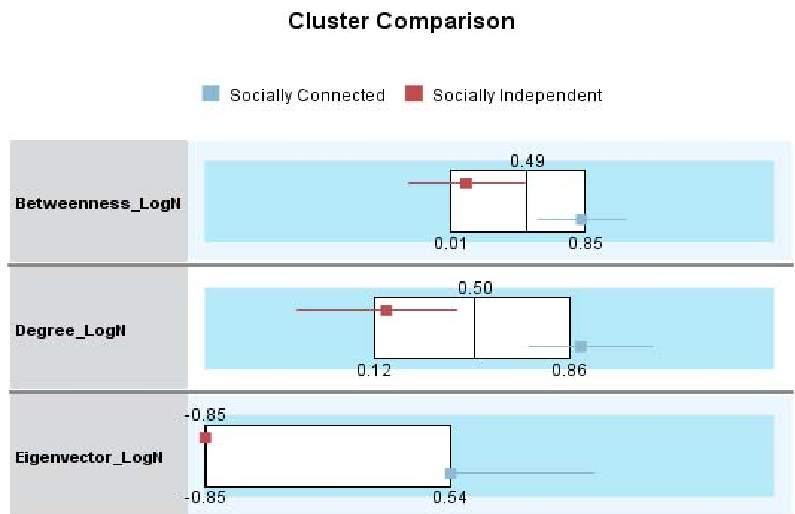 Figure 2: Visualizing the gap between the two clusters across environmental and financial variables.
Critical Insight: Why Does It Work?
The paper suggests that Social Capital facilitates access to better quality information at a lower cost. When "green" strategies become a status symbol or a recognized fiduciary duty within elite executive circles, adoption accelerates. Highly connected boards are less likely to be "Independent Polluters" because they are exposed to the best practices and regulatory pressures hitting their peers.
Strategic Implications & Limitations
Takeaway for Boards: Connectivity matters. Isolation is a risk factor for both environmental laggardness and underperformance. Companies should view their board's social network not just as a source of deals, but as a source of transition intelligence for the climate era.
Limitations:
- The data is a snapshot from 2008; a longitudinal study would be required to prove that connectivity causes green performance (rather than green firms simply attracting connected directors).
- The sample is limited to the US context.
Future Outlook
As ESG reporting moves from voluntary to mandatory globally, the role of social networks in standardizing these metrics will only grow. Future research should leverage Natural Language Processing (NLP) on board minutes to see exactly how "green" topics travel through the network in real-time.
Editor's Note: This paper provides a crucial empirical bridge between Social Network Analysis (SNA) and Corporate Social Responsibility (CSR), proving that the "Green Revolution" is as much about people and connections as it is about technology and policy.