
S-VDS: Transforming Public Surveillance into an Intelligent Social Network
A surveillance system based on social networking and localization
This paper introduces the Surveillance system on Video Diary Service (S-VDS), a novel framework that integrates localization and social networking to track moving targets across multiple cameras. By transforming raw CCTV footage into a "Video Diary," the system maintains continuity of a subject's activities and social interactions throughout a service area.
TL;DR
Existing surveillance is "camera-centric," often losing track of targets as they move between blind spots. This paper proposes S-VDS (Surveillance system on Video Diary Service), which flips the script to "user-centric" monitoring. By combining real-time localization and social networking logic, it creates an automated, continuous video diary of a target’s movements and their interactions with others.
Background Positioning: This work bridges the gap between Location-Based Services (LBS) and traditional CCTV surveillance, introducing a social-aware layer to forensic investigations.
Problem & Motivation: The "Siloed Camera" Challenge
Why is it so hard for police to track a suspect across a city in real-time? Most systems operate in silos; Camera A knows what happened at the corner of 5th Street, but it has no semantic link to Camera B at 6th Street.
The authors identify a critical gap: Contextual Discontinuity. Prior work focused on better image resolution or motion detection within a single frame. The authors’ insight was that the mobile device in the target's pocket provides the "glue" (localization) needed to stitch these isolated video feeds into a coherent narrative—a Video Diary.
Methodology: The Core Architecture
S-VDS is not just about recording video; it’s about metadata-rich archival. The architecture consists of several specialized agents:
- LMS (Location Management Server): Uses GPS, WiFi, or RFID to track the target's coordinates.
- VDA (Video Diary Agent): The "Bridge." It matches the target's coordinates with the coverage area of specific cameras at specific timestamps.
- SNMS (Social Networking Management Server): The most innovative component. If two targets are captured by the same camera simultaneously, S-VDS creates a temporary "social link." This allows investigators to see not just where a person went, but who they were with.
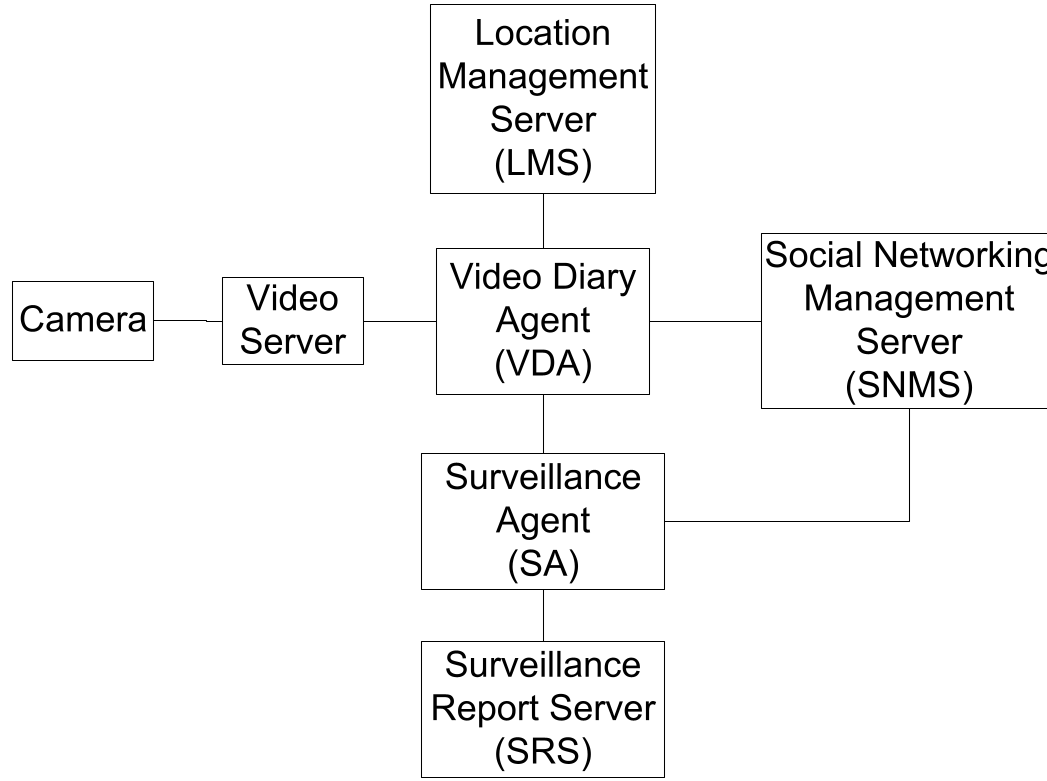 Fig 1: The S-VDS logic flow, moving from localization to social networking management.
Experiments & Real-World Scenarios
The researchers implemented a functional prototype to demonstrate how raw footage is transformed into "Articles." These articles include spatial semantics—knowing that a user was at a "Museum" rather than just a set of GPS coordinates.
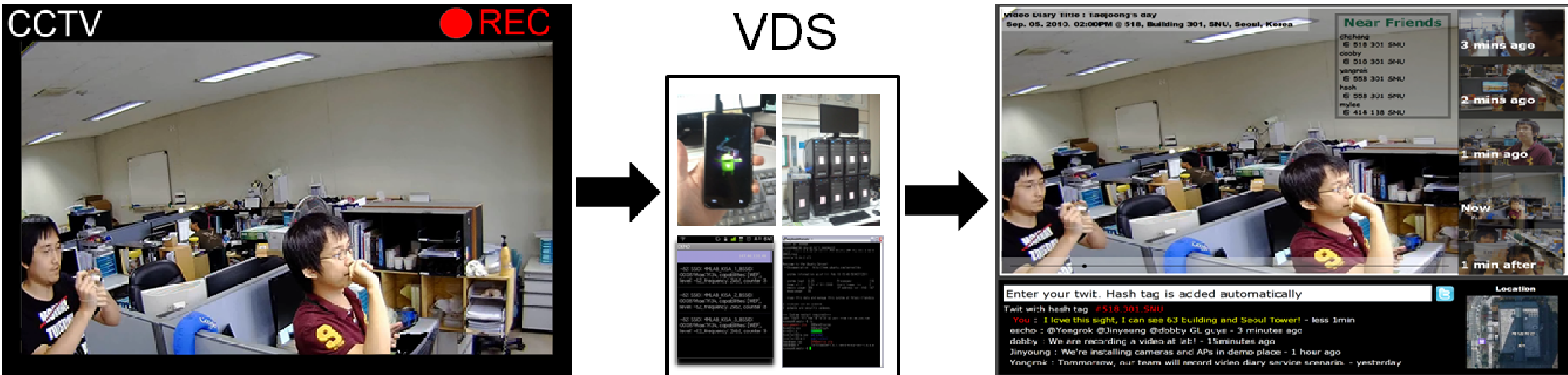 Fig 2: Transforming raw CCTV pixels into a structured Video Diary article with time, location, and tagging.
The paper highlights three high-impact use cases:
- Remote Healthcare: Automatically alerting relatives if an elderly patient's "diary" shows abnormal location patterns (e.g., a fall).
- Anti-Crime: Tracking a criminal’s path and identifying accomplices through the automated social networking links.
- Missing Children: Utilizing the location tags of bystanders (LBS social networking) to help parents find a lost child in a crowded area.
Critical Analysis & Conclusion
Takeaway
S-VDS represents a shift toward Semantic Surveillance. By indexing video with identity and location data, the "searchability" of public safety data increases exponentially.
Limitations & Future Work
The "elephant in the room" is Privacy. The authors honestly acknowledge that a system capable of tracking social relationships and movements through public cameras is a double-edged sword. Future iterations would need robust encryption and strict access control to prevent misuse. Furthermore, the reliance on a mobile device for localization assumes the target wants to be found—a limitation in high-stakes criminal tracking where suspects might ditch their phones.
Despite these hurdles, S-VDS provides a compelling vision for a more "connected" safety net, turning disjointed video streams into a structured, searchable history of our urban environments.