
Social Weight: Repurposing Social Networks as a Weapon Against Obesity
Social Networking for Obesity Prevention and Eradication for Algerian Teenagers
This paper introduces a specialized social networking platform designed for obesity prevention and eradication, specifically targeting the Algerian context. The system, accessible via "helpweightonline.com," creates a structured community where obese individuals, healthcare professionals, families, and fitness experts interact to provide verified medical advice and peer support.
TL;DR
Obesity is a global epidemic exacerbated by the sedentary nature of digital life. This paper introduces a specialized social networking platform that flips the script—transforming the Internet from a cause of inactivity into a community-driven, expert-validated support system. By connecting patients, families, and healthcare providers in a structured Algerian community, the authors provide a framework for obesity prevention through shared experience and verified medical guidance.
Background: The Double-Edged Sword of Connectivity
In the contemporary health landscape, the Internet is often viewed as a villain. Statistics show that as social network usage climbs toward 2.5 billion users globally, physical activity levels plummet. However, researchers Abdelkarim Benatmane and his team argue that the "social" aspect of these networks is also their greatest strength. Since health status is often "contagious" within social circles (obese individuals are more likely to have overweight friends), the cure can also be social.
The Problem: The Inactivity Trap
Existing interventions often fail because they are either too isolated (individual mobile apps) or too unverified (general social media groups where misinformation flourishes). The core challenge is creating a digital environment that:
- Encourages movement rather than mindless scrolling.
- Provides medical advice that is trustworthy and tailored.
- Leverages peer pressure and success stories in a positive way.
Methodology: A Verified Ecosystem
The proposed system, hosted at helpweightonline.com, is built on five pillars: Awareness, Prevention, Support, Positivity, and Information Sharing.
The Interaction Architecture
Unlike Facebook or Twitter, the "Social Networking for Obesity Prevention" platform follows a strict hierarchical interaction model to ensure safety:
- Expert Validation: Any medical advice, dietary suggestions, or exercise routines shared by regular members MUST be approved by a physician, dietician, or gym coach before appearing to the wider community.
- Privacy Guardrails: Detailed medical data is restricted to healthcare professionals, maintaining a balance between public motivation and private health security.
- The Experience Loop: Successfully treated members are encouraged to become mentors, sharing their journey to inspire others under the supervision of experts.
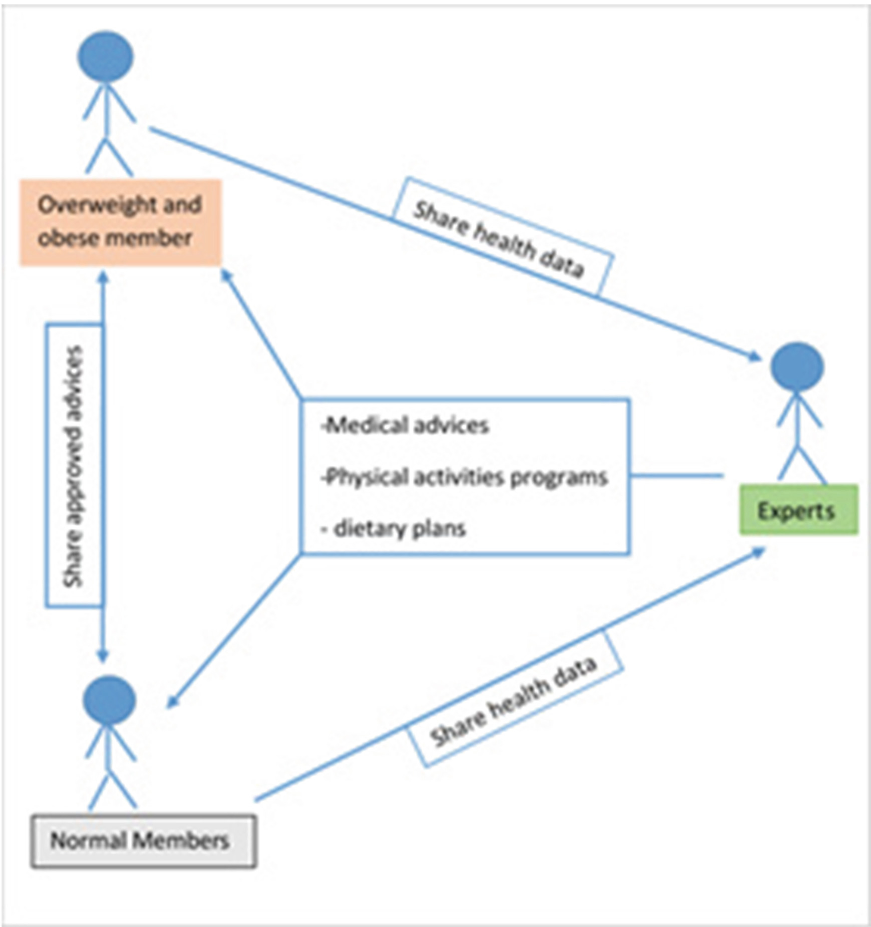 Figure 1: The proposed multi-stakeholder interaction model including experts (P, G, D) and community members (Y, Z, N).
Experimental Insights: Community Success
The paper validates its approach by analyzing the Shape Up Somerville (SUS) intervention. By involving schools, restaurants, and digital outreach, the community saw a statistically significant reduction in BMI z-scores among participants.
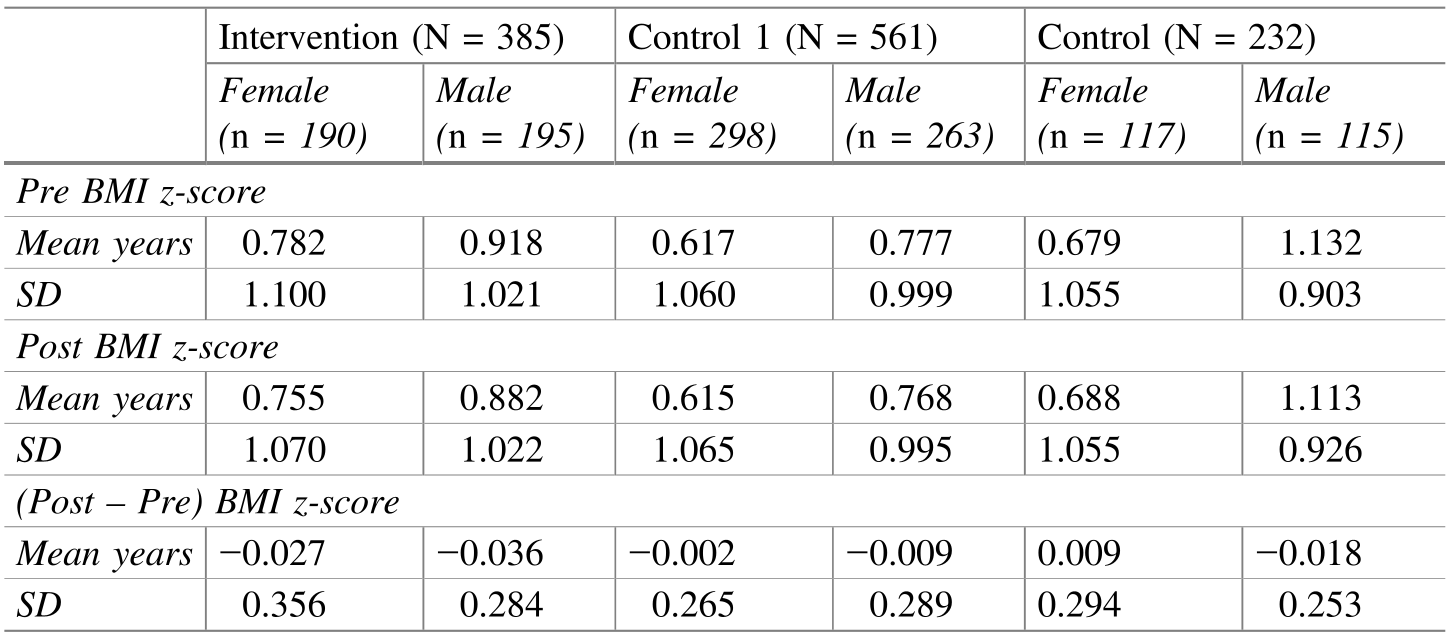 Table 1: Comparative analysis showing the decrease in BMI z-scores in the intervention group (-0.027 to -0.036) vs. control groups.
The study demonstrates that when a community—both physical and digital—aligns its environment (from school breakfasts to social media feeds), the physiological impact is measurable.
Critical Analysis & Conclusion
Takeaway
The value of this work lies in its Human-in-the-Loop design. By making physicians and coaches "moderators" of the social experience, the platform mitigates the risk of "bro-science" and dangerous fad diets while retaining the high engagement of a social meta-layer.
Limitations & Future Work
While the web implementation is a strong start, the paper notes that mobile applications are the next frontier. In an Algerian context, mobile penetration is key. Furthermore, the system relies heavily on the voluntary participation of experts; future updates might explore incentive mechanisms (Professional Reputation points or CE credits) to keep healthcare providers active on the platform.
Ultimately, this research proves that the same digital tools currently contributing to our sedentary lifestyle can be re-engineered to become our most powerful allies in the fight for global health.