
Visuals Over Utility: Deciphering Homestay Intentions in Vietnam via GM(1,N) Modeling
Finding the Social Networking Service Factors of Homestay Intention in Vietnam Based on GM(1, N) Model
This research applies the GM(1,N) grey system model to identify the key social networking service (SNS) factors influencing homestay travel intentions in Vietnam. Utilizing data from 220 respondents, the study concludes that visual and interest-sharing functions (Interest, Photo, and Video sharing) are the primary drivers of consumer intent.
Executive Summary
TL;DR: This study investigates what makes travelers choose homestays in Vietnam by analyzing 14 specific social media functions. Using the GM(1,N) grey model, the research discovers that "sharing interests," "photos," and "videos" are the most powerful predictors of travel intention, while functional tools like "planning" and "decision support" have surprisingly little impact.
Background: Within the landscape of Social Computing, this work acts as a bridge between mathematical grey system theory and tourism marketing, providing a quantitative ranking of SNS "features" in a high-growth emerging market.
The "Small Data" Challenge in Tourism
Predicting consumer behavior in the tourism sector is notoriously difficult because travel decisions are often emotional rather than purely rational. In the context of Vietnam's burgeoning homestay market, traditional statistical methods often require massive datasets to achieve reliability. The authors identified a gap: we know social media matters, but we don't know which specific buttons (sharing, searching, or planning) actually drive the conversion from a casual browser to a confirmed guest.
Methodology: Why the Grey Model?
The authors chose the GM(1,N) model—a variant of Grey System Theory. Unlike traditional regression which requires large samples and normal distributions, the Grey Model excels with "small samples and poor information." It treats the relationship between SNS functions and traveler intention as a "Grey" system (partially known, partially unknown).
System Architecture
The model follows a rigorous 6-step process:
- AGO (Accumulated Generating Operation): Transforming raw, potentially oscillating survey data into a monotonically increasing sequence to reduce noise.
- Grey Differential Equation: Mapping the 14 influencing factors ( to ) against the system behavior (, Homestay Intention).
- Weight Estimation: Solving for values to determine the strength of the relationship.
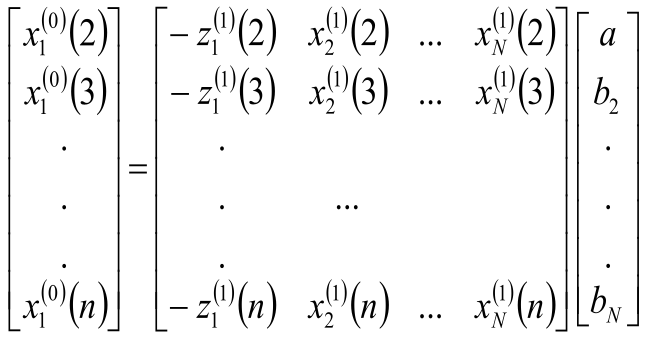 The GM(1,N) matrix equation used to resolve factor weights.
Key Findings: The Power of the Image
The results from the 220-respondent survey (primarily Facebook users in the 21-30 age bracket) provided a clear hierarchy of influence:
| Rank | Factor | Weight () |
|---|---|---|
| 1 | Sharing Interest | 0.6797 |
| 2 | Sharing Photo | 0.6309 |
| 3 | Sharing Video | 0.5660 |
| 14 | Helping Planning | 0.0266 |
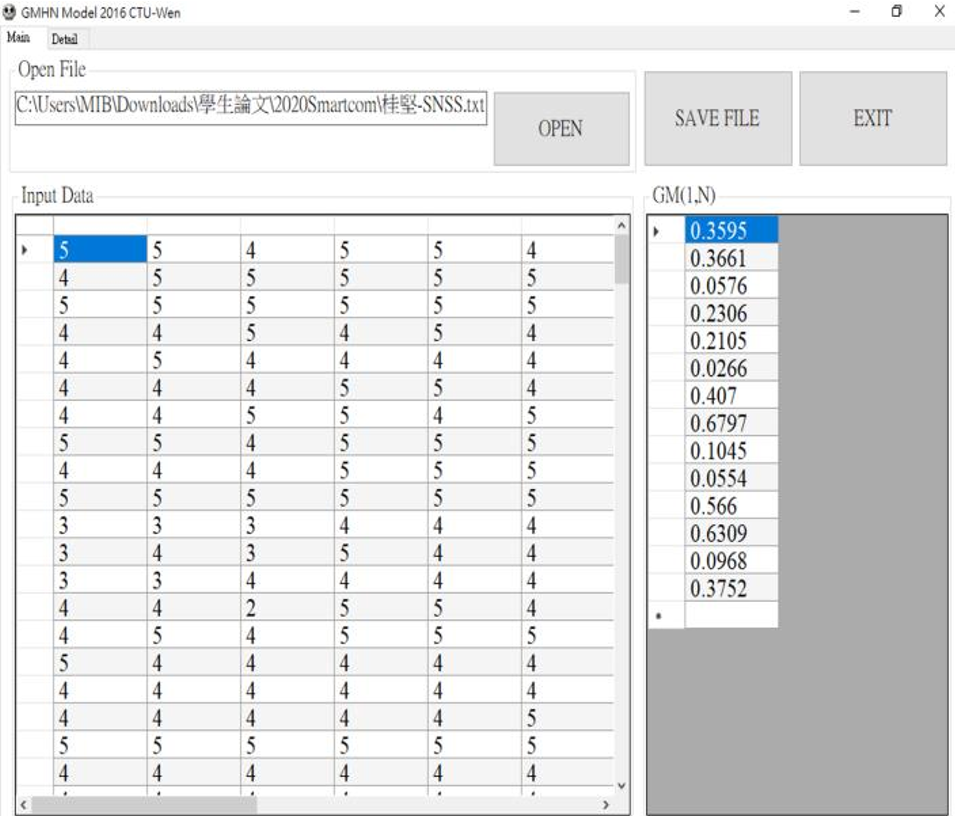 Fig 1. Model verification showing the fit between observed and predicted values.
The Insight: "Inspiration over Interaction"
The data suggests a profound shift in how SNS is used for travel. Consumers prioritize legible, high-signal content (Photos/Videos) and psychological alignment (Interests) over the functional utility of the platform. They don't want the SNS to "help them plan" or "make the decision" for them; they want the SNS to provide the aesthetic and social proof needed for them to exercise their own autonomy.
Critical Analysis & Business Implications
Takeaway for Vendors: If you are running a homestay in Vietnam, stop investing in complex booking bots or detailed text-based blogs. Instead, focus on:
- User-Generated Content (UGC): Encourage guests to share high-quality photos.
- Niche Interests: Tag content with specific lifestyle interests (e.g., "rural life," "traditional cooking") rather than just "accommodation."
Limitations: The study relies on convenience sampling, which may lean heavily towards younger, tech-savvy urbanites in Vietnam. Furthermore, while the GM(1,N) model is robust for small samples, it assumes a linear-like influence that may not capture complex psychological feedback loops between different SNS functions.
Future Outlook: This research sets the stage for "Personalized Sharing" as a dominant marketing frontier. Future studies could apply the GM(h,N) model (higher-order) to see if the interaction between photo-sharing and video-sharing creates a synergistic effect that further boosts traveler intention.