
Manga & Social Media: Reforming Strategic Design through Casual Data
The utilization of Social Networking Service and Japanese manga in strategic user generated design
This research introduces a novel online service for Strategic User Generated Design (UGD) that integrates Social Networking Services (SNS) with Japanese manga. By utilizing Twitter as a communication medium and morphological/syntax analysis to process "casual data," the system facilitates a collaborative environment between developers and consumers.
TL;DR
In the age of rapid digital transformation, traditional market research often fails to capture the "messy" but rich aspirations of consumers. This paper proposes a system that bridges this gap by leveraging Twitter (SNS) for data collection and Japanese Manga for creative expression. By analyzing "casual data" through syntax analysis and inviting users to draw narratives, the authors create a "User Generated Design" (UGD) ecosystem where consumers become co-creators rather than just survey respondents.
The Motivation: Why Surveys Aren't Enough
Traditional product development relies on structured feedback, which often misses the latent needs of the user. Consumers often don't know what they want until they see it, or they lack the vocabulary to describe innovative concepts.
The researchers identified two major hurdles:
- Understanding Aspiration: How do you turn a random tweet into a product requirement?
- Engagement: How do you make the design process interesting enough for users to contribute high-quality ideas?
Their insight was to use Casual Data—the unstructured, emotional snippets of conversation on SNS—translated via a rigorous linguistic framework.
Methodology: The Core Engine
The system's technical backbone is divided into two distinct parts that work in a feedback loop.
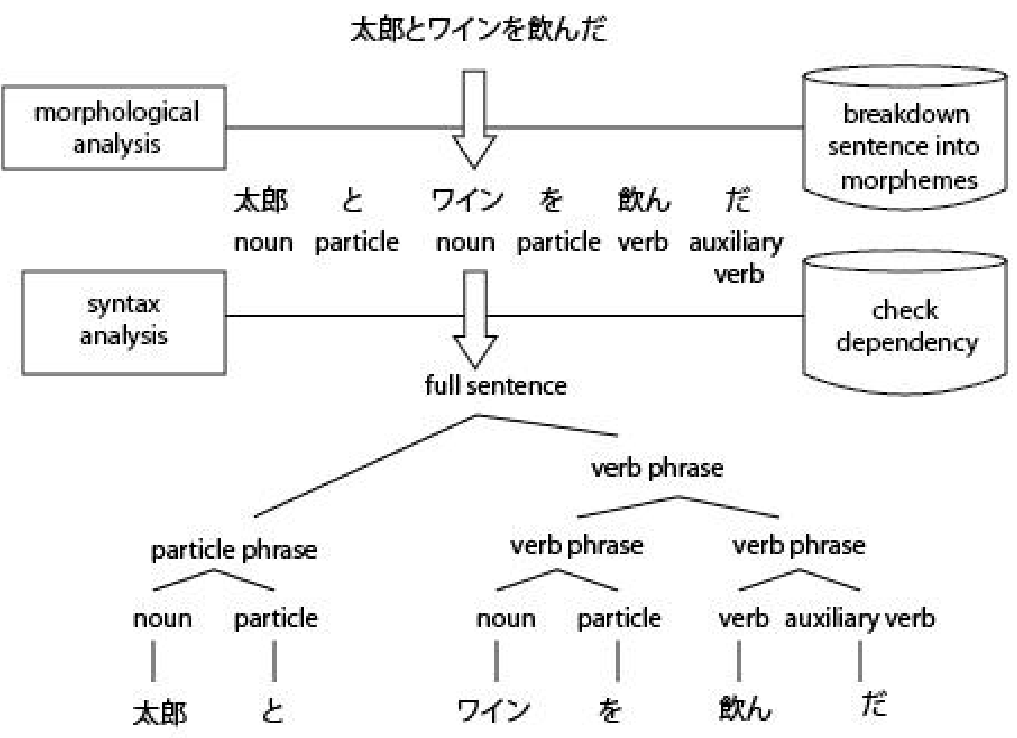
1. Syntax Analysis & Visualization
To process unstructured text, the system utilizes Japanese Morphological Analysis and Dependency Parsing. This isn't just about counting keywords; it’s about understanding the relationships between them (e.g., identifying that "automatic" refers to "car" and "not" refers to "tires").

By mapping these dependencies, the system creates a Visualization Graph. The size of the nodes represents frequency, while the thickness of lines represents the strength of the syntactical relationship. This allows developers to see "clusters of desire" at a glance.
2. Manga as a Narrative Design Tool
While sketches provide a visual of a product, Manga provides a narrative. Manga explains the How and Why—the context in which a product is used, its limitations, and the user's emotional journey. This "Manga Part" allows hobbyists to express their creativity while providing manufacturers with rich, scenario-based insights.
The Design Loop in Action
The workflow is elegant in its simplicity:
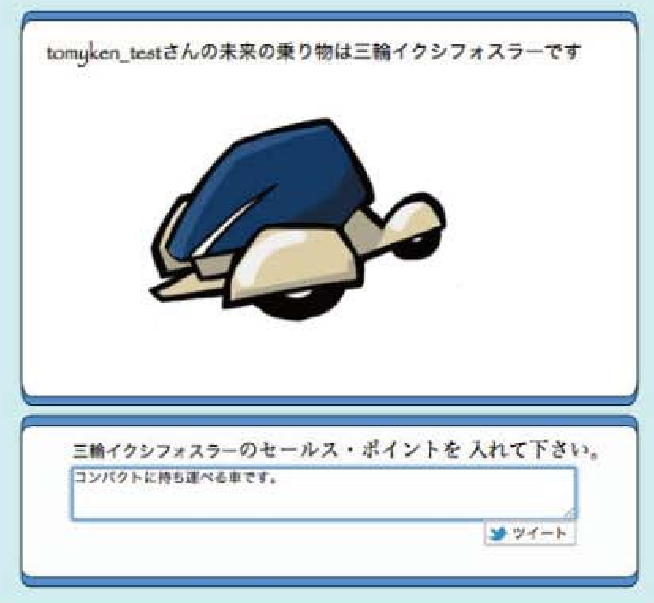
- Phase 1: Users (Respondents) post opinions on Twitter triggered by conceptual sketches.
- Phase 2: The system analyzes these tweets, identifies hot themes, and generates "Design Themes."
- Phase 3: Contributors (Manga enthusiasts) create original manga based on these themes.
- Phase 4: Feedback is returned to the developer, and the cycle continues.
Critical Analysis & Future Outlook
The beauty of this research lies in its respect for the hobbyist culture. By turning product feedback into a creative outlet (manga), the quality of data improves significantly compared to dry, unrewarding surveys.
Limitations:
- Language Barrier: The current prototype is strictly optimized for Japanese syntax. Expanding this to English or other languages would require different dependency parsers.
- Scalability: Manual review of manga entries is still necessary, though the authors suggest syntax analysis helps in setting the themes.
Future Prospects: With the rise of AI-generated art (Stable Diffusion, Midjourney), one could imagine an extension of this work where user "casual data" is instantly transformed into visual storyboards, further lowering the barrier for consumer participation in the design process.
In conclusion, this paper serves as a vital first step toward a more empathetic and strategic design methodology that values the "casual" voice of the consumer just as much as the professional voice of the producer.