
CRB-Model: Transforming Social Networks into Decentralized Cloud Marketplaces
Social Networking for Sharing Cloud Resources
This paper introduces the Cloud Resource Bartering model (CRB-model), a social-cloud framework that enables users to share idle virtualized computing resources via social networks. By leveraging platforms like Facebook and AWS EC2, it creates a trust-based marketplace where resources are traded without monetary transactions.
TL;DR
The Cloud Resource Bartering (CRB) model bridges the gap between social connectivity and high-performance computing. It allows users to trade idle Amazon EC2 instances with "friends" on Facebook based on trust rather than currency. By introducing Social Service Level Agreements (SSLA) and LXC-based sandboxing, the authors provide a secure, cost-effective way for hobbyists and researchers to access cloud power.
Problem & Motivation: The High Cost of Loneliness in the Cloud
Cloud computing is inherently elastic, yet its economic model remains rigid. Individual users often pay for virtual machines (VMs) that sit idle for hours, while others—particularly in developing nations or small scientific communities—cannot afford the "entry fee" for a dedicated instance.
Prior attempts at sharing, like Volunteer Computing (e.g., SETI@home), suffered from anonymity and accountability issues. Users had no reason to trust providers, and providers had no guarantee that "tenants" wouldn't abuse their resources. The authors' insight is simple: Leverage existing social trust. If you trust someone enough to be their friend on Facebook, you are more likely to barter computing power with them.
Methodology: The Architecture of a Social Cloud
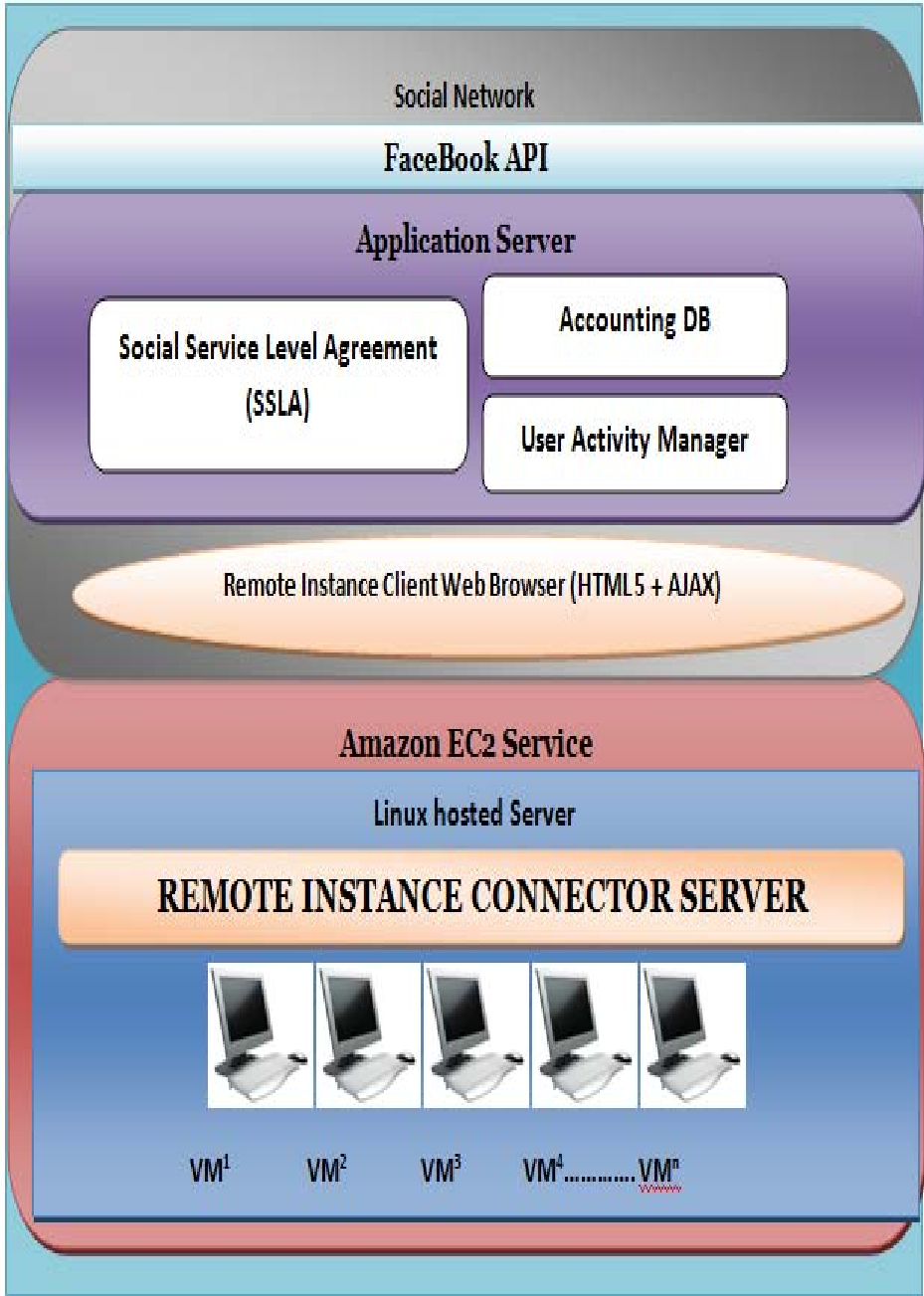
The CRB system acts as a middleware layer between social platforms and cloud providers. The core components include:
- Social Connectivity: Identifying a trust circle using the Facebook Graph API.
- The Bartering Engine: Replacing monetary payment with reciprocal "favors" governed by an SSLA.
- Secure Access (The Technical Hurdle): Sharing an entire VM is risky. The authors implemented Nested Virtualization. By running Linux Containers (LXC) inside an AWS EC2 instance, the owner can "sandbox" the tenant, granting access to only a fraction of the CPU/RAM without exposing the host system.
Remote Access without Plugins
A standout feature is the integration of Guacamole, an HTML5-based remote desktop gateway. This allows tenants to use the shared VM directly in their web browser, removing the need for complex SSH keys or RDP clients for the end-user.
Experiments & Results: Making Bartering Practical
The authors deployed a prototype where AWS EC2 serves as the resource pool and Facebook as the interface.
- User Registration: Owners register their instances and set terms (e.g., "shared for 4 hours in exchange for storage").
- User Activity Manager (UAM): This module tracks whether tenants abide by the SSLA, providing the accountability that anonymous systems lack.
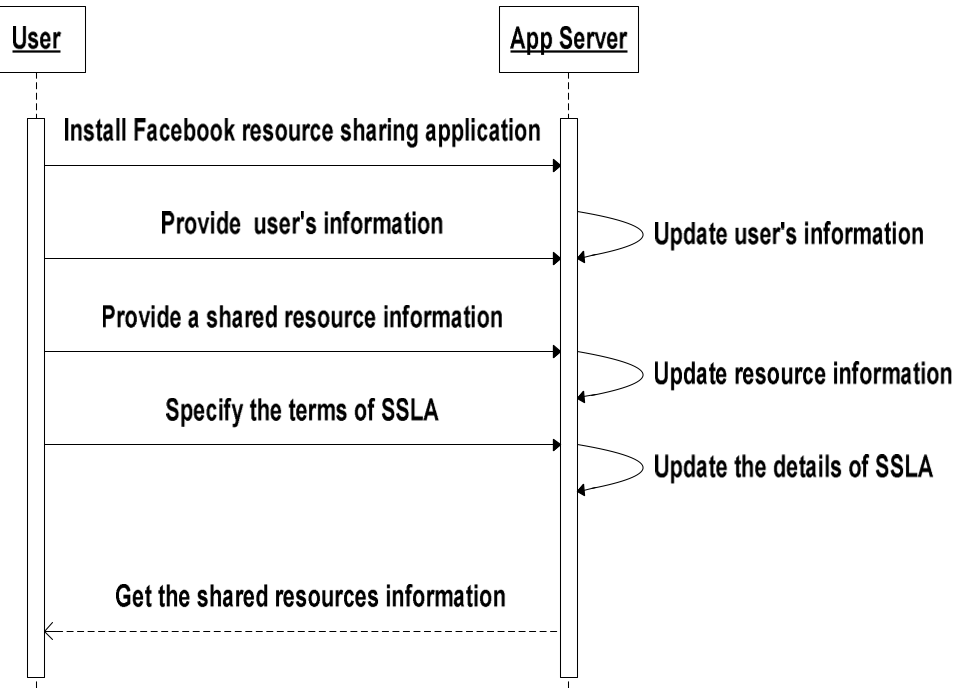
The results confirm that nested virtualization via LXC efficiently isolates users while maintaining acceptable performance on commercial clouds. This allows for "fractional sharing"—where one large instance can be partitioned among multiple social connections.
Critical Analysis & Future Outlook
Conclusion (Takeaway)
The CRB-model proves that social graphs are a viable foundation for a "Green Social Cloud." By maximizing the utility of already-paid-for instances, it reduces specialized hardware demand and lowers the barrier to entry for citizen scientists.
Limitations
While the trust model is strong, it relies on the availability of the host. If the owner's instance shuts down, the tenant's work is interrupted. Additionally, while LXC provides process isolation, it may not be as secure as hardware-level virtualization against sophisticated side-channel attacks.
Future Directions
The logical next step is exploring OpenSocial to move beyond Facebook exclusivity and incorporating Auction-based models for scenarios where trust isn't high enough for simple bartering. This work maps a clear path toward a more democratic and environmentally conscious cloud ecosystem.