
Beyond the Panic: Does Social Networking Actually Harm Our Children?
Does the use of social networking sites increase children’s risk of harm?
This study investigates whether Social Networking Site (SNS) usage increases online risks and harm for children using a large-scale survey of 25,000 European minors. It employs logistic regression to identify how SNS affordances and user practices—rather than just the platforms themselves—correlate with exposure to bullying, sexual content, and meeting strangers.
TL;DR
A comprehensive study of 25,000 European children reveals that while Social Networking Sites (SNS) do increase exposure to online risks, the "harm" is not a direct consequence of the platform itself. Instead, it is the way children use these sites—their privacy settings and contact habits—and their own psychological resilience that determine whether a digital encounter becomes a damaging experience.
The "Digital Panic" vs. Empirical Reality
For years, headlines have suggested that social media is a digital wilderness where children are constantly under threat. But scholars Elisabeth Staksrud, Kjartan Ólafsson, and Sonia Livingstone argue that we have been looking at the problem through a distorted lens. The core issue isn't just "what" children are using, but "how" they are using it.
The researchers identified a critical gap: the conflation of Risk (the probability of an encounter) with Harm (actual physical or mental damage). Previous policy efforts aimed at "digital literacy" often assumed that smarter kids would avoid risks. This paper flips that logic on its head.
Methodology: A Pan-European Deep Dive
The study utilized a massive, random stratified sample of internet-using children across 25 countries. By using private self-completion questionnaires for sensitive topics (like sexual messaging and bullying), the researchers created a high-integrity dataset to test the nuances of computer-mediated communication (CMC).
The Research Logic
The authors explored whether the "affordances" of SNS—persistence, searchability, and invisible audiences—inherently drive children toward risky behavior, or if individual competence acts as a shield.
Key Findings: The Paradox of Competence
One of the most striking findings is the Paradox of Digital Competence. While one might expect "tech-savvy" children to be safer, the data shows the opposite:
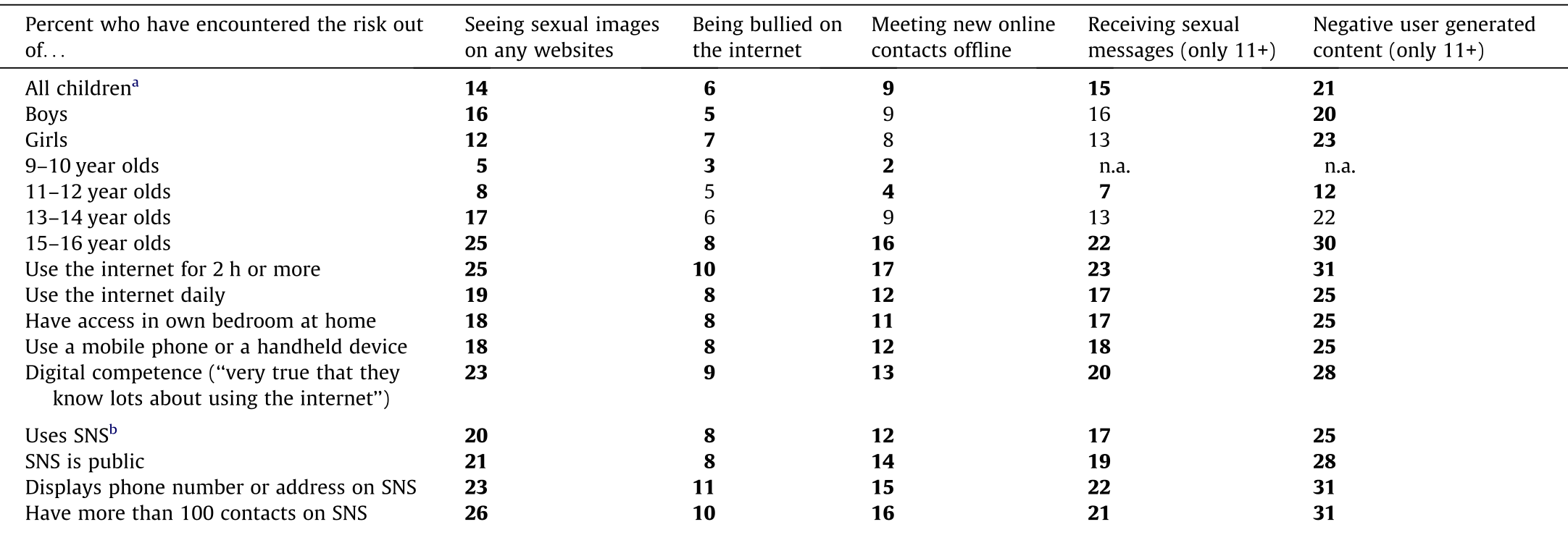
- Competence = Exploration: Children who reported high digital competence were 20-30% more likely to encounter risks.
- The Reason: Skill acts as an empowerer. More skilled children use more features, spend more time online, and venture into more diverse digital spaces, which naturally increases their "surface area" for risk.
Breaking Down the Risks
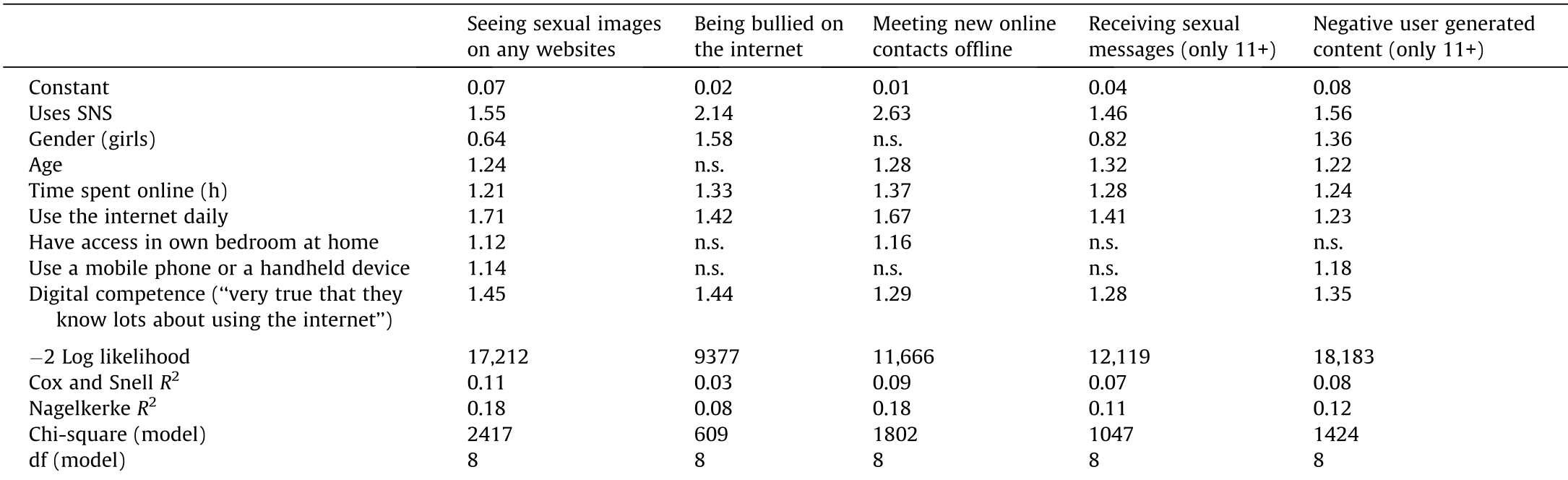
When comparing SNS users to non-users, the odds ratios were stark:
- Meeting Online Contacts Offline: SNS users are 2.63x more likely to do this.
- Cyberbullying: The risk doubles (OR 2.14) for children on social platforms.
- Practice Over Platform: Specifically, having a public profile and 100+ contacts were the strongest predictors of risk, not the mere presence of an account.
Why SNS Use Doesn't Equal Harm
The most vital takeaway of this research is the decoupling of risk and harm. The study found that once you control for the specific risks encountered (like bullying), SNS use itself does not increase the likelihood of a child being "bothered or upset."
In fact, the platform matters less than the communicative context. For instance, bullying via Instant Messaging was found to be significantly more upsetting than bullying on gaming sites. This suggests that intimacy and the "closeness" of the platform affordance change how harm is processed.
Critical Insight: The Future of Digital Safety
The study concludes that "Safety by Default" is the only sustainable path forward. Since digital competence often encourages more risk-taking, we cannot rely solely on teaching children to be "smarter" users.
Takeaways for Parents and Policy Makers:
- Focus on Practices, Not Presence: Deleting a child's SNS account may not be as effective as ensuring their profile is private and their contact list is restricted to known friends.
- Privacy by Design: Developers must make privacy settings intuitive and "opt-out" rather than "opt-in."
- Resilience Matters: Education should focus on psychological resilience—helping children cope when things go wrong—rather than just technical skills meant to prevent exposure.
Conclusion
Social networking is now a fundamental part of the social fabric of childhood. This paper demonstrates that while the "digital jungle" has many paths, the risk of getting lost depends more on the tools of the traveler and the gates they leave open than the jungle itself.