
Beyond the Feed: Do Social Media Interactions Actually Drive Service Innovation?
Examining the Impact of Social Networking Sites on Performance of Service Firms: Evidence from Romania
This study investigates the impact of Social Networking Sites (SNSs) on the business performance of Romanian service firms, primarily using Structural Equation Modelling (SEM). While the findings confirm a direct positive link between SNS usage and business performance, they surprisingly reveal that service innovation does not act as a mediator in this specific context.
TL;DR
This research examines whether Social Networking Sites (SNSs) like Facebook and LinkedIn actually improve the bottom line of service firms through innovation. By analyzing Romanian service companies, the study finds that while SNSs directly boost sales and market share, they are currently not being effectively used to fuel the innovation process itself.
Problem & Motivation: The "Usage vs. Value" Gap
Most managers intuitively feel that being "active on social media" is good for business. However, the academic community has struggled to pinpoint why. Is it because social media helps firms invent better services (Service Innovation), or is it just a megaphone for marketing?
The authors identified a gap: while previous studies focused on R&D or general innovation, few looked at how the informal, dynamic nature of SNSs interacts with the specific needs of service firms—where customer co-creation is vital.
Methodology: Testing the Path
The researchers developed a conceptual model to test the pathways between SNS usage, Service Innovation (SI), and Business Performance (BP).
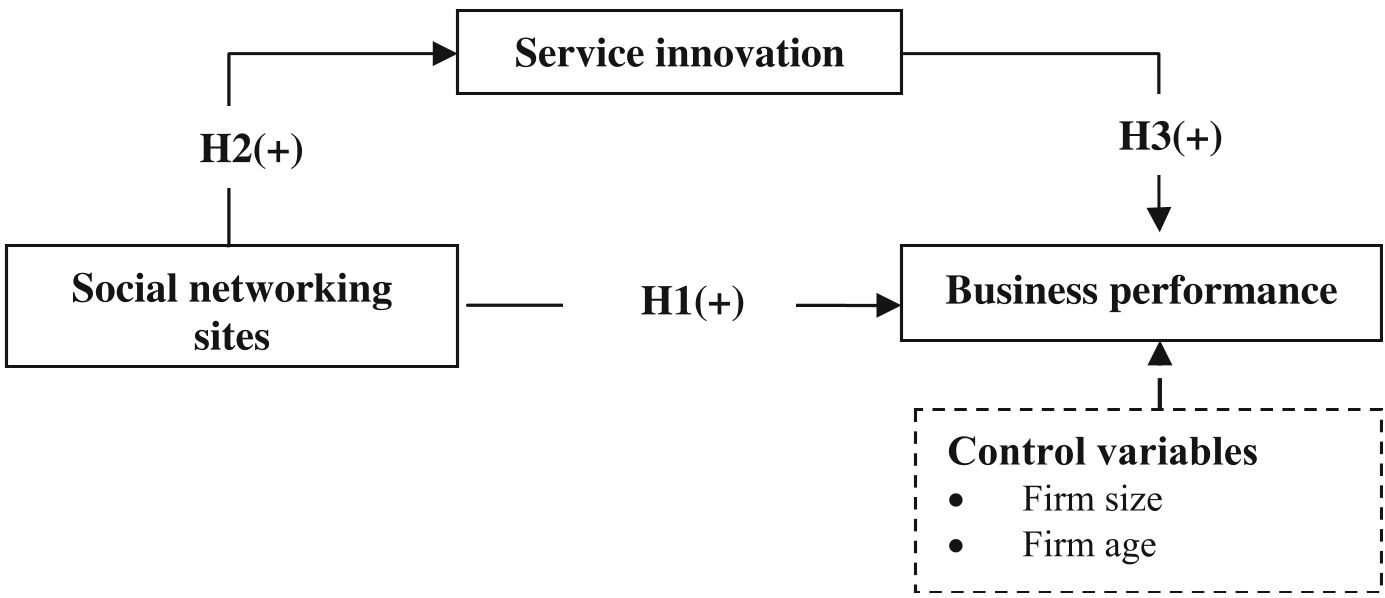
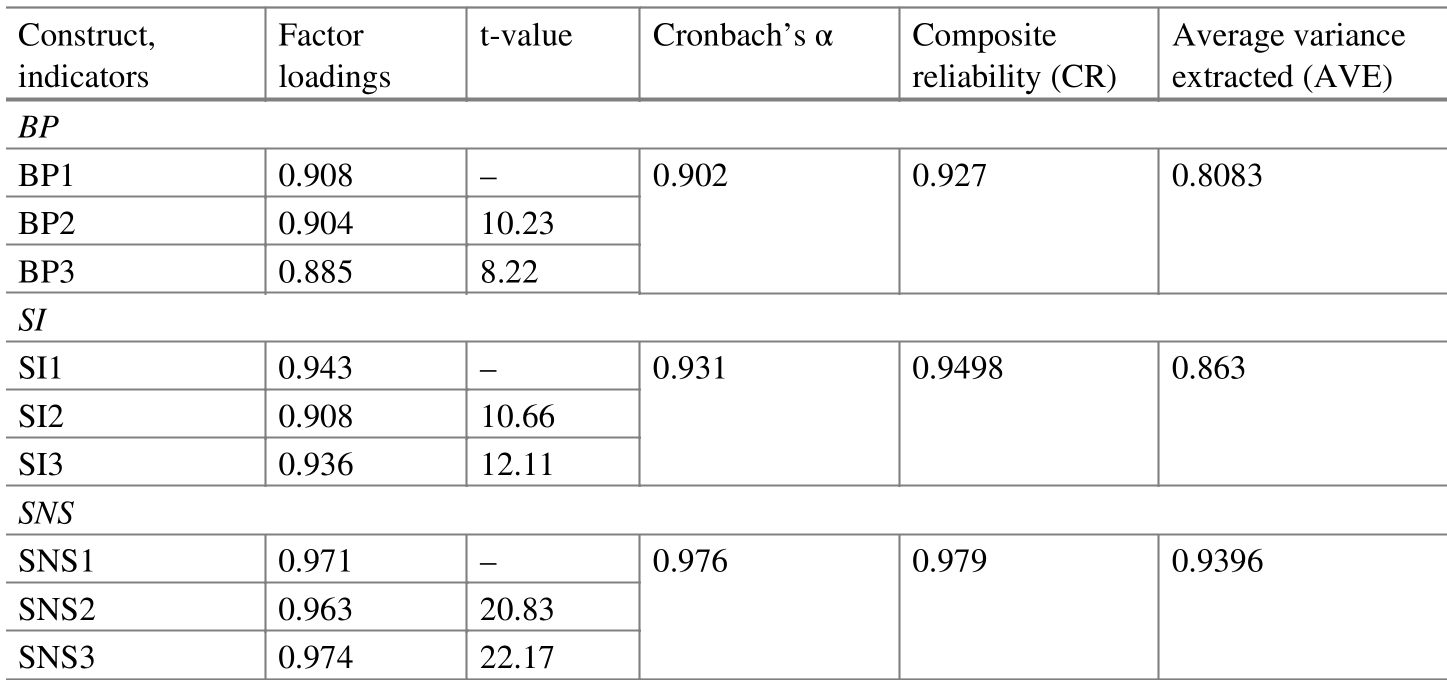
Using Structural Equation Modelling (SEM) on data from 68 Romanian service firms, they measured items such as:
- SNS Usage: Collecting ideas from clients and improving services through social interaction.
- Service Innovation: Improvements in processes, procedures, and the development of new offerings.
- Business Performance: Growth in sales, market share, and profitability.
Critical Results: The Missing Link
The data confirmed two out of three major hypotheses, but the results regarding "Innovation" were an academic curveball.
- Direct Success: Using SNSs leads to better Business Performance (β = 0.25).
- Innovation Wins: Service Innovation is a strong predictor of performance (β = 0.30).
- The Surprise: SNS usage had no significant impact on Service Innovation.
Why did the mediation fail?
The study suggests that while front-line employees use social media to chat with customers, the information gathered is often seen as "low quality" or "untrustworthy" by management. Consequently, social media data is not being integrated into the formal "Service Innovation" pipeline. The interaction remains superficial—good for a quick sale, but ignored for long-term structural changes.
Insights & Conclusion
The study provides a sobering reality check for the "Digital Transformation" narrative.
Key Takeaways:
- Operational Effectiveness vs. Innovation: SNSs are currently being used for operational speed (faster time-to-market) rather than creative destruction (new service paradigms).
- The Trust Barrier: Firms need better mechanisms to verify "virtual" customer feedback. Without trust in the data, social media remains a marketing tool, not an R&D asset.
- Cultural Readiness: Service firms must foster an "innovative culture" where employees are encouraged to translate digital feedback into process improvements.
Limitations: The sample size (N=68) and the use of students/early-career professionals in Romania mean these results might reflect a specific stage of digital maturity. Future research should look at longitudinal data to see if these firms eventually "learn" to innovate via social channels.