
SGSNs: Why Your Neighborhood Energy App Needs Casual Users More Than Super-Users
Social Networking for Smart Grid Users A Preliminary Modeling and Simulation Study
This paper introduces the concept of Smart Grid Social Networks (SGSNs) and explores their evolution using an Agent-Based Model (ABM). The study demonstrates that large communities with occasionally active members are better predictors of successful energy-sharing ecosystems than small groups of highly active users.
TL;DR
Sustainable energy management is moving beyond "smart meters" to "smart communities." This paper introduces Smart Grid Social Networks (SGSNs)—virtual communities where neighbors share energy-saving tips and compete for social points. Using Agent-Based Modeling, the researchers found a surprising counter-intuitive truth: a large group of "lurkers" and occasional posters is far more valuable for a grid's long-term health than a tiny clique of energy enthusiasts.
Problem & Motivation: The Missing Social Link
For years, smart grid research focused on the hardware—the wires, the meters, and the pricing algorithms. But energy consumption is a deeply human behavior. How do we encourage people to shift their laundry to off-peak hours or invest in renewables?
Prior work often viewed users as isolated economic actors. The authors of this paper argue that we are missing the Social Dimension. By linking smart grids with Social Networking Sites (SNSs), we can tap into shared values like sustainability and social cohesion. However, building these "SGSNs" is complex—if engagement drops, the network dies. This study seeks to find the "tipping points" of these virtual communities.
Methodology: Simulating Human Energy Communities
The researchers built an Agent-Based Model (ABM) in NetLogo. Each agent represents a household with attributes like awareness, knowledge, and "Social Networking (SN) points."
Logic of the SGSN
Users earn points by sharing or receiving messages (general info, load-shifting tips, or energy-reduction tricks).
- Levels and Categories: Users move between categories (from "Never" to "Daily" users) based on their accumulated SN points.
- Knowledge Decay: To keep it realistic, "Awareness" fades over time. Users must stay active to maintain their engagement levels.
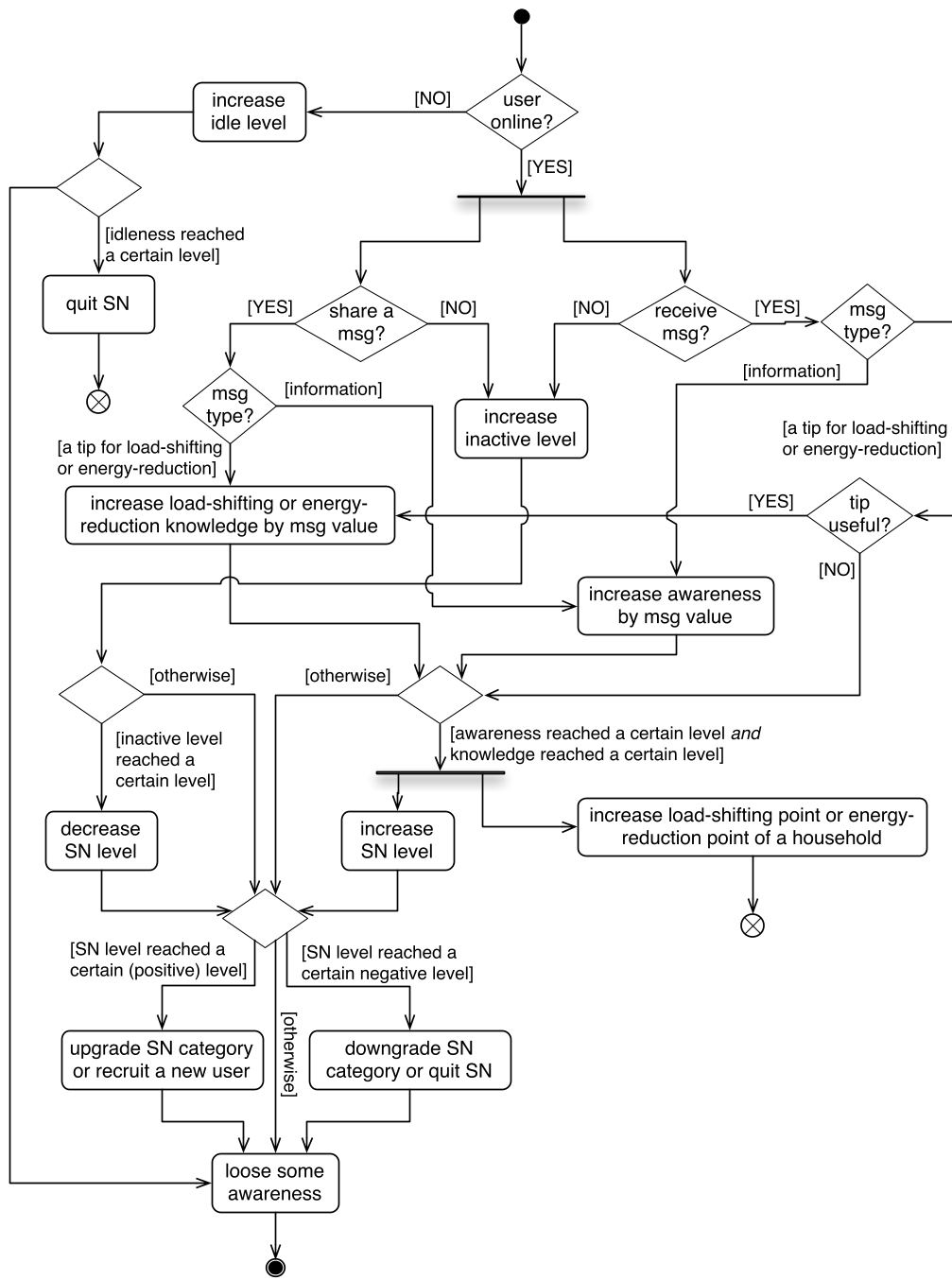 Fig 1: The daily routine of an agent—deciding whether to go online, share a tip, and how that impacts their social standing.
Experiments & Results: The "Quiet Majority" Wins
The team ran seven parameter-sweeping experiments to see what makes a community grow or shrink.
1. Presence Over Activity
A critical finding was that having a low initial user base (presence) is more damaging than having users who don't post often (activity). If people are there, there is hope; if the platform is empty, it's dead on arrival.
2. The Power of the Medium-Active User
In Experiment 3 and 4, the researchers compared different community structures. They found that a large community of members who are occasionally active yields faster growth than a small community of very active users. This suggests that "Social Energy" platforms should focus on scale rather than intensive gamification for a few.
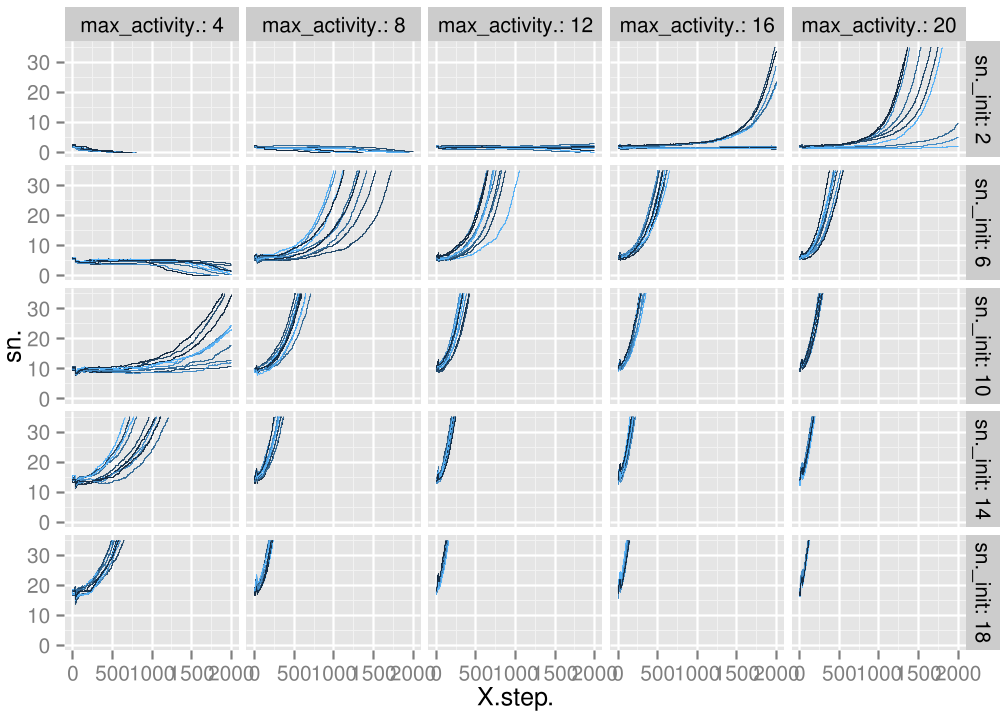 Fig 2: Impact of initial user ratio and activity levels on the evolution of the user percentage.
3. The Asymmetry of Growth
The model showed that Negative Growth is easier to trigger than Positive Growth. A bad user experience leads to a faster "exit spiral" than a good experience leads to an "entry surge." This highlights the importance of user retention strategies in smart grid ICT design.
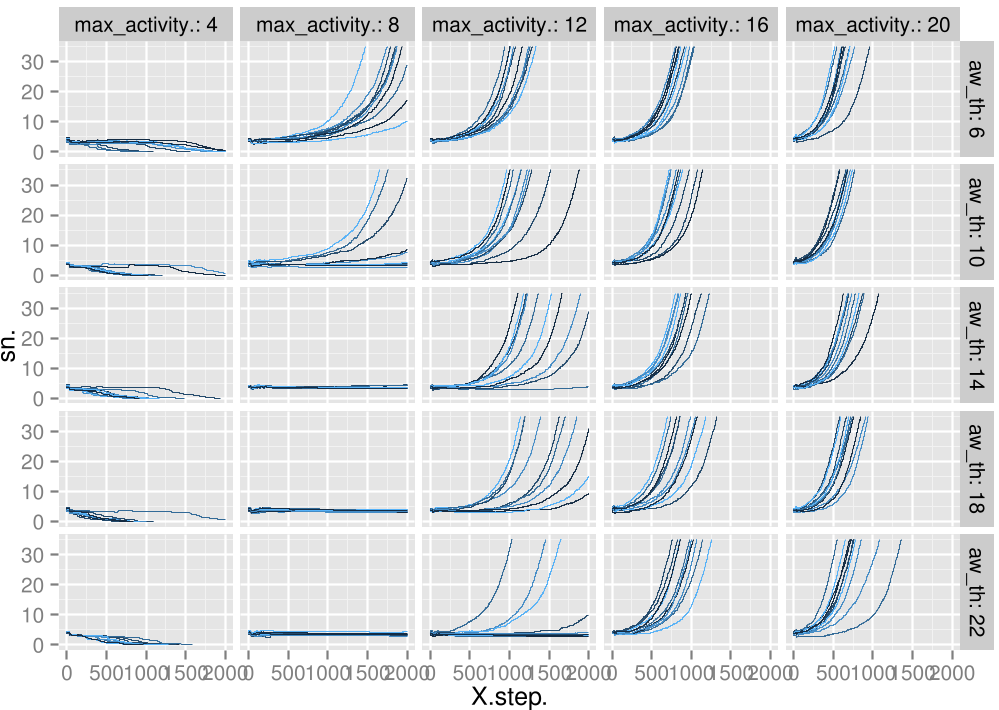 Fig 3: Analysis of awareness thresholds and social networking point limits.
Critical Insight & Conclusion
This study provides a vital roadmap for the CIVIS project and future energy platform designers. The core takeaway is Inclusive Design: don't just build for the "Eco-Warriors." To make a smart grid truly social—and functionally efficient—you need the participation of the average person who might only check their energy stats once a week.
Limitations:
- The model is currently exploratory.
- It uses a simplified "random chance" for whether a tip is useful.
- High-fidelity residential energy data (in kWh) is needed to ground these social points in physical reality.
Looking Ahead: Future iterations will likely include "Social Ties," where agents are more influenced by their actual friends than by random users, bringing the simulation even closer to real-world social network behavior.