
The Living T-Shirt: Bridging Urban Social Gaps through AR and Twitter
The Effort of Social Networking on Social Behavior – Integrating Twitter, Mobile Devices, and Wearable Clothing as an Example
This paper introduces a novel Social Network Service (SNS) communication system that bridges virtual interactions and physical reality using "AR T-shirts." By integrating Twitter, mobile devices (iPhone), and wearable markers, the system enables users to scan a person's clothing to instantly view and reply to their latest Tweets via Augmented Reality.
TL;DR
Researchers from Kyushu University have developed a system that turns everyday clothing into a dynamic social interface. By printing AR markers on T-shirts, they allow observers using an iPhone to "see" a wearer's latest Twitter updates floating in physical space, enabling real-time digital replies triggered by physical proximity. It is a pioneering step toward Phygital Social Networking.
Problem & Motivation: The Digital-Physical Divide
Despite the ubiquity of Social Network Services (SNS), a strange paradox exists: we are more connected than ever digitally, yet we remain strangers in physical spaces. Traditionally, exchanging social media handles requires a manual, often awkward step.
The authors identify two main limitations in previous attempts to solve this:
- Static QR Codes: Standard QR-printed shirts only offer one-way data (like a website link) and lack the "liveness" of real-time communication.
- Virtual Silos: SNS interactions are trapped inside phone screens, disconnected from the person standing right in front of you.
The motivation was to find an "affordance for interaction"—a way to make social data visible and actionable in the real world.
Methodology: The AR T-Shirt Architecture
The system relies on a triad of technologies: Wearable Markers, Mobile AR, and SNS APIs.
1. The Tangible Medium (AR T-Shirt)
Unlike traditional QR codes, the system uses specific AR markers printed on both the front and back of a T-shirt. This ensures that an observer can initiate communication regardless of the wearer's orientation—vital for natural social settings where people move freely.
2. The Software Stack
Developed on iOS, the application uses AR Toolkit for marker recognition. It leverages the iPhone’s camera and 3G data connection to fetch the latest "Tweet" associated with that specific marker's ID.
3. Interaction Design
The workflow is designed for speed:
- Detection: The observer points their phone at the T-shirt.
- Display: The latest Tweet is overlaid on the video feed.
- Two-Way Loop: The observer can touch the screen to open a reply window, sending a message back to the wearer's Twitter account.
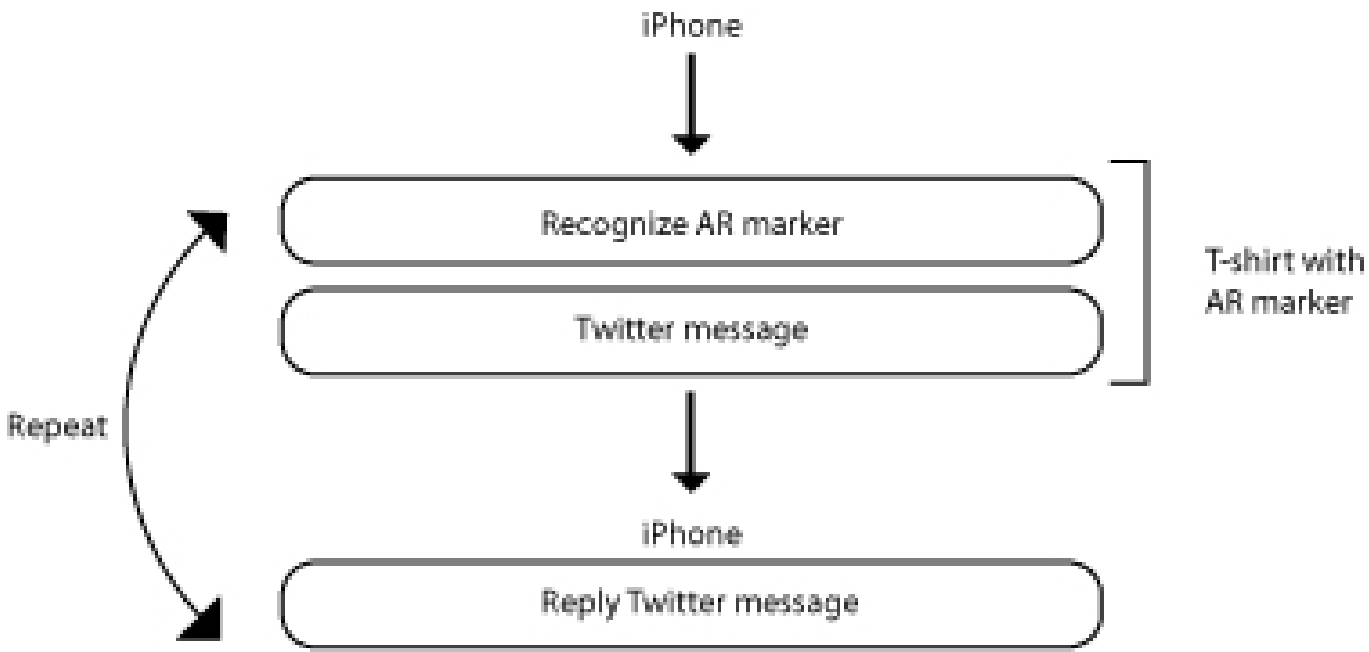 Fig 1: The UI design for recognizing markers and displaying real-time feeds.
Experiments & Social Scenarios
The researchers explored three primary behavioral scenarios to test the system's social utility:
- The Mutual Interaction: Both parties wear the T-shirt, creating a symmetrical exchange of digital identities.
- The Observer-Wearer Dynamic: Only one person wears the shirt, acting as a "broadcast station" for their thoughts.
- The Unaware Interaction: A wearer is scanned by a stranger without realizing it, exploring how digital transparency affects personal space.
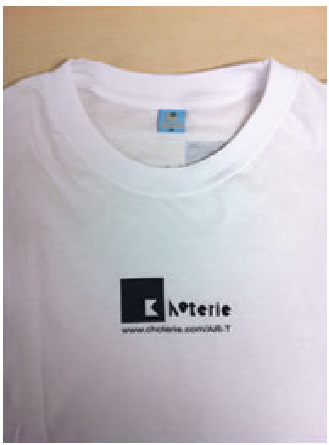 Fig 2: Real-world demonstration of the iPhone app identifying the AR marker on a subject.
Critical Analysis & Conclusion
This research is an early but profound exploration of Inter-human AR. By moving the UI from the screen to the "body" of the user, the authors have shifted the focus of SNS from remote connection to proximal connection.
Strategic Takeaways:
- Contextual SOTA: While later technologies (like Apple's ARKit or Meta's Spark AR) have marginalized marker-based tracking, this paper correctly identified that clothing is the ultimate canvas for social AR.
- Limitations: The study primarily focuses on the technical feasibility for 1-on-1 interactions. Scalability to crowded environments (multiple markers) and the inherent privacy concerns of "broadcasting" one's thoughts to anyone with a camera remain open challenges.
Future Outlook
The authors envision a future where communication content extends beyond text to include 3D graphics, animations, and sound. As wearable AR glasses (like XREAL or Ray-Ban Meta) become mainstream, the "AR T-shirt" concept will likely evolve from physical markers to AI-driven person recognition, making our digital personas a permanent part of our physical presence.