
Digital Hype as Currency: How Social Networking Drives the Box Office
The adoption of social networking technologies in cinema releases
This study investigates the impact of social networking technologies on cinema success using a novel event study methodology applied to Internet search data. By analyzing 99 major film releases from 2008, the author demonstrates that strategic Internet social networking significantly boosts both worldwide revenues and consumer search intensity.
TL;DR
In the high-stakes world of Hollywood, where marketing budgets often triple production costs, social networking has evolved from a "viral experiment" to a critical financial driver. This research quantifies the impact: a robust social media campaign can surge release-window revenues by 64%. By treating Google search data as a measure of consumer demand, the study proves that "Internet chatter" translates directly into dollars.
Background Positioning
Published in Information Technology and Management, this work bridges the gap between traditional financial econometrics and modern digital marketing. It moves beyond anecdotal success stories (like The Blair Witch Project) to provide a statistically rigorous framework for valuing digital engagement.
The Problem: The Billon-Dollar Gamble
Film studios spend approximately $4 billion annually on traditional TV and print ads. However, theatrical windows have shrunk to a mere 4–6 weeks. If a movie misses its mark in the first weekend, the investment is lost. Traditional metrics fail to capture the "immediacy and ubiquity" of modern audience interest. The author identifies a need for a "real-time" demand metric to replace lagging financial reports.
Methodology: Google Data as "Hicksian Demand"
The core innovation lies in the use of Hicksian demand theory. In economics, this represents a consumer’s demand that minimizes expenditure for a fixed utility level. The author argues that Google search intensity is a nearly perfect proxy for this demand because it is:
- Liquid: Continuously priced via AdWords auctions.
- Ubiquitous: Reflecting 80% of global search traffic.
- Immediate: Capturing "shouts" of interest before a ticket is even purchased.
The Model Architecture
The study uses a two-equation system to isolate the effects of the Budget (Bi) and Social Networking Intensity (Si) on Revenue (Ri):
- Revenue Model:
- Internet Activity Model:
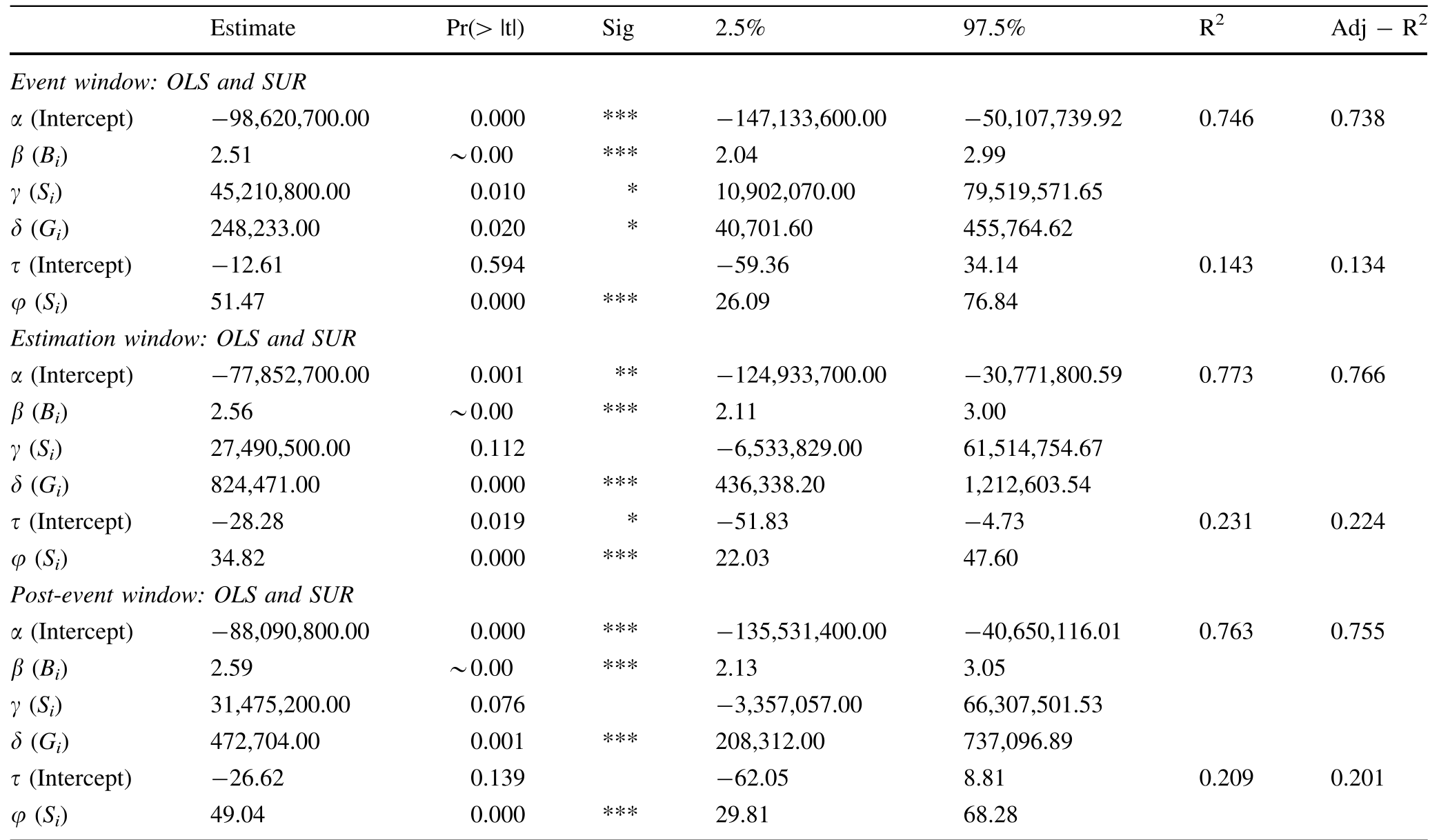 Table 1: OLS and SUR estimates showing the significant impact of Social Intensity (Si) on Revenue and Search Activity.
Key Insights & Experimental Results
The analysis of 99 major films released in 2008 reveals several critical "physics" of film marketing:
- The 64% Revenue Boost: Films with high social networking intensity outperformed their peers significantly during the "event window" (release week).
- The Long Tail: Even after a film leaves theaters, social media efforts keep revenues 14% higher during the DVD and streaming phases.
- The "Blockbuster" Concavity: The relationship between Budget and Revenue is concave—meaning that at the highest levels of spending (mega-blockbusters), revenues increase faster than expenditures, justifying the "all-in" strategy on CGI-heavy action films.
- Diminishing Returns on Search: Interestingly, the Search Activity vs. Revenue curve is convex, suggesting that while more search volume is good, there is a point of diminishing returns where "noise" no longer converts to additional ticket sales.
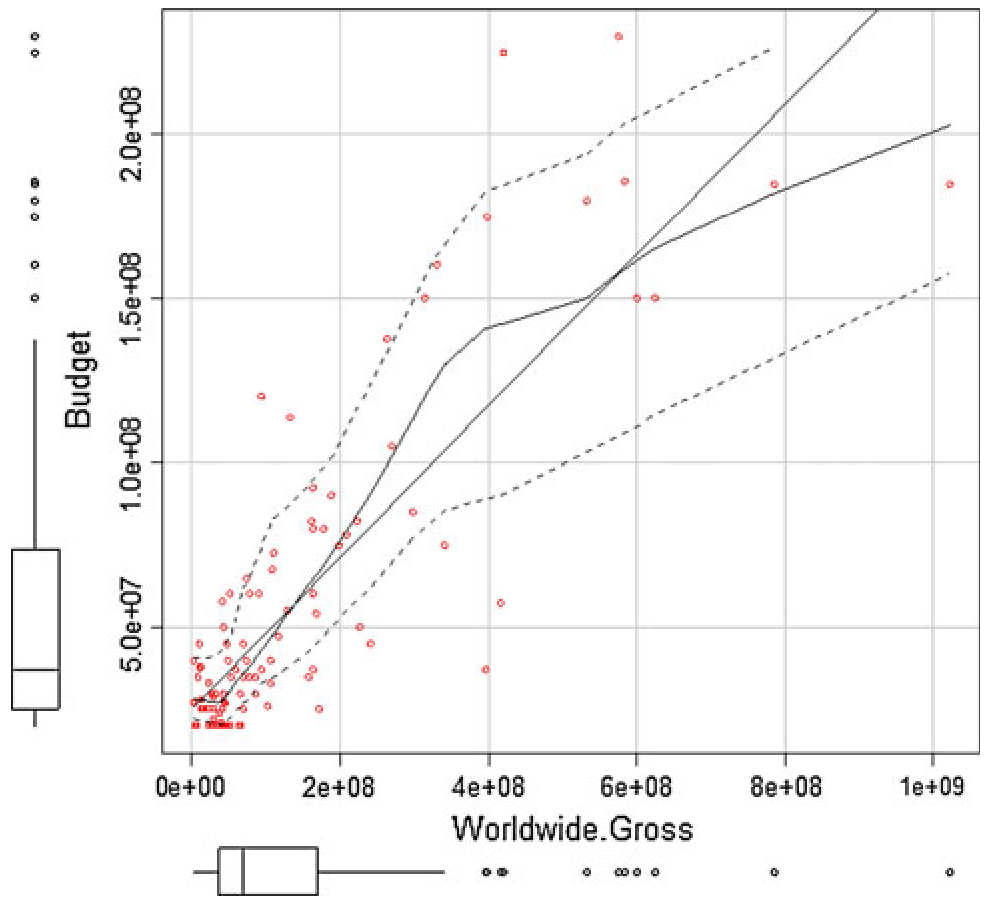 Figure 1: The Revenue Model Budget vs. Revenue distribution, demonstrating the Paretian nature of the industry (80/20 rule).
Critical Analysis & Conclusion
Takeaway
The paper confirms that social networking is not just "free marketing"—it is a structured driver of Search Intensity, which in turn acts as a precursor to revenue. A shift from "little social media" to an "intense campaign" can triple search volume.
Limitations
- Subjectivity of "Intensity": The study uses a 1-3 scale for social intensity based on news mentions, which, while practical, lacks the granularity of modern sentiment analysis or direct engagement metrics (likes/shares).
- Historical Context: Data from 2008 predates the dominance of TikTok and Instagram, though the fundamental "network effect" logic remains valid.
Future Outlook
This methodology opens doors for "soft" technology adoption research. By using Google-Hicksian demands, researchers can now study the economic value of intangible factors like trust, usability, and brand sentiment through the lens of traditional financial event studies.
Final Verdict: A foundational paper for any data scientist or marketer looking to prove the NPV (Net Present Value) of digital community engagement.