
Flickr in the Classroom: Bridging Informal Social Networking and Formal Knowledge Construction
Integrating social networking technologies in education: a case study of a formal learning environment
This paper presents a case study on integrating Web 2.0 social networking sites (specifically Flickr) into a formal postgraduate education setting. By applying the Gunawardena, Lowe, and Anderson interaction analysis model, the study evaluates how social media facilitates knowledge construction and collaboration among students.
TL;DR
This case study explores the integration of Web 2.0 technologies—specifically the photo-sharing site Flickr—into a postgraduate university environment. It investigates whether the informal engagement typical of social media can be translated into formal knowledge construction. Using an established interaction model, the study finds that while social networking encourages collaboration, reaching higher levels of critical "knowledge testing" remains a significant pedagogical challenge.
Contextual Positioning
Written at the dawn of the Web 2.0 revolution in education (circa 2008), this paper acts as a foundational exploration of how platforms not designed for education can be "hacked" for learning. It moves beyond merely describing the technology to applying a rigorous academic framework (Gunawardena et al.’s model) to measure actual learning discourse.
Problem & Motivation: The Formal-Informal Divide
The central tension in this research is the gap between informal learning (which is routine, inductive, and often occurs by chance) and formal education (which requires structured assessment and specific outcomes).
The authors identify a major pain point: Industry and policymakers demand "social learning," yet educators lack the evidence-based methods to:
- Ensure cognitive engagement exceeds simple "socializing."
- Manage the technical friction of external platforms.
- Address the blurring of personal and professional digital identities.
Methodology: Mapping Social Clicks to Cognitive Phases
The study followed 12 postgraduate students using Flickr to capture and discuss "collaboration." To analyze the results, the authors used the Interaction Analysis Model, which tracks five phases of knowledge construction:
- Sharing/Comparing: Exchanging information.
- Dissonance: Identifying disagreements.
- Negotiation/Co-construction: Working toward a shared meaning.
- Testing: Applying new concepts to see if they hold up.
- Application: Finalizing and using the knowledge.
Platform Architecure in Practice
Students had to navigate the public nature of Flickr, which introduced real-world technical constraints that were not present in closed Learning Management Systems (LMS).
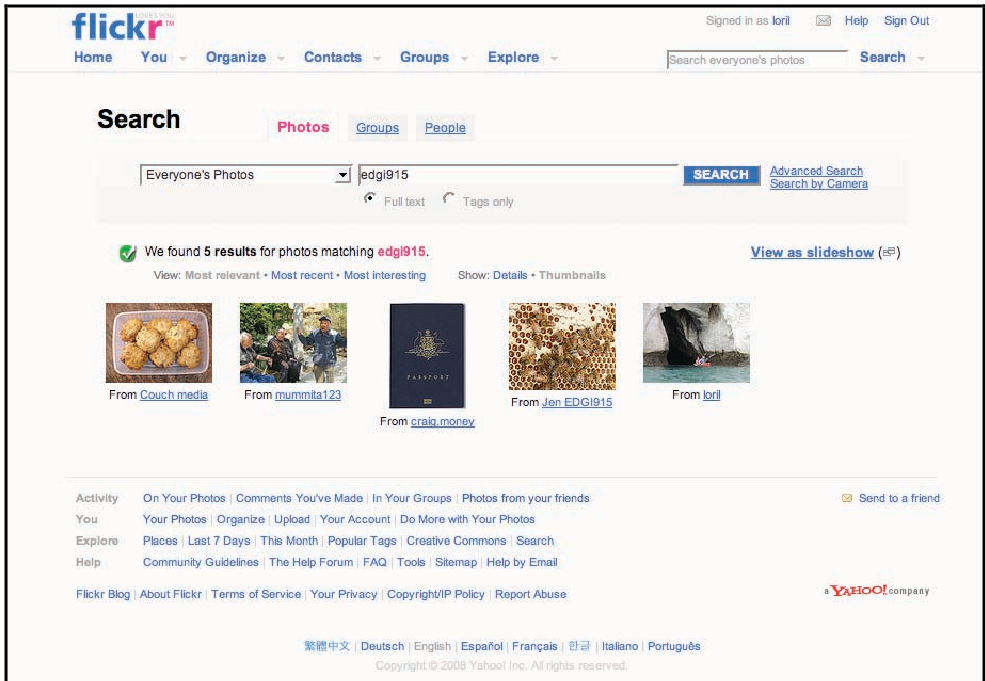 Figure 1: The shared Flickr gallery served as the "social manifold" where personal photography met academic theory.
Experiments & Results: Where did the Learning Happen?
The results, summarized in the table below, reveal a heavy concentration in Phase 1 (Sharing) and Phase 3 (Negotiation). However, the researchers had to add "Social" and "Technical" codes because a large portion of the interaction was dedicated to building rapport or solving platform bugs.
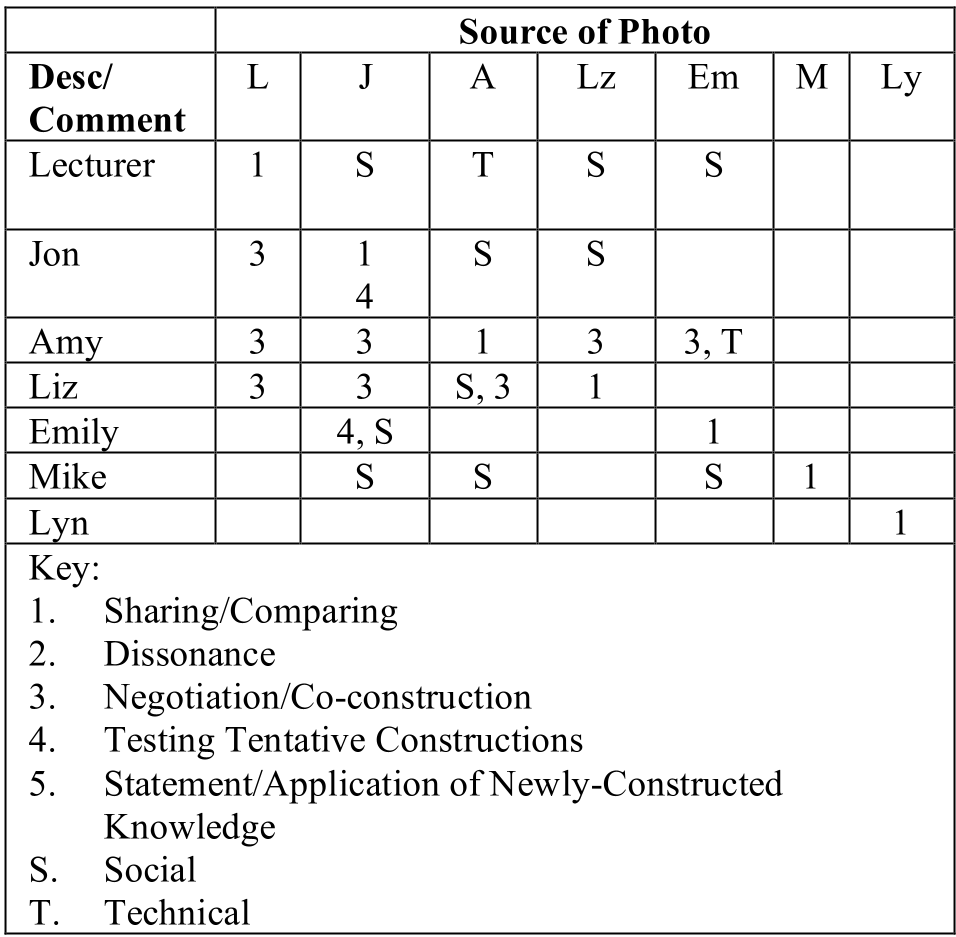 Table 1: Matrix showing that while interaction was frequent, it rarely reached the "Testing" phase (Phase 4).
Key Insights from the Analysis:
- The "New User" Friction: New Flickr members' photos didn't immediately appear in public searches. This forced students to become "problem solvers"—a form of meta-learning about ICT that ironically provided some of the richest "Negotiation" discourse.
- Identity Blurring: Students who used existing personal accounts inadvertently invited classmates into their private lives (vacation photos, personal blogs), raising questions about the "professional-personal" boundary in the Web 2.0 era.
- The Participation Gap: Only 50% of the class actively participated in the optional time-frame, suggesting that social learning requires high "social gravity" to be effective.
Critical Insight & Conclusion
Takeaway
Social networking sites in education are double-edged swords. They provide a high-engagement, authentic environment for social construction of knowledge, but they also introduce technical overhead and identity risks that can distract from the primary curriculum if not managed by a "technology-savvy" facilitator.
Limitations
The study is limited by a small sample size (n=7 active participants) and is highly dependent on the lecturer's ability to act as technical support. It also suggests that in subjects not related to ICT, this level of technical frustration might lead to total student disengagement rather than "accidental learning."
Future Outlook
As we move further into an era where AI and social platforms are even more integrated, this study’s focus on the transparency of the tool remains relevant. The goal for future educators is to make the technology "disappear" so that the focus remains entirely on the higher-order phases of knowledge construction (Testing and Application).