
The Engagement Gap: Why Having Data Isn't Enough to Lower Social Media Stress
Social Networking Use and RescueTime: The issue of Engagement
This research investigates the impact of prospective versus retrospective time estimations on social networking site (SNS) usage and stress levels using the personal informatics tool, RescueTime. The study unexpectedly failed to replicate previous findings due to a significant lack of participant engagement with the tracking software.
TL;DR
Access to tracking data is often touted as the "cure" for digital distraction, but a recent study from University College London reveals a critical flaw: Personal Informatics (PI) tools only work if people actually look at them. Despite testing whether predicting future use (Prospective) or recalling past use (Retrospective) could reduce stress, the study found no effect because participants simply ignored the data, highlighting a massive "engagement gap" in self-tracking research.
The "Estimated" Reality vs. Actual Use
Prior literature established a painful irony: we are terrible at knowing how much time we spend on social networking sites (SNS). Students frequently over-estimate their use by up to six times, leading to a cycle of guilt and perceived stress. The authors' previous work suggested that by simply asking users to guess their usage and then giving them the actual data via RescueTime, their stress levels dropped—not because they used SNS less, but because the "fear of the unknown" was removed.
The current study sought to push this further: If looking at the past helps, does predicting the future (prospective estimation) help even more with goal setting?
Methodology: The Tracking Setup
The researchers recruited 30 undergraduate students and tracked their digital behavior for three weeks:
- Baseline (Week 1): Passive logging via RescueTime on Android and PC.
- Intervention (Weeks 2-3): Participants were split into:
- Retrospective Group: Received daily texts asking how much they used SNS yesterday.
- Prospective Group: Received daily texts asking how much they would use SNS tomorrow.
- Control Group: No texts, just tracking.
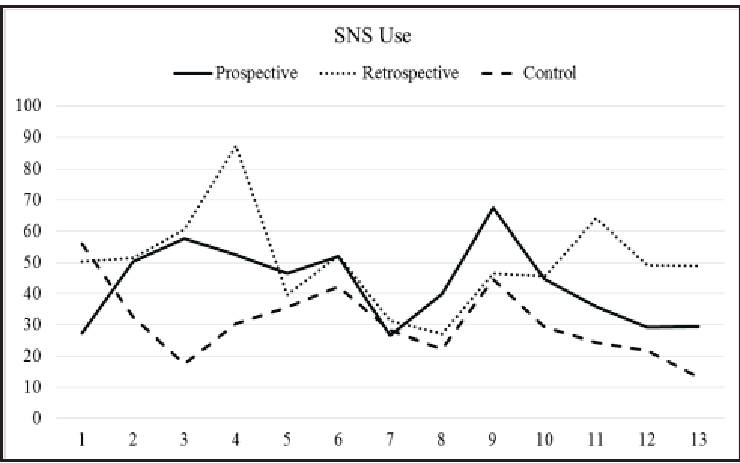
The Failure to Launch: Results that Countered Intuition
The experiment produced no significant changes. Accuracy didn't improve, stress didn't drop, and time management perceptions remained static. The reason was hidden in the engagement logs:
- The Engagement Drop: In the original study (Zhou et al.), participants spent nearly 27 seconds a day checking their data. In this study, they spent a measly 4.68 seconds.
- The Estimation Error: Without checking the feedback, the error margin for estimations remained massive throughout the two-week period.
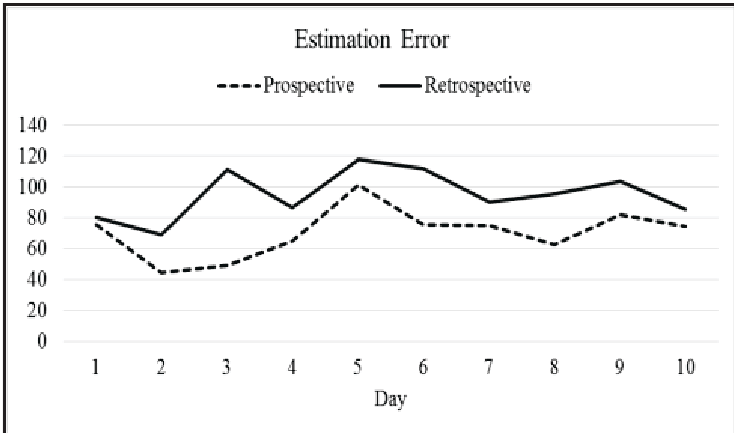
Critical Insight: The "Social Obligation" Factor
Why did one group engage while the other didn't? The authors suggest a fascinating psychological nuance: Social Proximity. In the first study, participants knew the researcher personally, creating a "social obligation" to be accurate. In the second study—conducted with a broader, unfamiliar sample—that motivation evaporated.
The data suggests that Information ≠ Action. Simply providing a dashboard (like RescueTime) does not guarantee that a user will process that information.
Takeaway for Future Tech
For developers of digital wellbeing apps and researchers in Human-Computer Interaction (HCI), the lesson is clear:
- Design for Engagement: Don't assume users are inherently motivated to check their stats. Use leaderboards, rewards, or specific notifications (nudges) to drive data consultation.
- Mind the Gap: There is a difference between "using a tool" and "engaging with its output." If the user doesn't bridge the gap between logging and reflecting, the tool provides no therapeutic value.
The study serves as a sobering "negative result" report, proving that the psychology of the user is just as important as the accuracy of the tracking software.