
When Socializing Fails Truth: Why Connectivity and Clustering Breed Groupthink
Truth tracking performance of social networks: how connectivity and clustering can make groups less competent
This paper investigates how social network topologies influence "collective competence"—the ability of a group to track the truth. Utilizing the Bayesian agent-based model "Laputa," the authors demonstrate that high connectivity and clustering significantly hinder a group's ability to converge on the truth, identifying these metrics as the primary drivers of collective epistemic failure.
TL;DR
Is more communication always better? This paper uses Bayesian simulations to prove a counter-intuitive reality: the more "connected" and "clustered" a social network is, the worse it becomes at finding the truth. By analyzing 36 different network types, the authors found that 96% of a group's "collective incompetence" can be blamed on these two factors, which trap agents in webs of false trust and "bad bandwagoning."
The "Common Sense" Trap
In the internet age, we often assume that a fully connected society—where everyone can talk to everyone—is the ultimate "truth machine." The logic is simple: more connections mean more information.
However, the authors point out a fatal flaw in this logic. High connectivity doesn't just spread information; it spreads influence. Traditional models like the Hegselmann-Krause (H–K) model failed to capture this because they were too rigid—they couldn't separate a network's structure from the opinions of the people in it. The authors move beyond this using Laputa, a model that treats trust as a dynamic variable.
Methodology: The Laputa Bayesian Framework
The researchers used the Laputa model to simulate agents who are initially undecided about a proposition p (which is true).
Dynamic Trust Updating
Unlike older models, Laputa agents don't just listen; they evaluate. If a peer provides an "expected" message (consistent with the agent's current belief), trust in that peer increases. If they provide an "unexpected" message, trust drops. This creates a feedback loop:
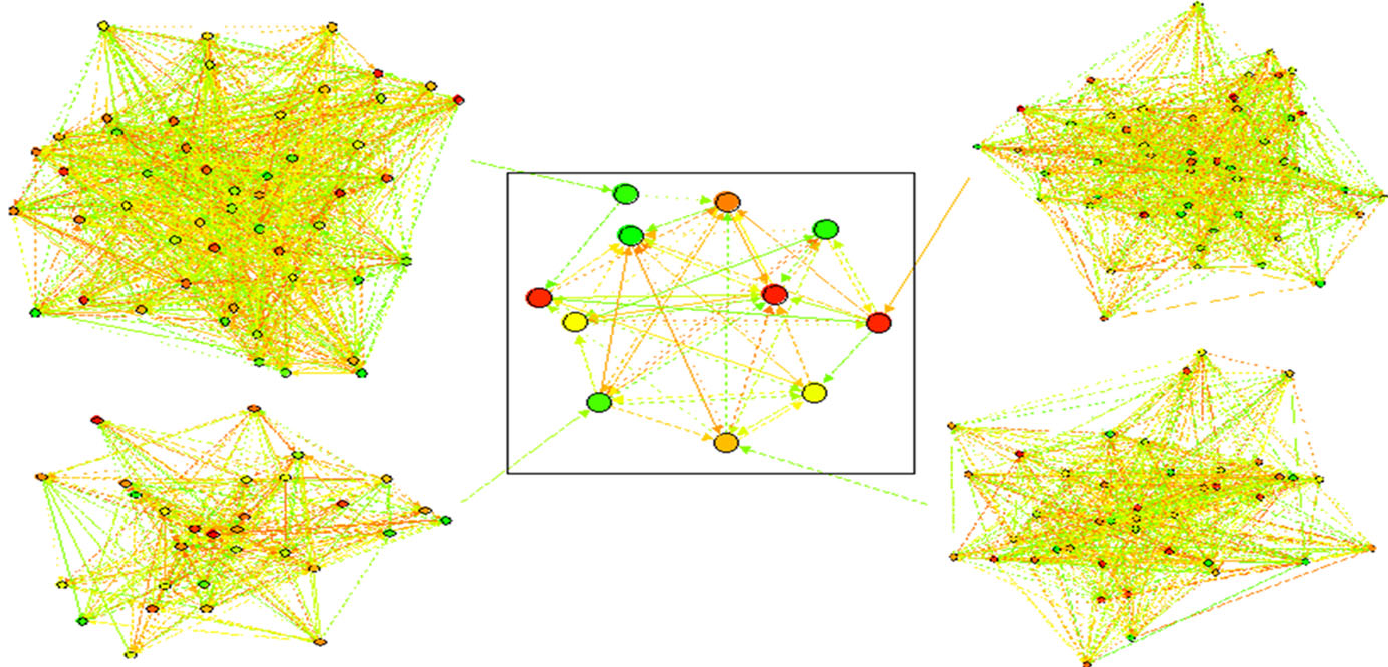 Table 1: The qualitative rules for updating credence and trust based on message expectancy.
The study analyzed 36 networks of various sizes (10, 15, and 18 nodes), testing how quickly and accurately they reached the "Veritistic Value" (V-value)—a metric for how close a group gets to the truth (Credence = 1).
The Core Discovery: The 96% Rule
After running 10,000 simulations per network, a startling statistical pattern emerged. Hierarchical regression showed that Average Degree (connectivity) and the Clustering Coefficient explained nearly all the variation in performance.
1. The Cost of Connectivity
As connectivity increases, the "V-value" (accuracy) decreases. While highly connected networks reach a consensus faster, that consensus is more likely to be wrong.
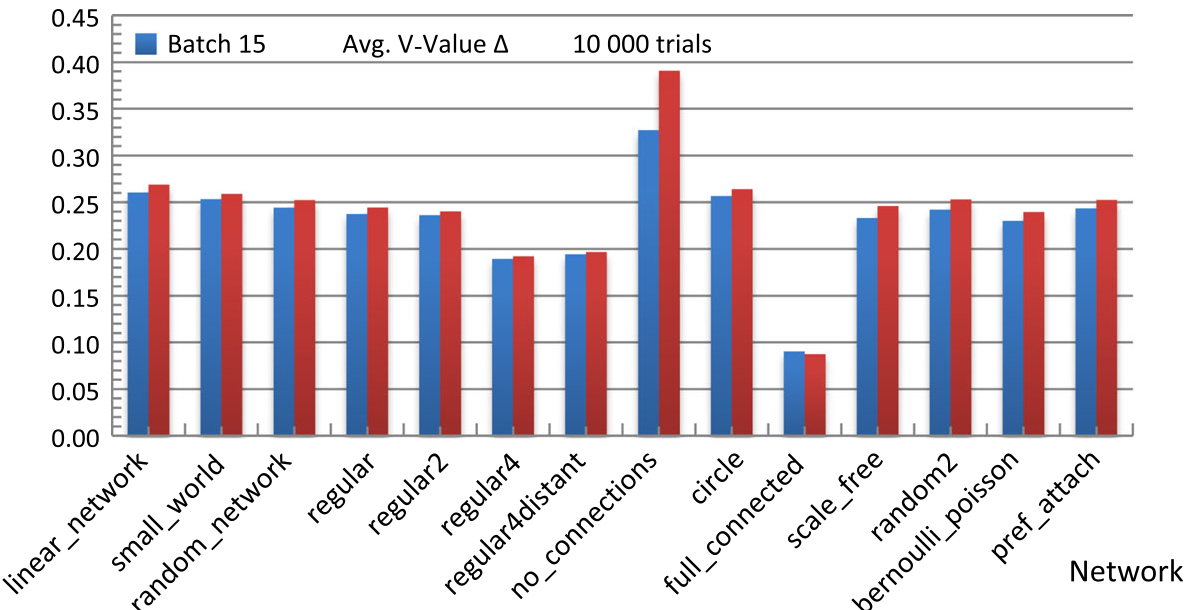 Figure 3: V-value increase for different networks. Note that the "No Connections" (isolated) group often outperforms others in the long run.
2. The Danger of Clustering
Clustering measures how many of your friends are friends with each other (forming "triangles"). The study found that even with the same amount of connectivity, a network with more clusters performs worse.
Why it Works: Bad Bandwagoning
The authors define "Bad Bandwagoning" as the phenomenon where social influence leads an agent away from the truth and against their own external evidence.
- In connected networks: A misled majority can quickly drag down the rest of the group.
- In clustered networks: Groups become "conspiracy theorists." Within a cluster, members reinforce each other's false beliefs and simultaneously lower their trust in anyone outside the cluster who tells them the truth.
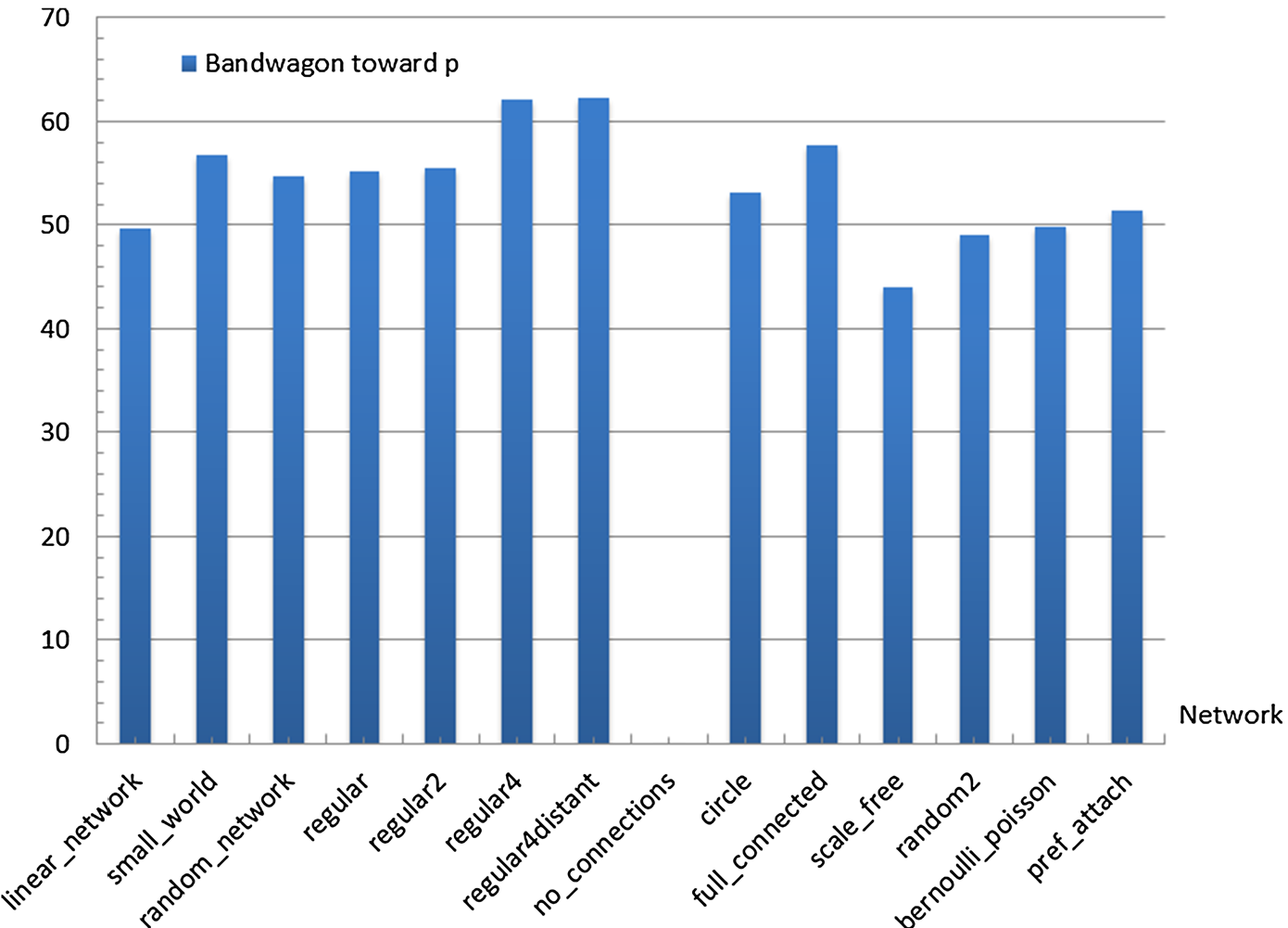 Figure 5 & 6: Connectivity and clustering correlate directly with "Bad Bandwagoning," pulling agents toward false opinions.
Critical Insight: The "Empty" Network Paradox
Perhaps the most provocative finding is that the "empty" network (where agents don't talk at all and only rely on their own inquiry) was often the most accurate.
Does this mean we should stop talking? Not necessarily. The authors note:
- Time Matters: In the very short term, connectivity can help groups find the truth faster.
- Social Impulses: Humans network for more than just truth (status, belonging).
- Spamming: Current social media allows "spamming" of unverified info. If agents were restricted from repeating information without new evidence, higher density might actually become beneficial.
Conclusion
This paper serves as a sober warning for the "Network Society." It suggests that the very metrics we use to judge successful social platforms—high engagement, dense connectivity, and tight communities—are the same metrics that degrade our collective ability to perceive reality. To track the truth, we don't need more connections; we need better ones, perhaps separated by the healthy distance that prevents the "bandwagon" from veering off a cliff.