
Peers: Redefining Knowledge Management through Social Networks
Social networks for creative collaboration
This paper introduces "Peers," an internal social networking application developed by Avenue A | Razorfish to foster creative collaboration among 50+ user experience designers. By integrating blog formats, shared workspaces, and peer-rating systems, the platform transforms traditional Knowledge Management (KM) into a dynamic "marketplace of ideas."
TL;DR
At the height of the mid-2000s social media boom, Avenue A | Razorfish realized that the same mechanics driving Friendster and LinkedIn could solve a corporate crisis: the invisibility of creative work. They built Peers, an internal social network that replaced stifling, categorized databases with personal blogs, shared workspaces, and a transparent peer-review system, successfully turning passive "Knowledge Management" into an active "Marketplace of Ideas."
The Silo Problem: Why Your Intranet is Ghost Town
In the world of high-stakes UX design and consulting, knowledge is the primary currency. However, most companies bury this currency in traditional Intranets. The authors identify two fatal flaws in prior work:
- Metadata Fatigue: Forcing designers to tag documents with rigid, centrally designed taxonomies is a barrier to entry.
- Lack of Incentive: In a typical KM system, there is no "social stake." Employees gain nothing personally by uploading their best work into a black hole of corporate files.
Methodology: The "Social Network as Intranet" Model
The authors' core insight was to "experiment on themselves" by treating the organization as a social graph.
1. The Blog as a Cognitive Artifact
Unlike static documents, the blog format captures knowledge incrementally over time. It allows designers to defend their choices and explore design logic in a non-nested, conversational stream. This mimics how humans actually learn—through dialogue and context.
2. Profile Ownership and Personal Value
In Peers, the profile is "personal property." By revealing their history, expertise, and interests, designers engage in an implicit trade. A high-quality post or comment increases a designer's standing among their peers, creating a meritocratic visibility that managers alone cannot provide.
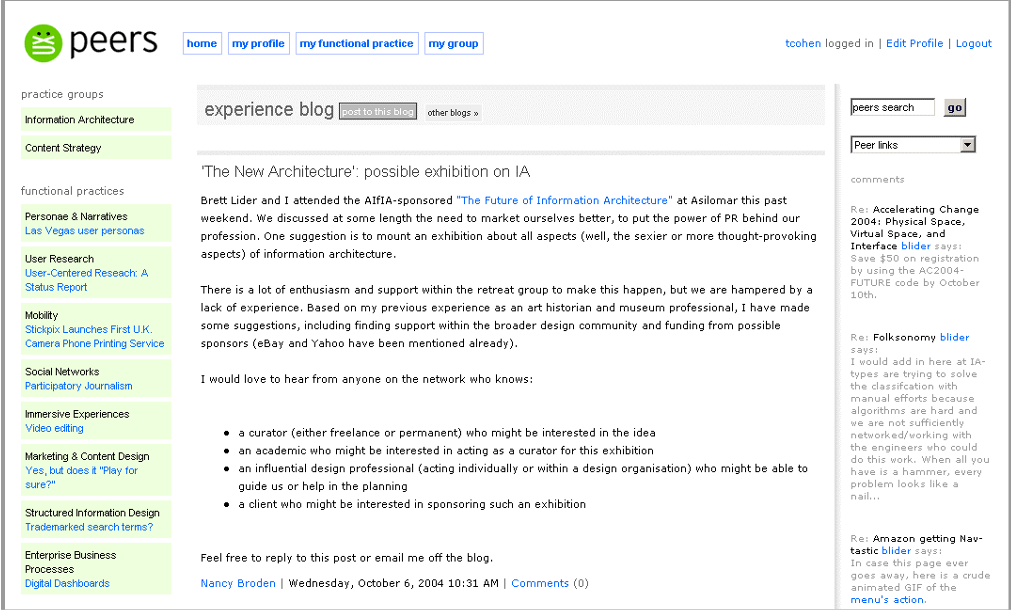 Fig 1: The Peers interface, integrating the main blog feed with direct access to personal profiles and specialized workspaces.
3. The "Controversial" Peer Rating System
Perhaps the most daring feature is the ability for colleagues to rate each other's deliverables on a 1-to-5 scale.
- The Intent: To democratize the review process and reduce the "politics" of senior management judgments.
- The Result: It forces work to "stand on its own," raising the collective bar for quality across the organization.
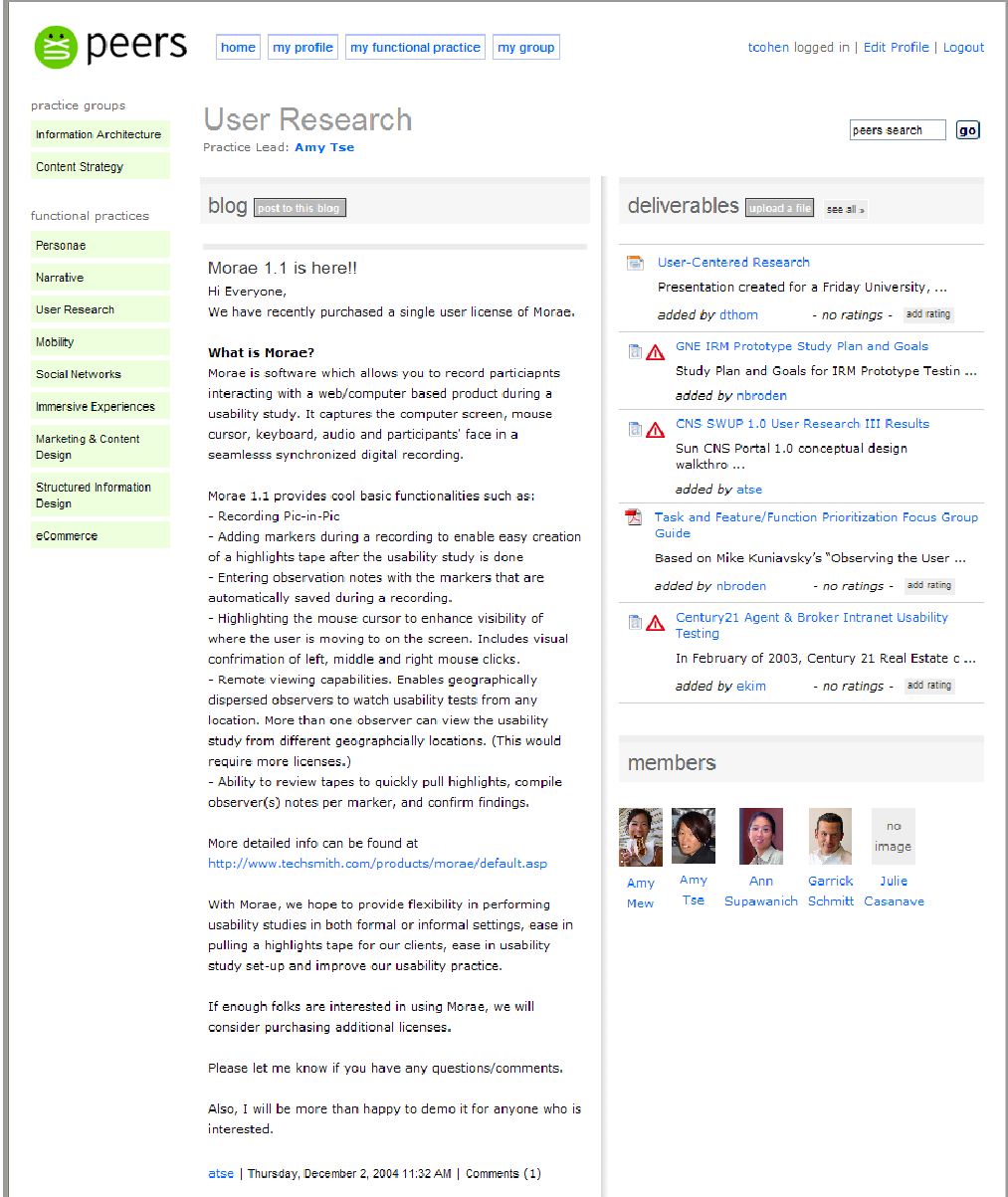 Fig 4: A comprehensive user profile including image/video libraries, project repositories, and peer-validated expertise.
Critical Results and Impact
The Peers experiment demonstrated that social networking is more than just a dating or recruitment tool; it is a superior architecture for business collaboration.
- Visibility: It solved the "visibility gap" for 50+ designers distributed across different project teams and locations.
- Quality Control: The transparent nature of the platform meant that exaggerated or false information was naturally filtered out by the community.
- Performance Tracking: The platform became so central that uploading deliverables to Peers became a required part of the annual performance review process.
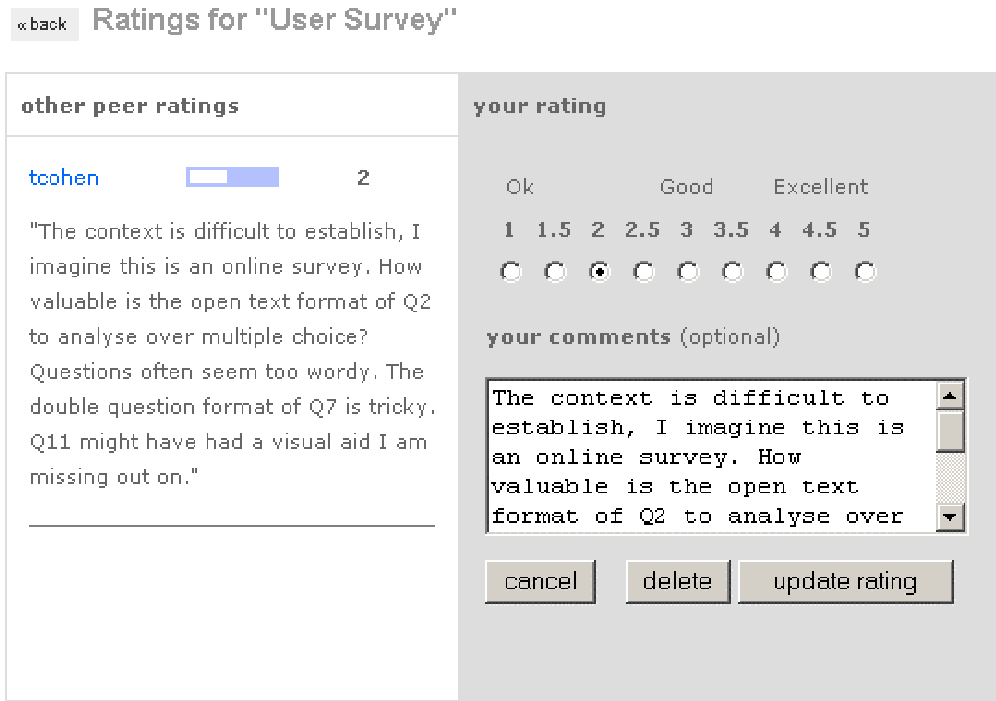 Fig 5: The rating interface—a simple yet effective tool for driving social accountability.
Depth Insight: The Future of Collaborative Work
The authors conclude that traditional KM fails because it treats knowledge as an object to be stored. Peers treats knowledge as a relationship to be nurtured.
Limitations: The paper acknowledges that rating systems carry the risk of alienating participants. Furthermore, maintaining high engagement requires constant cultural reinforcement, as seen in the decline of early social networks like Friendster.
Takeaway: This 2005 work was a visionary precursor to the modern "Social Enterprise." It proved that for technology to drive innovation, it must first cater to the human desire for status, recognition, and effortless communication.