
The Digital Agora: Decoding Linkage Patterns in the 2008 Facebook Election
The social life of social networks: Facebook linkage patterns in the 2008 U.S. presidential election
This research investigates user behavior and linking patterns on Facebook "walls" of 2008 U.S. Presidential candidates Barack Obama, Hillary Clinton, and John McCain. By analyzing a corpus of over 687,000 posts, the study identifies how social networking integrates with Web 2.0 media like YouTube and blogs to form a new digital public sphere.
TL;DR
Long before "fake news" and "echo chambers" became household terms, the 2008 U.S. Presidential election served as the first true laboratory for social media politics. This study deconstructs how nearly 40,000 hyperlinks shared on the Facebook walls of Obama, Clinton, and McCain created a high-stakes information ecology, blending YouTube videos, blogs, and news into a partisan digital public sphere.
Background: The Birth of Social Campaigning
In 2008, the internet evolved from a static broadcast tool into a participatory battlefield. With 10% of American adults using Facebook or MySpace for politics, the "Wall" became more than a guestbook—it became a site of "enculturation." The authors position this work as an early mapping of the Socio-Technical System, asking whether we were witnessing a new era of civic engagement or just a digital version of "birds of a feather flocking together."
The Problem: Insularity vs. Integration
Does social media expose us to new ideas or just amplify our existing biases? Previous studies on the blogosphere hinted at extreme polarization. The authors sought to find "who links to what and where," specifically checking if users were "homophilous"—directing people only to content that reinforces their own bubble.
Methodology: Scrubbing the Wall
To capture the transient nature of Facebook, the researchers built a Java crawler to systematically archive hundreds of thousands of posts. By filtering for the string http, they isolated the "active linkers."
Key Framework: Posting Frequency
The study uniquely categorized users by their activity levels:
- Unary Posters: One-hit wonders (73% of the total).
- Extreme Posters: The "Power Users" with over 1,000 posts.
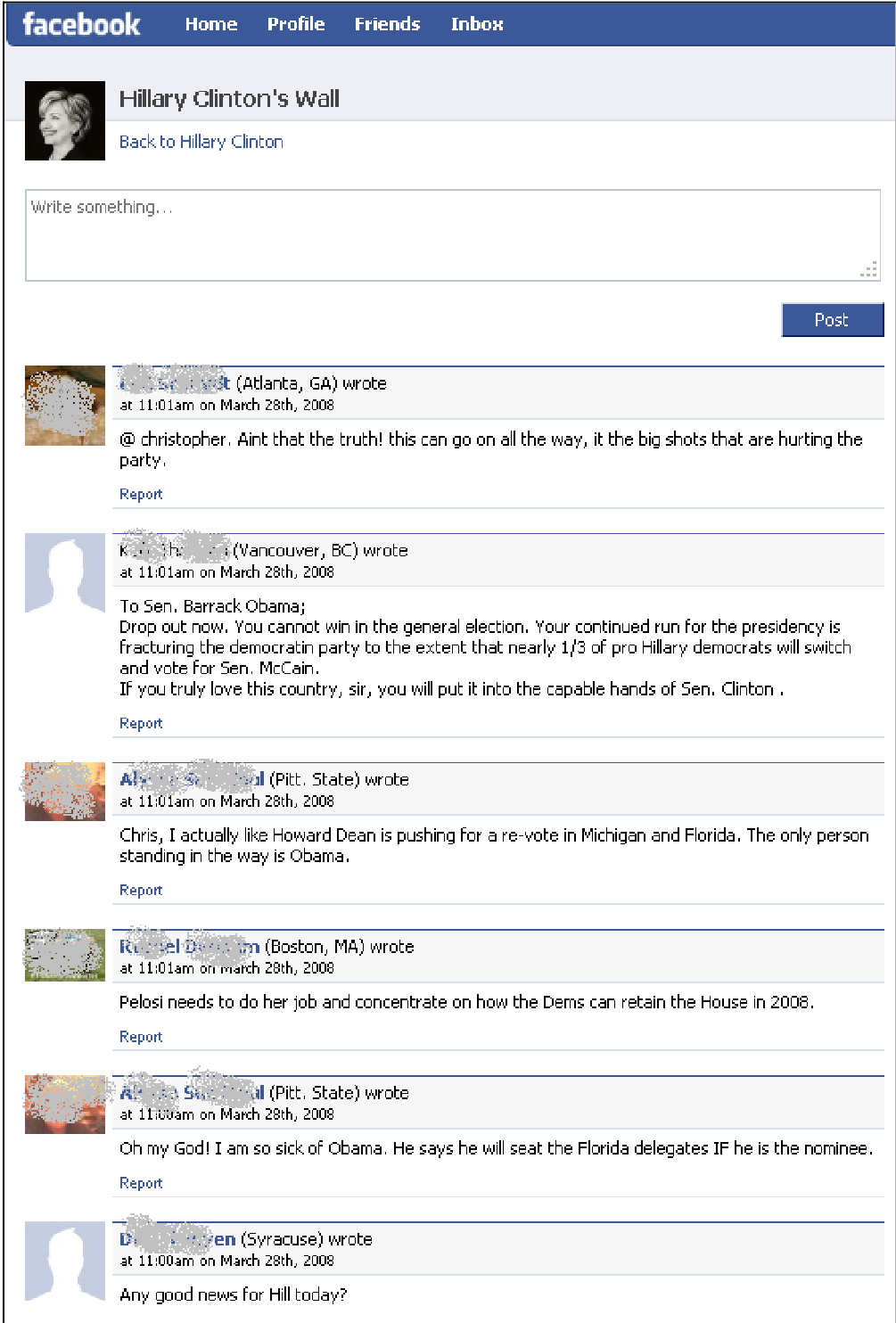 Figure 1: The original interface of a 2008 candidate wall, showing the unthreaded, temporal nature of the discourse.
Core Insight: The Evolution of a Linker
The most fascinating finding lies in the behavioral shift based on user activity.
- Novice linkers tend to stay within the Facebook ecosystem (linking to groups or apps).
- Power linkers behave like information brokers, pulling in external content from "A-list" blogs and niche political sites.
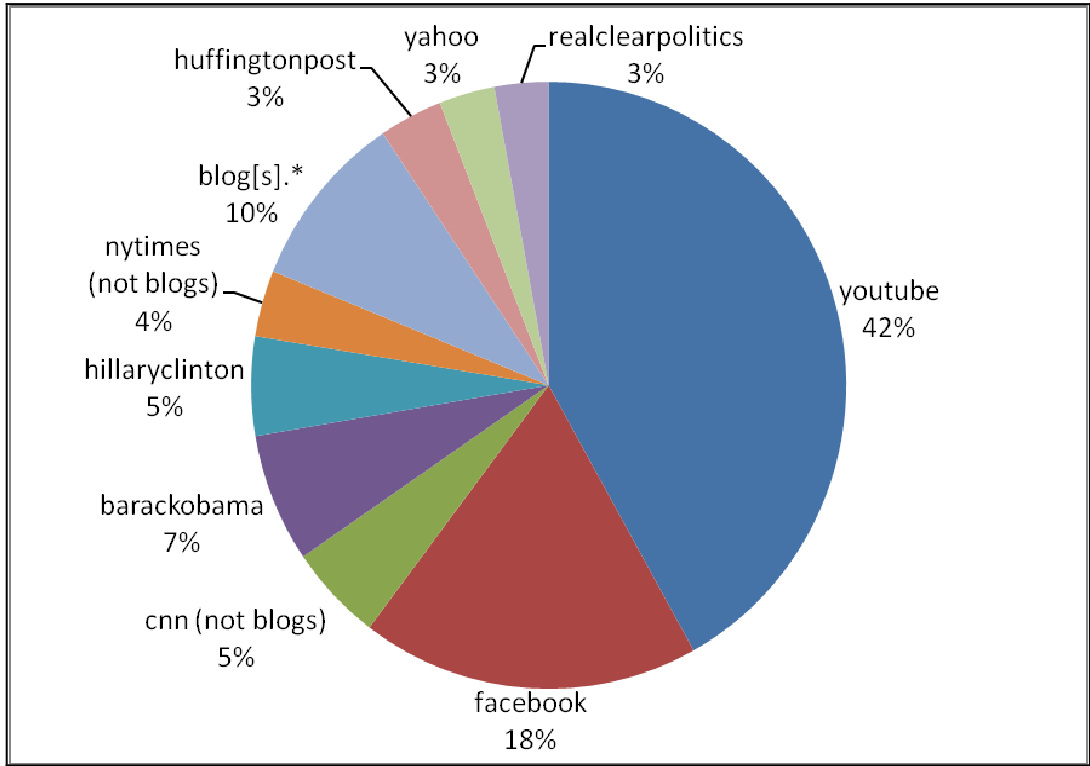 Figure 2: YouTube and Facebook dominate the link share, highlighting the shift toward video-based political consumption.
The Partisanship Gap
The data confirms a stark reality: linkers are highly partisan. 95.3% of links on Obama’s wall pointed to barackobama.com. There was almost no "cross-pollination" or attempts to convert the opposition. Instead, links were used as "Evidence" or "Rebuttal" to win arguments within their own camps.
Proposed Solution: The Who-What-When Browser
The authors argue that Facebook’s original design was hostile to healthy political discourse because it was unthreaded and ephemeral. They proposed a conceptual "Wall Browser" using Tag Clouds to visualize:
- Who is dominating the conversation.
- What topics are trending.
- When these discussions peaked.
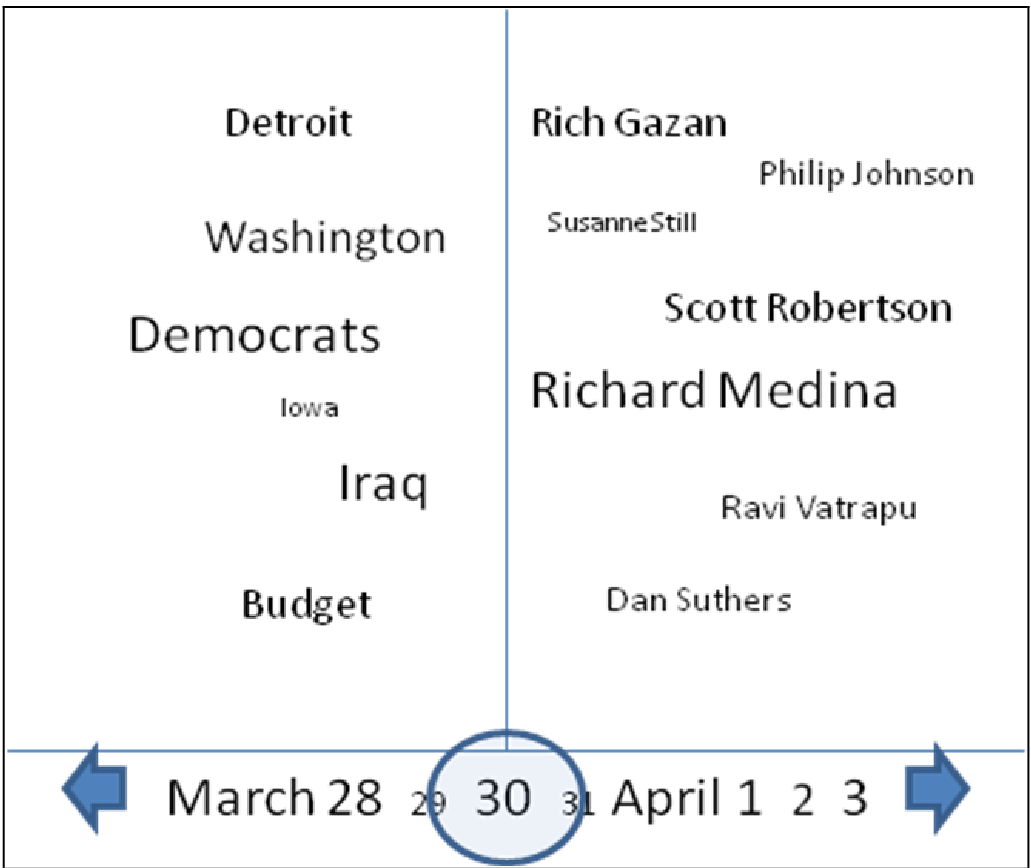 Figure 3: A design concept to turn chaotic wall posts into a navigable "public sphere" via topic and poster visualization.
Critical Analysis: 2008 vs. Today
This paper is a "time capsule" of digital government research. Its strength lies in its early identification of Information Foraging Theory applied to politics—treating links as "scents" that users follow to satisfy their ideological hunger.
Limitations:
The study focuses on the source of the link but doesn't track click-through rates. We know what was posted, but we don't know what was actually read. Furthermore, the exclusion of URLs without the http prefix likely underestimated the total linkage.
Conclusion: From Social Network to Public Sphere
The 2008 election proved that Facebook was no longer just for college students to share photos; it was a primary infrastructure for Digital Citizenship. While the study found high levels of partisanship, it also revealed a robust "Social Life" where links served as the currency of evidence, humor, and action.
As we look at modern platforms, the authors' call for "design interventions" remains more relevant than ever. Without tools to visualize and navigate the "Who, What, and When," our digital public spheres remain vulnerable to the same chaotic, ephemeral, and siloed patterns identified nearly two decades ago.