
The Facebook Mirror: Why We Compare and How it Leads to Digital Regret
How do people compare themselves with others on social network sites?: The case of Facebook
This study investigates the psychological drivers and consequences of social comparison behavior on Facebook among college students. By applying Social Comparison Theory to the digital realm, the research identifies a strong link between personality traits (SCO, self-esteem, self-uncertainty) and the frequency of comparative behavior, often leading to negative affective outcomes.
TL;DR
This research dives into the "Digital Mirror" effect of Facebook, revealing that our propensity to compare ourselves with others isn't just a habit—it's driven by specific psychological traits like Social Comparison Orientation (SCO) and Self-Uncertainty. The study found that the more intensely we use Facebook, the more we compare, which often results in the bitter feeling that "everyone else is living a better life."
The Problem: The Constant Feed of Peer Gold Standards
In the physical world, social comparison is limited by who we physically encounter. On Facebook, however, we are bombarded with a curated, "highlight reel" version of hundreds of acquaintances simultaneously. Traditional psychology tells us that people compare to evaluate their own abilities—but what happens when the "standard" of comparison is a filtered, idealized version of reality? The author argues that social network sites (SNS) have become the primary venue for self-evaluation, yet we lack a clear map of which personalities are most vulnerable to the negative side effects of this behavior.
Methodology: Mapping the Student Psyche
The study utilized a sample of college students—a demographic for whom "peer influence" is a central developmental pillar. By measuring several psychological scales against Facebook usage data, the author sought to answer why some people "lurk" and compare more than others.
The Core Model
The researcher analyzed several key psychological dimensions:
- SCO (Social Comparison Orientation): The innate drive to look at others to define one's own status.
- Self-Uncertainty: Encompassing self-concept clarity, anxiety, and depression.
- Facebook Use Intensity (FUI): Not just how long you stay online, but how integrated the platform is into your daily identity.
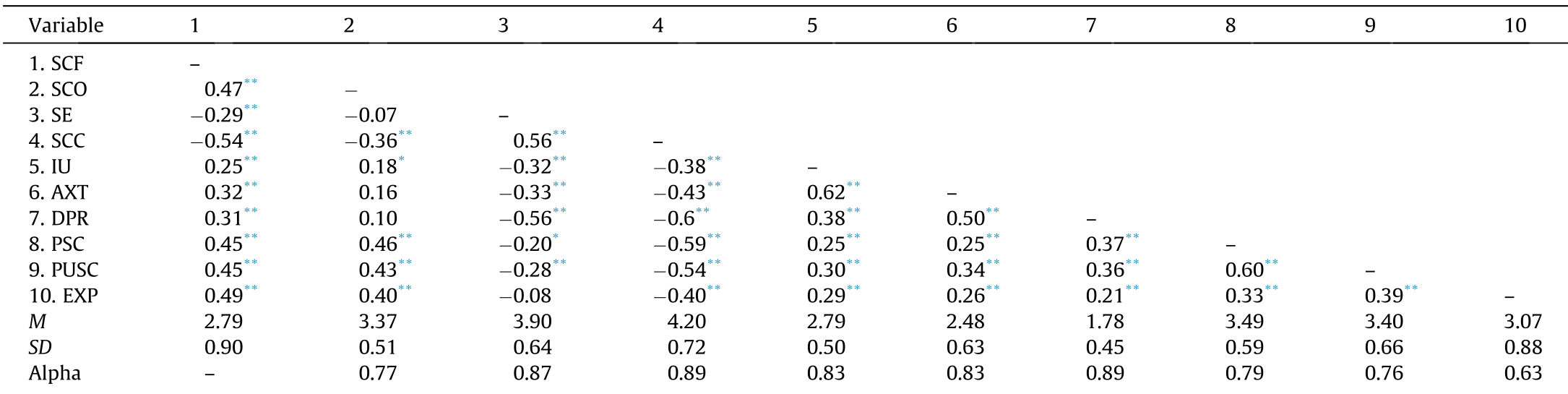 The table above highlights the strong correlations between Social Comparison Frequency (SCF) and personality traits like SCO and Self-Consciousness.
Key Insights: Why It Works (and Why It Hurts)
The findings reveal a "Perfect Storm" for negative mental health outcomes:
- The SCO Catalyst: If you are naturally inclined to compare (High SCO), Facebook acts as a high-octane fuel. These individuals don't just use Facebook; they use it specifically as a tool for self-measurement.
- The Uncertainty Trap: People with low "Self-Concept Clarity" (those unsure of who they really are) use Facebook comparisons to try and find their footing. Paradoxically, this high frequency of comparison (SCF) often leads to more negative feelings.
- Intensity Matters: The regression analysis showed that Facebook Use Intensity is one of the strongest predictors of comparison frequency. The more Facebook becomes "part of your routine," the less you can resist the urge to measure your life against your news feed.
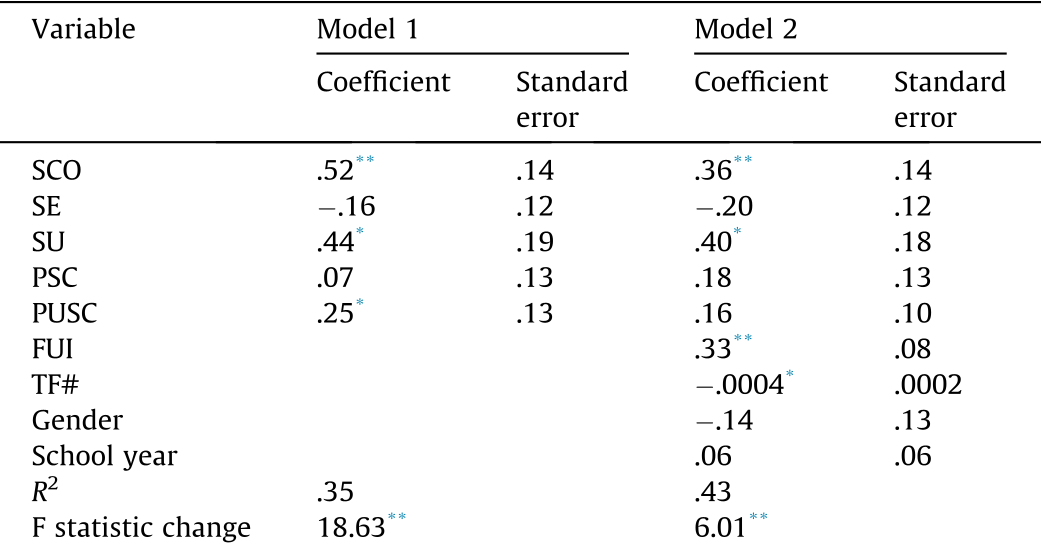 This regression model proves that even when controlling for gender and school year, psychological traits and usage intensity remain the dominant drivers of social comparison.
Critical Analysis: The Downward Spiral
The most striking result is the relationship between Social Comparison Frequency and Negative Affect. The data suggests a correlation (0.41) indicating that the more you compare, the more likely you are to feel isolated or "less than."
The author points out a crucial nuance: users tend to post "good things." Therefore, almost all comparisons on Facebook are "Upward Comparisons" (comparing yourself to someone perceived as better off). In the offline world, we often balance this with "Downward Comparisons" to feel better. On Facebook, the "Downward" option is rarely visible, leading to a skewed perception of reality.
Conclusion & Future Outlook
This 2014 study was a foundational warning for the current "Social Media Detox" movement. It confirms that Facebook is not a neutral tool; it is a psychological environment that rewards comparison.
Limitations to Consider: The study relies on self-reported data. As the author notes, "people are reluctant to admit they have engaged in social comparison." Therefore, the actual frequency—and the resulting psychological damage—is likely much higher than the data suggests. Future research must look at how algorithmic "For You" pages, which purposefully show us the most "enviable" content, amplify this comparison trap.