
WantEat: Turning Gastronomy into a Social Network of Intelligent Things
Interacting with social networks of intelligent things and people in the world of gastronomy
This paper introduces WantEat, an intelligent framework that builds a social web of things and people to promote cultural heritage in the gastronomy sector. It utilizes a mobile application featuring an innovative "Wheel" interaction model to connect users with smart physical objects (like wine or cheese) via image recognition and geofencing.
TL;DR
What if a bottle of wine could tell you its own history, introduce you to its "best friend" (a local goat cheese), and connect you with people who share your taste? WantEat is a research framework that transforms a geographical region into a smart environment. By combining mobile augmented reality, semantic ontologies, and social networking, it allows users to interact with physical products as if they were social entities—all without sticking a single sensor on the objects themselves.
Problem & Motivation: The Gap Between Taste and Knowledge
When you visit a farmers' market, the experience is visceral: you smell the cheese, see the label, and talk to the producer. Usually, if you want more information—like the history of that specific dairy or a recipe—you have to break the "flow" by searching on Google.
Existing "Smart Environment" research typically relies on heavy infrastructure:
- RFID/NFC tags: Costly for small producers and fragile.
- QR Codes: Often ugly and intrusive on artisanal packaging.
- Static Silos: Information is often just a Wikipedia link, not a dynamic social connection.
The authors of WantEat set out to kill the "context jump" by making the object itself the gateway, using nothing but the smartphone's camera and the concept of Social Intelligence.
Methodology: Socially Active "Things"
The core innovation isn't just the app, but the Server-Side Intelligence that treats a cheese wheel not as an item in a database, but as a "Social Entity."
1. The Interaction Model: The Wheel
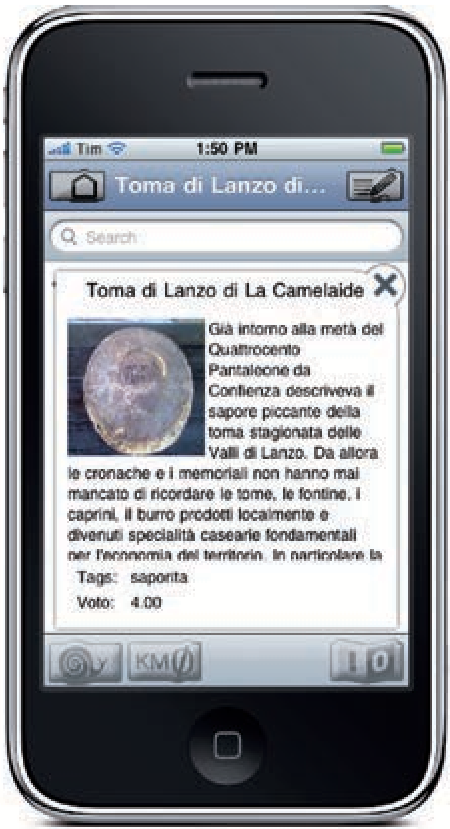
Instead of lists and menus, the team developed the "Wheel Metaphor." When you photograph a label, that item becomes the center of a wheel. Around it are four sectors:
- Territorio (Region): Producers, shops, and production sites.
- Persone (People): Users who liked or commented on it.
- Prodotti (Products): Compatible items (e.g., a wine that pairs with this cheese).
- Cucina (Cuisine): Recipes and restaurants.
2. The Semantic Brain
How does the system know a specific wine pairs with a specific cheese? It uses a complex Ontology and Rule Engine (SWRL).
- Logical Inference: If a cheese is "Soft" and "Medium-Aged," and a rule says flowery white wines pair with such cheeses, the system autonomously creates a "friendship" link between the two things in the social network.
3. Zero-Infrastructure Identity
Identity is handled through label recognition. By using image descriptors (like SIFT/SURF) on the server side, the system recognizes the artisanal label itself. No new stickers are required, making it "Sustainable Gastronomy" compatible.
Experiments & Results: Real-World Testing
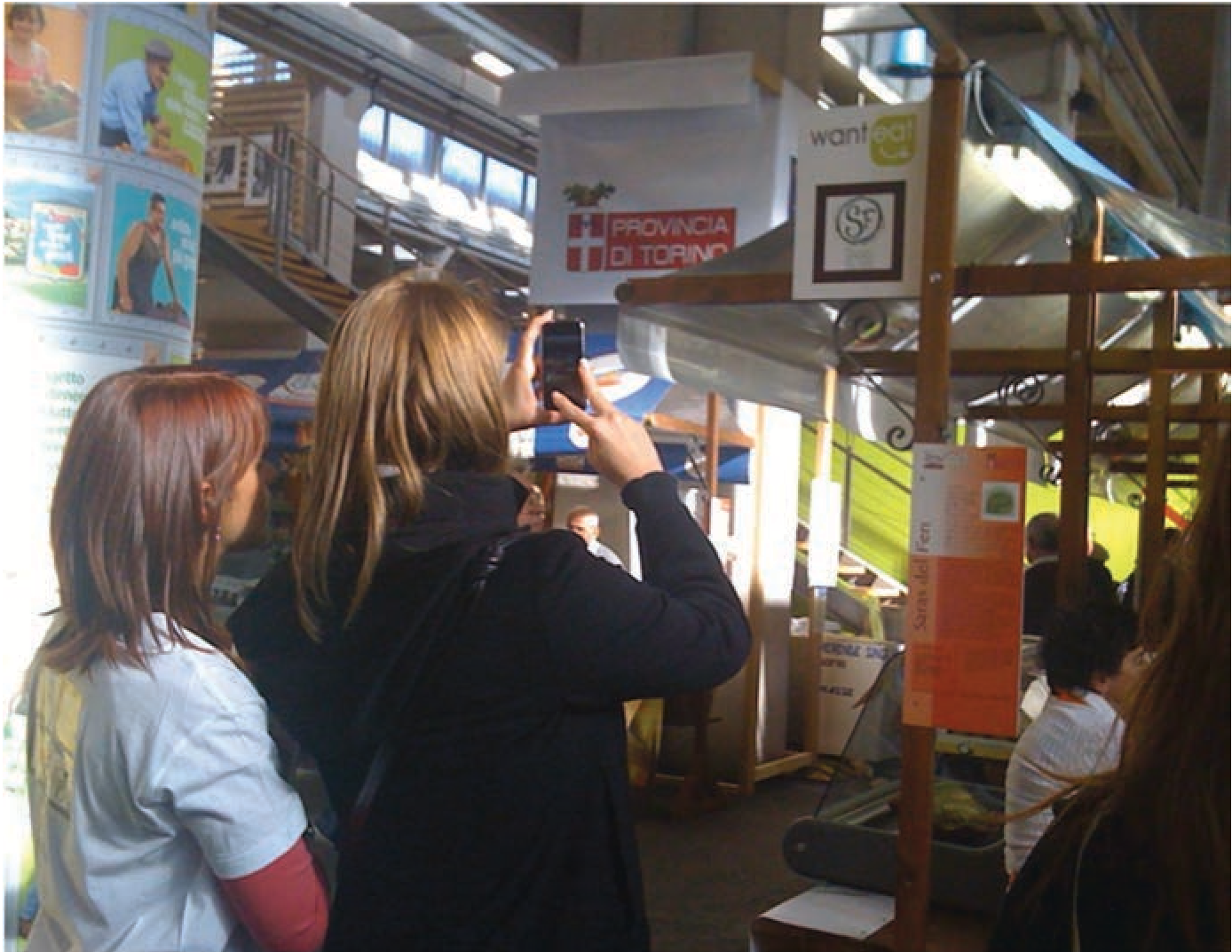
The researchers didn't just stay in the lab; they took WantEat to the Salone Internazionale del Gusto in Turin, testing it with 684 real visitors.
Key Findings:
- High Engagement: The "Old/Hard Users" (tech-savvy users over 35) actually gave the highest comprehensibility scores (3.64/4), suggesting the tool is perfect for the "informed tourist" demographic.
- Serendipity: Users reported that "dragging" items from a sector to the center of the wheel felt like "walking through a village square"—they discovered products they weren’t looking for but found fascinating.
- Producer Feedback: Through the Back-shop interface, producers could see where and when people were interacting with their products, creating a "shorter supply chain" via digital feedback.
Critical Analysis & Conclusion
Takeaway: WantEat proves that the "Internet of Things" doesn't have to be about hardware; it can be about meaning. By creating a digital "avatar" for physical objects and allowing those avatars to form social relationships, we can preserve cultural heritage in a way that feels natural and playful.
Limitations:
- Label Collision: In a global market, similar-looking labels might confuse the system without more robust GPS-context filtering.
- Network Effects: The system’s value relies on a critical mass of "Socially Intelligent" things; a sparse network feels like a ghost town.
Future Outlook: This research paves the way for a world where every object—from a museum artifact to a bottle of olive oil—has a "voice." As we move into the era of Mixed Reality glasses, the "Wheel" model could evolve into a spatial interface that surrounds us during our daily shopping and travels.
Senior Editor's Note: This paper is a landmark in "Social IoT," shifting the focus from hardware connectivity to semantic relationship management.