
Simulating Intimacy: A Bipartite Graph Approach to Public Health Interventions
Generating social networks of intimate contacts for the study of public health intervention strategies
The paper introduces a computational simulator designed to generate realistic bipartite social networks of heterosexual intimate contacts for public health modeling. By utilizing a bounded Zipf-law (power-law) degree distribution and a custom heuristic matching algorithm, it achieves SOTA-level realism in simulating Sexually Transmitted Disease (STD) transmission and evaluating targeted intervention strategies like HPV vaccination.
TL;DR
Researchers have developed a high-performance computational simulator that generates bipartite social networks specifically for modeling sexually transmitted diseases (STDs). By moving beyond simple random graphs and adopting a bounded Zipf-law distribution combined with a fast O(E log V) matching heuristic, the tool allows health professionals to simulate real-world outcomes of vaccination strategies (like HPV) with unprecedented topological accuracy.
Context: Why Traditional Models Fail
Epidemiology has long struggled with the "last mile" of modeling: human behavior. While standard models assume people mix randomly (like molecules in a gas), real human intimacy follows a Power Law. A small percentage of "super-spreaders" have many partners, while the majority have few. Furthermore, heterosexual transmission requires a Bipartite Graph structure—where connections only exist between two distinct sets (Males and Females).
Existing tools either ignored this structure or were too computationally heavy to run large-scale simulations. This paper bridges that gap by providing a mathematically grounded yet efficient simulator.
Methodology: The Logic of Connection
The core innovation lies in the Algorithmic Bipartite Matching. The authors treat the social network as a triplet .
1. Degree Distribution
Instead of assigning partners randomly, the model uses a Bounded Zipf-law. This ensures the "long tail" of the distribution is capped at a realistic maximum, reflecting data from real-world sexual behavior surveys.
2. Preferential Attachment
The probability of a new connection is not uniform. It follows the principle of Preferential Attachment: nodes with a high degree (more existing partners) are more likely to acquire new ones.
3. Efficiency Heuristic
Connecting two groups to satisfy specific degree counts is an NP-hard problem. The authors introduced a heuristic that manages connections in time by attempting stochastic links and falling back to arbitrary assignments only after a threshold (200 attempts), ensuring the simulation remains fast even at scale.
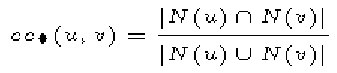 (Note: The clustering coefficients are calculated using bipartite-specific formulas, as traditional "triangles" do not exist in bipartite graphs.)
Experimental Evidence
The authors validated the simulator using Human Papilloma Virus (HPV) as a case study. HPV is the primary cause of cervical cancer, and its transmission is highly dependent on network topology.
Key Results:
- Scaling Accuracy: The generated networks closely followed the power-law curves reported in sociological literature (as seen in Figure 1).
- Intervention Impact: The model compared "No Intervention," "Male-only Vaccination," and "Female-only Vaccination."
- Quantitative Success: The simulation showed a 75% Relative Reduction in Prevalence (RRP) at the height of the epidemic when targeting either gender, aligning with high-fidelity clinical studies.
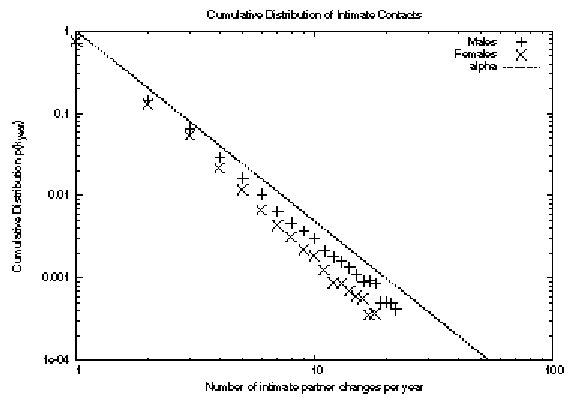 Figure 1: Comparison between the simulator's generated distribution and the target power-law scaling ().
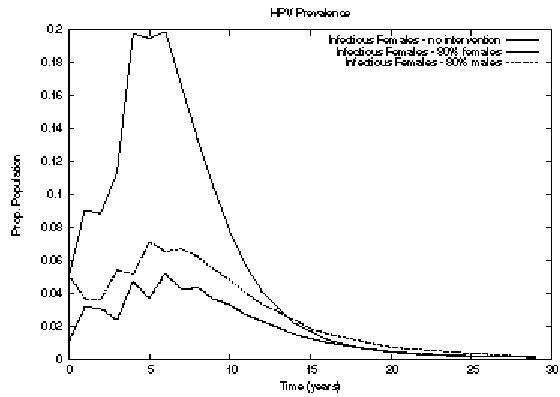 Figure 2: The simulation tracks the impact of different vaccination strategies over a 30-year period.
Critical Insight & Conclusion
The significance of this work is two-fold. Practically, it gives public health officials a "sandbox" to test vaccination policies without expensive real-world trials. Mathematically, it proves that Bipartite Graph Statistics (like the specific clustering coefficients and defined in the paper) are superior metrics for describing human affiliation networks compared to standard graph metrics.
Limitations: The current model slightly under-fits the power-law tail because it strictly enforces maximum degree bounds. Future iterations aim to include "demographic mixing" (matching based on age, location, and social status) to further refine the predictive power.
Takeaway for Research
This simulator moves the field toward "Precision Public Health," where network science dictates policy rather than generalized assumptions.