
The Power of a Handshake: Decoding 25 Years of Japanese Social Networks via Name Card Data
Study on the social networks based on Japanese social events from name card data
This paper explores social network dynamics in Japan by analyzing 25 years of name card exchange data. It constructs interpersonal and inter-organizational networks to demonstrate how major social events act as catalysts for structural evolution and connectivity.
TL;DR
In Japanese business culture, the exchange of Meishi (name cards) is a foundational ritual. This study analyzes a unique longitudinal dataset spanning over two decades to reveal how social events—from small meetings to international conferences—shape the "connective tissue" of both interpersonal and inter-organizational networks. The research proves that major events are the primary drivers of permanent network expansion and organizational bridging.
Problem & Motivation: Beyond the Digital Profile
While we often study social networks via digital traces (likes, follows, or co-authorship), these often lack the authenticity and professional intent of physical name card exchanges. In Japan, name cards are high-quality research resources because they are meticulously kept up-to-date and represent a verified professional contact.
The authors identify a gap in existing literature: most studies focus on either people or organizations, but rarely both across a significant span of time (25 years). They sought to understand the "Insight": Do events merely provide a temporary spike in socialization, or do they fundamentally reorganize the structure of professional society?
Methodology: From Events to Alliances
The researchers utilized a dataset from a single individual who collected every name card received between 1991 and 2016. The data included timestamps, affiliations, and the specific events where the exchange occurred.
The Two-Mode Transformation
To analyze this, the team first built a Two-Mode Network, where nodes represented either People/Organizations or Events. They then projected these into Single-Mode Networks.
- Interpersonal Network: Links nodes if two people attended the same event.
- Inter-organizational Network: Links nodes if two organizations had representatives at the same event.
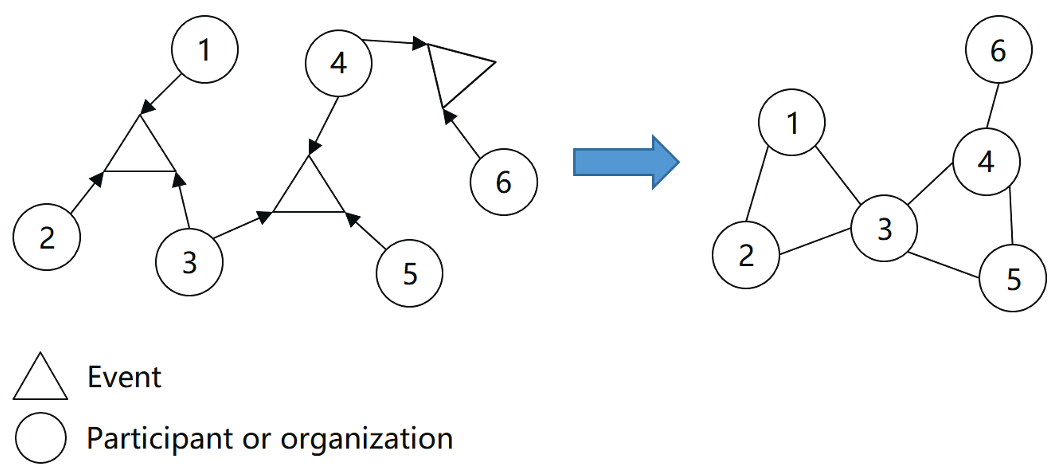 Fig 1: The process of projecting event-based participation into direct social linkages.
Visualizing the Social Fabric
By measuring structural properties, the authors found that both networks follow a Power Law distribution—meaning a few "super-connectors" (events or nodes) hold the majority of links.
However, a striking difference emerged in Modularity:
- Interpersonal networks are highly modular (0.973), meaning people tend to stick to small, isolated clusters related to specific niche events.
- Inter-organizational networks are much denser (avg. degree 6.863), suggesting that organizations are more likely to have "overlapping" presences at various events.
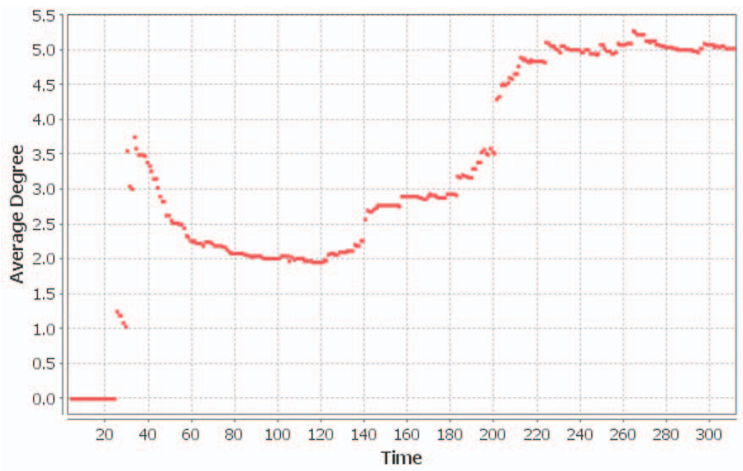 Fig 2: Snapshots of interpersonal (a) vs. inter-organizational (b) networks.
The "Step-Function" of Major Events
One of the most profound findings of the study is the role of Big Social Events. By tracking the "Average Degree" over 311 months, the researchers noticed sudden, permanent jumps in connectivity.
For example, around time point 141 (representing the Pacific Asian Conference on Information Systems in 2002), the network didn't just grow—it changed its topology. These big events acted as bridges, connecting previously isolated clusters and significantly shortening "path lengths" across the organizational landscape.
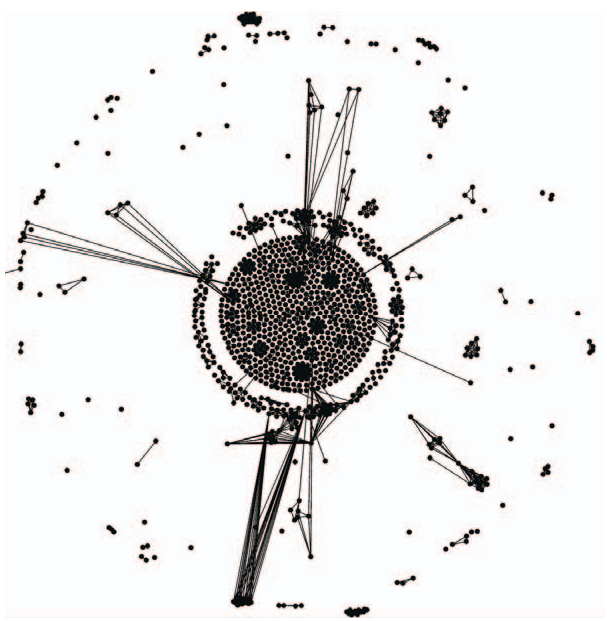 Fig 3: The average degree of the network over 25 years, showing sharp increases at key event milestones.
Critical Analysis & Conclusion
Takeaway
For businesses and policymakers, this research highlights that Big Events are structural catalysts. They do more than facilitate introductions; they create the "architectural bridges" that allow for future organizational cooperation and alliances.
Limitations & Future Work
The primary limitation is the egocentric nature of the data; since the name cards were collected by a single individual, the network is naturally biased toward that person's field (academia and industry).
Perspective
The authors propose moving toward Agent-Based Modeling (ABM) in the future to simulate how specific social strategies (like attending certain types of events) can optimize the growth of an organizational network. This work serves as a reminder that even in an increasingly digital world, the physical exchange of information remains a powerful tool for social engineering.