
Beyond Socializing: Benchmarking WhatsApp, Facebook, and Twitter as Learning Delivery Platforms
Social Networks as Learning Delivery Platforms Academic Achievement and Attitudes of Students
The study investigates the effectiveness of WhatsApp, Facebook, and Twitter as learning delivery platforms for university-level ethical education. Through a randomized comparative experiment, it establishes WhatsApp as the most effective medium for enhancing academic achievement and fostering positive student attitudes.
TL;DR
Is your smartphone a distraction or a classroom? This study reveals that not all social networks are created equal for education. In a semester-long experiment, WhatsApp emerged as the gold standard for learning delivery, significantly outperforming Twitter in both student grades and overall satisfaction.
Background: The Academic Migration to Mobile
The integration of social networks into the academic landscape is no longer a novelty; it is a necessity. However, the pedagogical community has long debated which platform best serves the student. Is the micro-learning style of Twitter better for retention, or does the private, comprehensive nature of WhatsApp foster a better environment? This paper positions itself as a critical comparative analysis to resolve these "platform wars" in the context of an "Introduction to Ethics" course.
The Core Problem: Affordances vs. Academics
The primary challenge in mobile learning is balancing the informal nature of social media with the rigor of academic content. Prior work has shown mixed results:
- Recent studies suggested that social networks increase motivation.
- Conversely, some researchers (e.g., Gettman & Cortijo) cast doubt on whether these tools actually translate into higher grades.
- The specific friction point: Does the restrictive 280-character nature of Twitter or the public noise of Facebook hinder the learning of complex ethical concepts?
Methodology: A Controlled Experiment
The researcher divided 363 first-year social science students into three groups. For 14 weeks, they received 10 ethical definitions weekly (140 total) via:
- WhatsApp (Instant Messaging)
- Facebook (Social Networking Feed)
- Twitter (Microblogging)
At the end of the term, students were subjected to a standardized achievement test and a psychometric questionnaire measuring User-friendliness, Motivation, and Satisfaction.
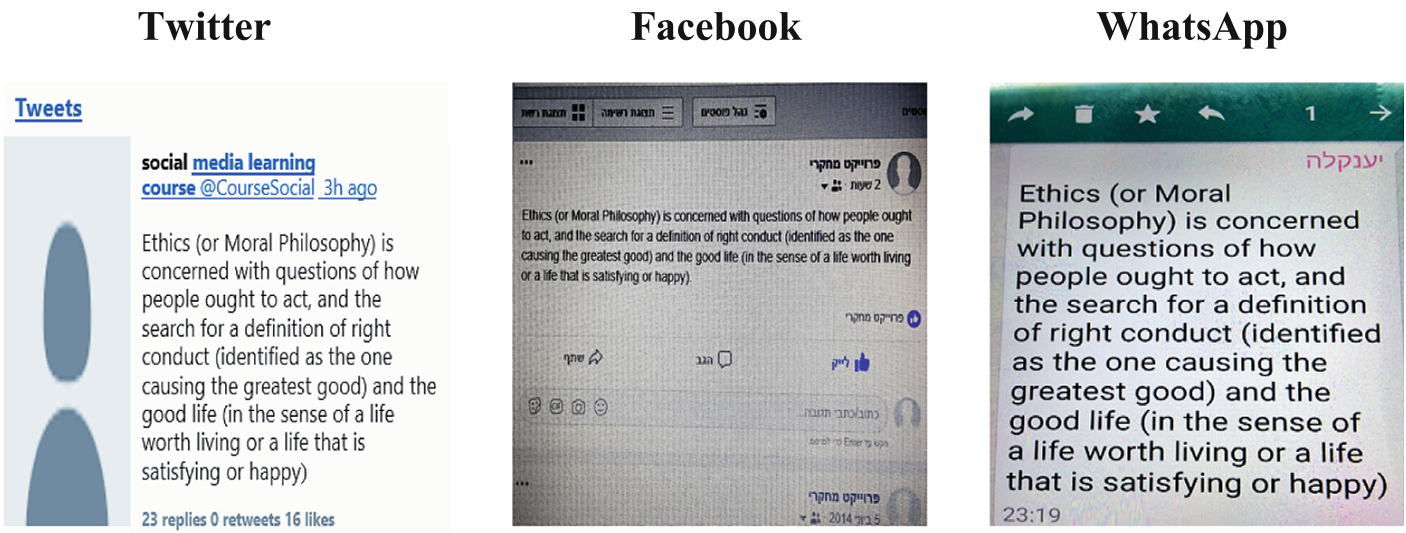 Figure 1: The Research variable flow connecting Delivery Platforms to Achievement and Affective outcomes.
Results: Why WhatsApp Wins
The data provided a clear hierarchy of effectiveness.
1. Academic Achievement
WhatsApp and Facebook students achieved nearly identical high scores, whereas Twitter students lagged significantly behind.
- WhatsApp Mean: 88.40
- Facebook Mean: 87.30
- Twitter Mean: 81.90
2. The Affective Edge
WhatsApp didn't just help students score better; it made them feel better about the process. It scored the highest across all three affective categories, particularly in Learner Satisfaction.
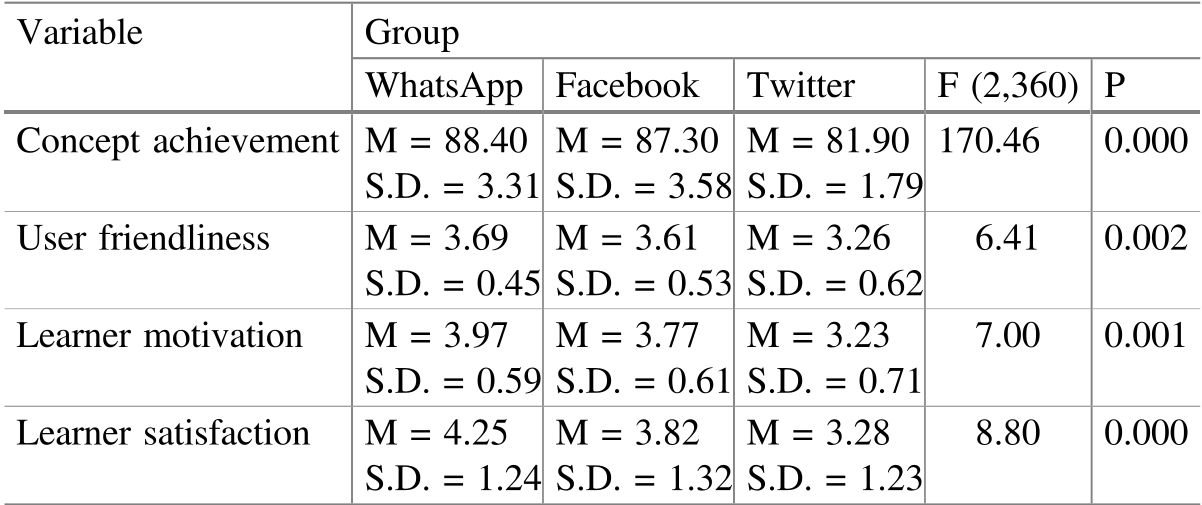 Table 1: Statistical breakdown showing the significant (p < .001) dominance of WhatsApp and Facebook over Twitter.
Deep Insight: The "Hermetic" Advantage
The study offers a profound intuitive explanation for these results.
- Comprehensiveness: Unlike Twitter, which forces content into "snippets," WhatsApp and Facebook allow for unlimited text, catering to the depth required for ethical definitions.
- The "Closed" Environment: WhatsApp acts as a "hermetically sealed" container. It prevents the "infiltration of unwanted members" (trolls or unrelated social noise) that often plagues public platforms like Twitter. This creates a psychological "safe space" for learning.
- User Perception: Students do not view Twitter as an "efficient" tool for heavy lifting in education, despite its popularity for news or quick updates.
Conclusion & Future Outlook
The takeaway for educators is clear: If you are delivering structured academic content via mobile, prioritize closed instant messaging (WhatsApp) over open microblogging (Twitter).
Limitations: The study focuses on concept definitions—a relatively rote form of learning. Future research should examine whether these platforms maintain the same hierarchy for high-level "Critical Collaborative Thinking" or project-based learning.
Final Thought: The success of WhatsApp suggests that the future of mobile learning isn't just about being "digital"—it's about being "focused."