
Beyond Views: Mapping Social Influence Through Video Near-Duplicate Detection
Constructing Social Networks Based on Near-Duplicate Detection in YouTube Videos
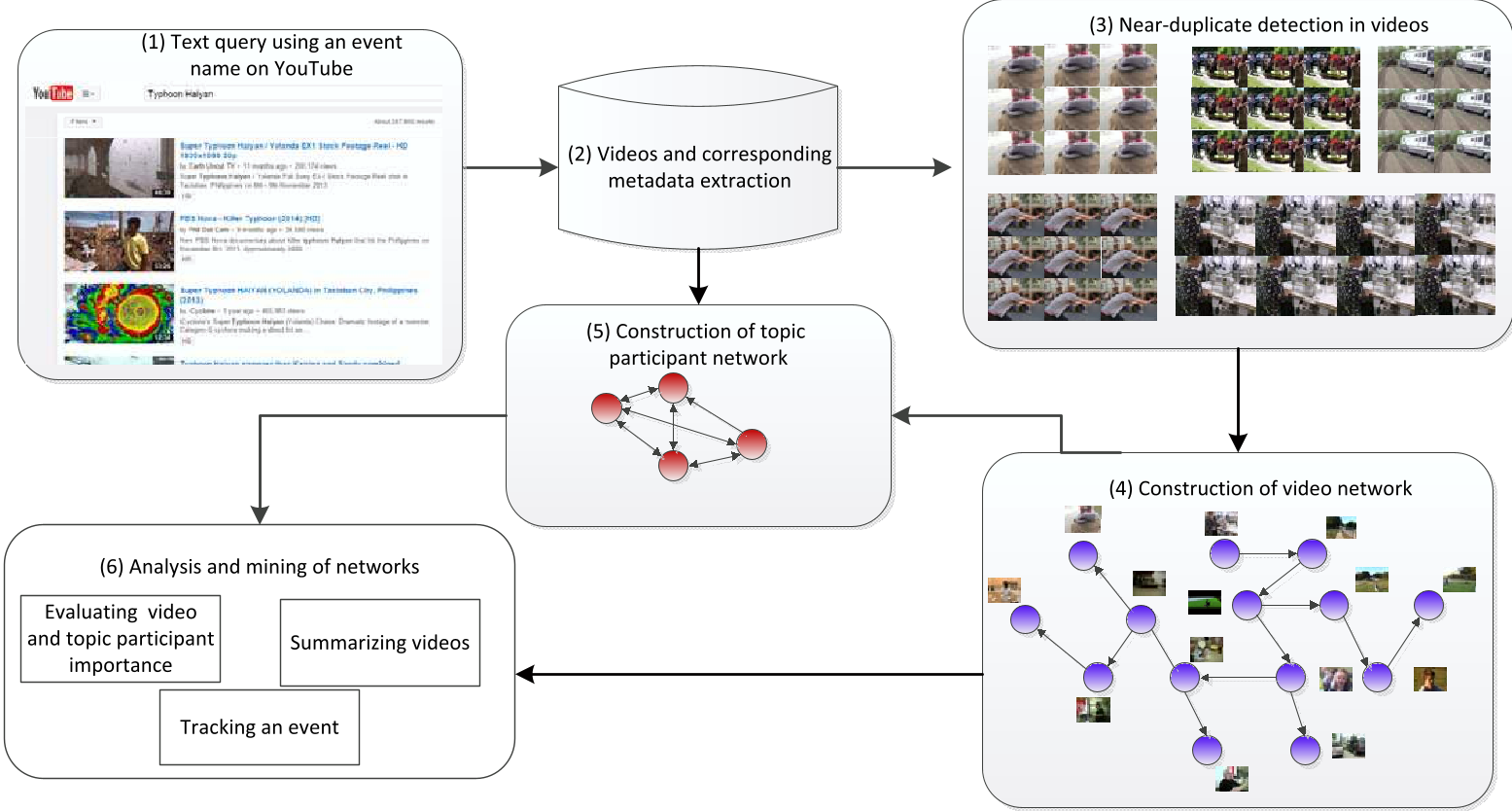
This paper introduces a framework for constructing two types of social networks—Video Networks (VN) and Topic Participant Networks (TPN)—by leveraging Near-Duplicate Detection (NDD) and video metadata from YouTube. Using "Super Typhoon Haiyan" as a case study, the authors define indices like "Video Importance" and "Popular Score" to identify key influence drivers in digital events.
TL;DR
Researchers from the National University of Defense Technology have developed a system to uncover the hidden social structures within YouTube. By detecting "Near-Duplicate" video segments—clips that are remixed, reposted, or edited—they can map how information flows between creators and audiences. This approach proves that the "importance" of a video is defined by how often its content is reused, not just how many clicks it receives.
The Problem: The Invisibility of Content Reuse
On platforms like YouTube, the same footage often appears across hundreds of videos: news broadcasts, citizen journalism, and user remixes. Traditional analysis treats these as isolated data points or relies on simple metrics like "View Count." However, view counts are easily manipulated and don't reflect the relational value of a video. Why does one clip get remixed by 50 other creators while a more "popular" one is ignored? Current metadata-only approaches fail to capture this "Information Genealogy."
Methodology: High-Fidelity Network Construction
The researchers built two distinct but interconnected networks:
- Video Network (VN): Nodes are videos; directed edges represent the flow from an original "Source" to a "Remix." The weight depends on the number of Near-Duplicate Keyframes (NDK).
- Topic Participant Network (TPN): Nodes are users (uploaders and commentators). It tracks the "Popularity Score" (who is being followed/copied) and the "Preference Score" (who is actively following/remixing the topic).
Filtering the Noise
A common pitfall in NDD is "Logo Bias"—where different videos from the same news station are flagged as duplicates because they share a logo/anchor. The authors introduced a post-processing filter that checks uploader IDs and timestamps to ensure captured duplicates represent actual content reuse rather than broadcast templates.
Key Insights: Defining the "Social Star"
The paper introduces a sophisticated scoring system for participants:
- The Vital: Users who upload few videos, but whose content is so essential that it becomes the primary source for everyone else.
- The Known: High-volume remixers who sustain the conversation.
- The Social Star: The rare user who both provides original footage and engages deeply with the community.
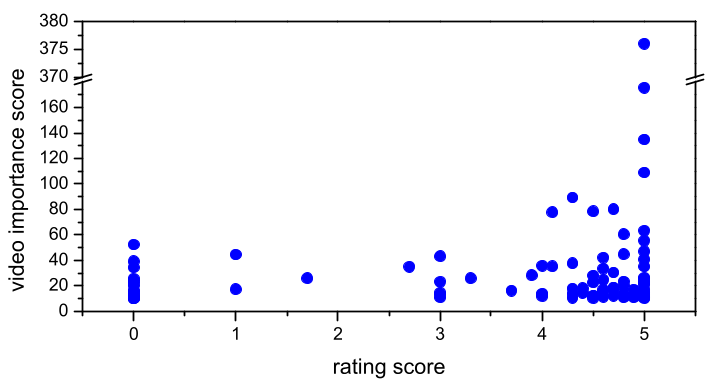
One of the most striking findings is the lack of correlation between "Video Importance" (reused information) and "View Count." A video can have millions of views as entertainment but zero impact on the information spreading process of an event.
Quantitative Success: Dataset Summarization
By identifying the "hubs" of the Video Network—those videos that contain the highest number of NDKs—the system can effectively summarize massive datasets. In their Typhoon Haiyan experiment, they managed to represent 78.76% of the content using only 112 videos out of the original 1,329.
| Number of Videos | Dataset Representation (%) |
|---|---|
| 7 | 20.85% |
| 43 | 50.00% |
| 112 | 78.76% |
Conclusion & Future Outlook
This research moves us closer to an "Algorithmic Sociology" where we can track the lifecycle of a news event through its visual DNA. While the current work focuses on manual metadata and NDD, the future lies in integrating deep learning to handle more complex transformations (like extreme color shifts or cropping) and sentiment analysis of the comments to better weight the edges of the Topic Participant Network.
Takeaway: If you want to find the most influential content in a crisis, look at the "Source" nodes in a Video Network, not the trending tab on YouTube.