
Unmasking the Invisible: How Graph Algorithms Reveal Implicit Social Communities
The social networks' nodes grouping algorithm for the analysis of implicit communities
This paper introduces a node grouping algorithm designed to identify implicit communities in social networks by combining PageRank with structural graph analysis. The methodology employs edge betweenness and modularity metrics within a Neo4j graph database environment to segment users based on interaction density rather than explicit group memberships.
TL;DR
Social networks are more than just friend lists; they are complex webs of interaction that harbor "implicit communities"—groups of people aligned by interests but not necessarily by explicit tags. This paper presents an automated methodology using PageRank and Edge Betweenness to dissect these clusters, slashing the time required for SMM (Social Media Marketing) analysis from 6 hours to 15 minutes.
Contextualizing Social Graphs
In the modern digital landscape, the "Six Degrees of Separation" has collapsed into even tighter clusters. As networks develop, they exhibit "Gravity," where influential nodes (authorities) attract dense connections. Detecting these clusters is vital for targeted advertising and statistical analysis, yet most tools rely on overt group memberships. The authors argue that the real value lies in the implicit—the organic silos formed by frequent interactions.
The Problem: The High Cost of Manual Discovery
Marketing teams (SMM) traditionally identify potential audiences by manually browsing profiles, which is a slow, error-prone process. Identifying "who influences whom" in a network of hundreds of friends is a combinatorial challenge that grows exponentially. Existing automated methods often lack a robust metric to determine where one community ends and another begins.
Methodology: PageRank meets Modularity
The researchers proposed a three-stage workflow: Data collection via API, influence ranking, and structural grouping.
1. The Power of Importance (PageRank)
By treating a social network as a probabilistic model, the authors apply the PageRank algorithm. It assumes that a user is "important" if they are linked to by other "important" users. This allows the system to identify the "authorities" within any local network cluster.
2. Community Detection via Arc Removal
The core innovation lies in the sequential removal of "loaded" arcs. Instead of looking for cliques, the algorithm looks for the "bridges" (arcs with high betweenness) that connect different communities. By progressively removing these bridges, the graph naturally fractures into its organic components.
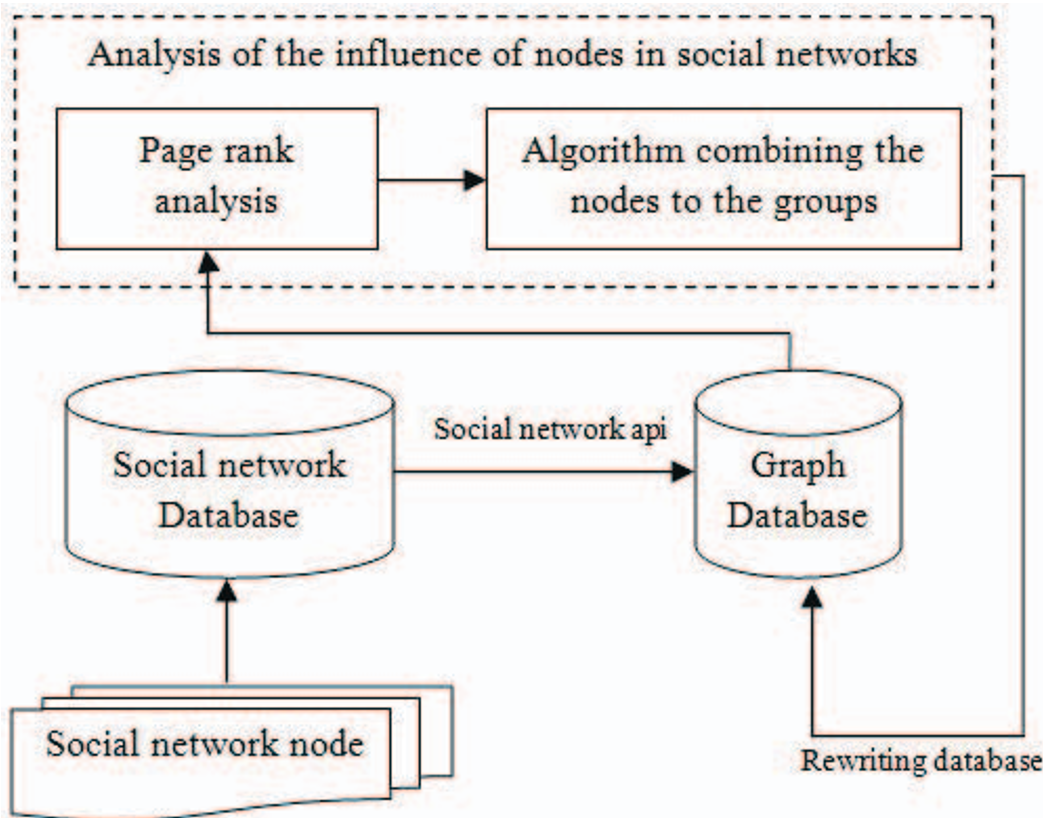 Fig 1. The three-stage research methodology: Data collection, PageRank analysis, and Node Grouping.
3. Measuring Quality (Modularity Q)
To know when to stop "fracturing" the graph, the authors use Modularity (Q). This metric compares the density of edges within groups vs. what would be expected in a random graph. A higher Q indicates a non-random, robust community structure.
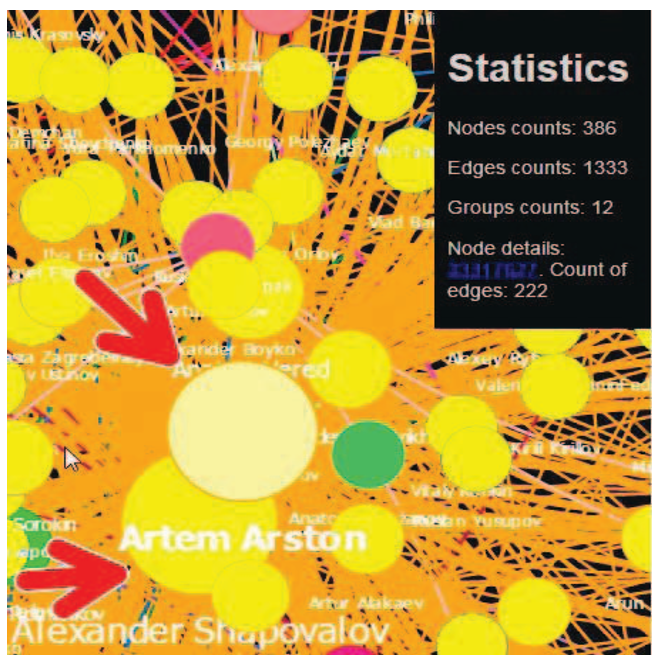 Fig 2. Calculation of edge betweenness based on shortest paths, used to identify the "loaded" arcs for removal.
Experimental Results: From Hours to Minutes
The system was implemented using the Neo4j graph database and the Cypher query language, allowing for high-performance relationship traversal.
- Efficiency: The manual analysis of a single user's network took 6+ hours. The automated module completed the same task in 15 minutes.
- Case Study: Analyzing a user with 386 friends revealed 12 implicit groups. The algorithm identified specific influential users (e.g., Artem Arston) who then became the targets for promoting the "Vigel" music project.
 Fig 3. Performance comparison between manual analysis and the algorithmic module.
Critical Insight & Conclusion
This work demonstrates that graph-theoretic principles like edge betweenness are not just academic exercises but powerful tools for SMM. By leveraging the Neo4j ecosystem, the authors moved community detection from a "black box" into a visual, actionable marketing tool.
Takeaway: The future of social marketing lies in understanding the latent structure of networks. While this paper focuses on Vkontakte, the logic is platform-agnostic, applicable to any graph where interaction density defines community boundaries. One clear limitation is the computational cost of re-calculating betweenness after every arc removal—a bottleneck that future work in dynamic graph algorithms could address.