
Social Sensing: Decoding Weight Loss from the Latent Patterns of Tweets
Using Social Networks to Predict Changes in Health
This paper introduces a predictive framework using social network data to detect personal health changes, specifically weight loss. By applying sentiment analysis, POS tagging, and topic categorization to Twitter feeds, the authors demonstrate that linguistic patterns can serve as digital biomarkers for health transitions.
TL;DR
Can your tweets predict your pants size? Researchers from Carnegie Mellon University have developed a model that identifies weight loss by analyzing shifts in pronoun usage, sentiment, and topic focus on Twitter. With a 90% accuracy rate in their sample, the study suggests that our digital exhaust—the words we choose—contains significant, untapped health insights that could revolutionize preventative medicine.
Background: Beyond the Fitbit
We are living in the "Quantified Self" era, where wearable devices like Apple Watches and Fitbits track our every move. However, these devices require hardware and active user participation. This paper shifts the paradigm toward Passive Sensing. Instead of asking "How many steps did you take?", it asks "How has the way you speak changed?" This work positions social networking sites (SNS) as a mirror reflecting an individual's internal health state through linguistic nuances.
The Problem: The High Friction of Health Tracking
The current healthcare system is episodic; doctors only see data when a patient is in the office. Furthermore, active tracking apps often fail because users forget to log their meals or weight. The authors identify a gap: there is no effortless, continuous way to monitor health without "adding time or effort." Existing NLP techniques were rarely applied to the intersection of physical health transitions and general social media behavior.
Methodology: The 8-Point Linguistic Signature
The researchers developed a binary scoring model based on the "delta" (change) in a user's behavior. They compared a "weight-loss month" against a "neutral month" for the same individual.
1. Pronoun Tagging (POS Tagging)
The model tracks the shift from second-person ("you", "your") to first-person ("I", "my", "I'm"). The intuition: individuals experiencing personal transformation become more self-focused and self-aware.
2. Sentiment Analysis
Weight loss is generally associated with increased self-confidence and happiness. The model calculates a sentiment score to detect a positive shift in the user's emotional baseline.
3. Topic Categorization
Naturally, a focus on weight loss leads to a higher frequency of keywords related to nutrition, exercise, and health.
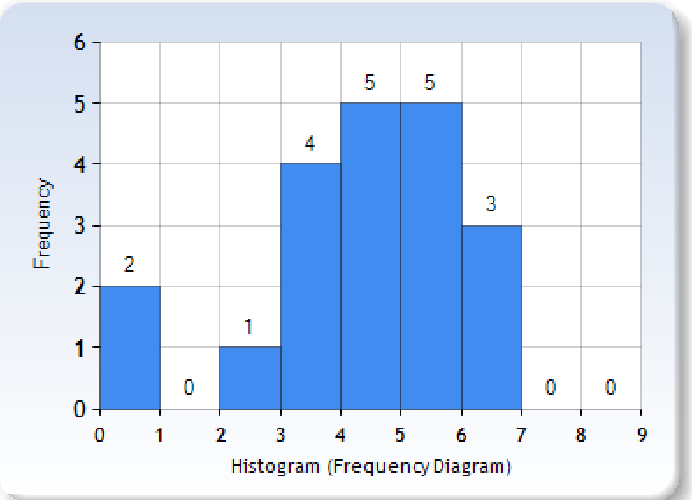 Fig 1: Distribution of scores among the sample population. A higher score indicates a stronger alignment with all 8 identified linguistic indicators.
Why Decoupled Patterns Matter
One of the most profound insights from the study is the "Score of 0" phenomenon. Two users showed zero changes despite losing weight. The authors argue this is a feature, not a bug: it acknowledges that health isn't a vacuum. Trauma, illness (like anorexia or cancer), or life stressors (divorce, job loss) can overwrite the "positive" signals of weight loss. This demonstrates the necessity of a multi-modal approach in health AI—one that considers the "Psychological Mood" alongside physical data.
Future Implications: The e-Health Revolution
The success of this pilot study indicates that Social Network Analysis (SNA) can act as a bridge between the physical and digital worlds.
- For MDs: Doctors could gain access to a "filtered information" stream of a patient's daily life, identifying shifts in personality or activity that are invisible during a 15-minute office visit.
- For Businesses: Tailored wellness programs could be offered to individuals exactly when they begin a health journey.
Conclusion
This paper serves as a proof-of-concept for the "Digital Twin" of health. By treating language as a biomarker, Jung and Tonguz have shown that our social media profiles are more than just communication tools—they are physiological dashboards. While the sample size was small (20 users), the statistical significance of the 90% prediction rate (at a threshold of 1) suggests a future where our health is monitored not by what we do, but by how we express it.
Takeaway: The "What" is weight loss; the "How" is the subconscious shift in pronouns and positivity. The future of healthcare is passive, linguistic, and deeply personal.