
Socially-Aware SOA: Leveraging Human Trust for Better Service Workflows
Leveraging Social Networks to Improve Service Selection in Workflow Composition
This paper proposes a framework to integrate social network data into Service Oriented Architecture (SOA) to optimize service selection. It introduces a methodology to bridge the gap between digital web services and physical world services using social trust graphs and decentralized recommendations.
TL;DR
While Service Oriented Architecture (SOA) promised a world of "plug-and-play" digital services, the missing link has always been trust and semantic accuracy. This paper bridges the gap by integrating social media graphs into the workflow composition process, allowing automated systems to choose service providers (both digital and physical) based on a hierarchy of social recommendations.
Background & Motivation: The Discovery Paradox
The vision of dynamically composing available services into executable workflows remains largely unfulfilled. The authors argue that the problem is twofold:
- Semantic Ambiguity: Standard search engines cannot differentiate between types of providers (e.g., a large-scale contractor vs. a small-job electrician).
- The Trust Gap: Even if a service is found, there is no inherent mechanism to verify its quality before execution.
The authors suggest that we should treat web service composition as a special case of general service composition—treating an API call and hiring a plumber with the same logical rigor.
Methodology: The Social Recommendation Hierarchy
The core of the paper is the formalization of "recommenders." Instead of treating all reviews as equal, the authors propose a five-tier hierarchy of trust:
- Friends: The highest trust level; people we know personally.
- Trusted Reviewers: Professionals or persistent high-value reviewers (e.g., J.D. Power, top Yelp contributors).
- Social Media Pages: "Likes" as implicit assertions of quality.
- Trusted Sources: Celebrity or corporate endorsements.
- Crowdsourcing: Statistical power from the masses (e.g., 342 reviews vs. 12).
System Architecture
The proposed system, a Social Services Broker, uses the Facebook Graph API to fetch a user's social context. It matches these social insights against a "Social UDDI" registry—a database of service descriptions.
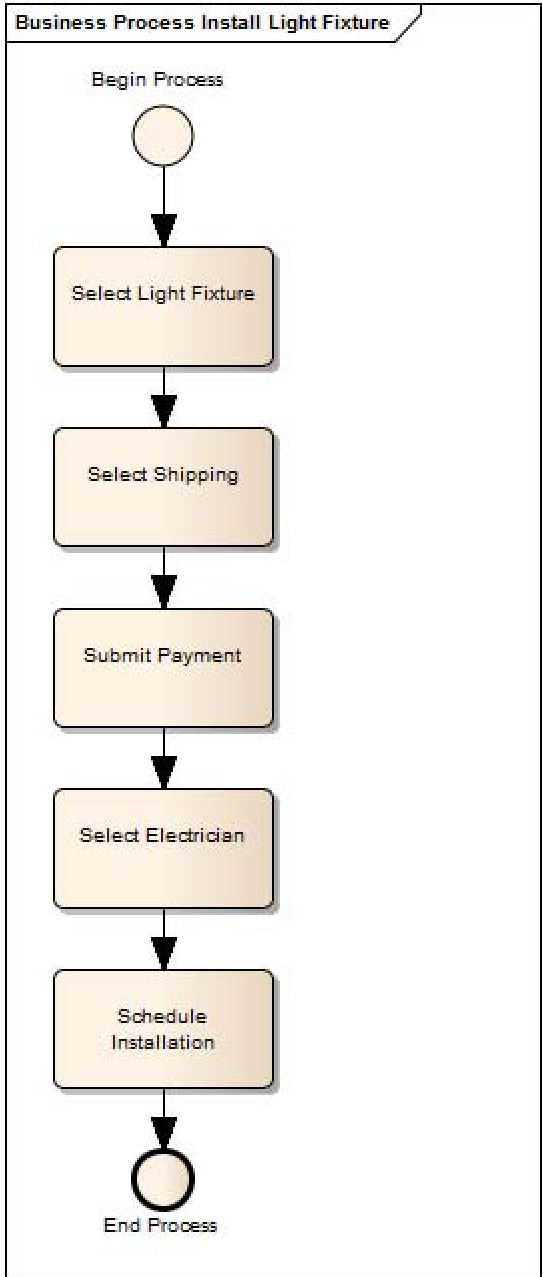 In the figure above, a simple physical workflow for fixture installation requires a mix of catalog selection and labor hire, demonstrating why automated discovery needs social trust.
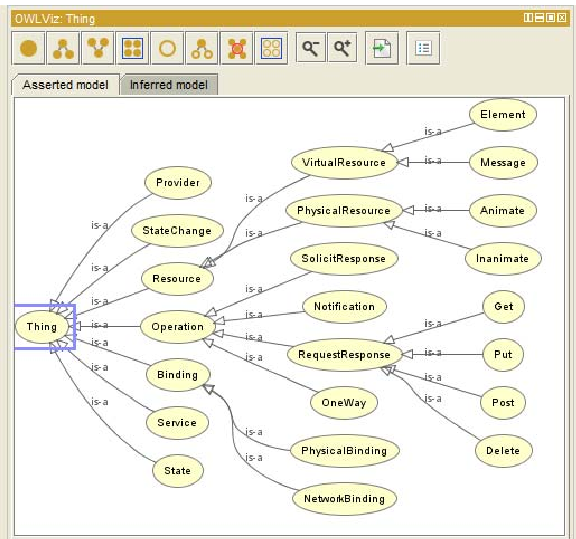
To make this machine-readable, the authors developed a General Service Description specification (extending OWL-S). This allows the system to understand that a "Payment Service" might be fulfilled by an electronic transfer OR a physical check, managing both within the same workflow logic.
Insights from Business Registries
The paper provides a deep dive into how existing platforms can be "mined" for SOA:
- Yelp: Insight into a reviewer’s "grading history" allows for weighted recommendations (e.g., a "3-star" from a harsh critic might be better than a "5-star" from a lenient one).
- eBay: Interestingly, the authors highlight eBay's ability to rate buyers. In complex service workflows, service providers face risk too. Rating consumers allows providers to adjust terms based on the consumer's "Reputation Score."
Critical Analysis & Conclusion
Takeaway
This work shifts the focus of SOA from purely technical interoperability (XML/SOAP/WSDL) to social interoperability. By digitizing the "ask a friend" intuition, it creates a more robust foundation for autonomous agents to make real-world decisions.
Limitations
- Privacy: As the authors note, accessing "friends of friends" data raises significant privacy concerns.
- Data Silos: Many business registries (Angie's List, etc.) lack public APIs, making a truly global "Social UDDI" difficult to implement without widespread industry cooperation.
Future Outlook
The next step for this research is the implementation of a prototype workflow composition system that can handle "Dutch auctions" for services, where providers progressively lower prices until a consumer (or their software agent) accepts, potentially revolutionizing the efficiency of the gig economy and cloud services alike.