
Beyond Greenwashing: Decoding Societal Strategy in Hospitality Through Netnography
Social Networks and Societal Strategic Orientation in the Hotel Sector: Netnographic Study
This study presents a netnographic analysis of guest reviews for the Magic Life (ML) hotel in Tunisia to evaluate its "Societal Strategic Orientation" (SSO). By analyzing 92 German-speaking guest reviews from HolidayCheck, the research identifies five key societal dimensions—Psychological Well-being, Physical Well-being, Social Relations, Environmental Orientation, and Economic Contribution—and determines their relative importance in consumer perception.
TL;DR
Is sustainability a real driver for hotel bookings, or just corporate jargon? This study dives into the "digital traces" left by German tourists in Tunisia to uncover what they actually care about. Using a method called Netnography, the researchers found that while guests value "societal orientation," they prioritize their own Psychological Well-being (relaxation, fun) and Physical Well-being (cleanliness) far more than a hotel's environmental or economic contributions.
Background: The Shift from CSR to SSO
In the world of sustainable tourism, Corporate Social Responsibility (CSR) often feels like a "box-ticking" exercise. The authors argue that CSR is too vague for the hotel industry. Instead, they propose Societal Strategic Orientation (SSO)—a framework that integrates five dimensions:
- Physical Well-being (PW): Health, safety, and cleanliness.
- Psychological Well-being (PSW): Hospitality, entertainment, and stress relief.
- Social Relations (SR): Staff-guest interaction and community impact.
- Environmental Orientation (EO): Greenery, waste management, and resource saving.
- Economic Contribution (EC): Value for money and local economic impact.
Methodology: Listening to the "Internet Verbatim"
Instead of traditional surveys, which can suffer from social desirability bias, the researchers used Netnography. They analyzed 92 archival reviews from HolidayCheck, focusing on German-speaking travelers—a demographic known for high sustainability awareness.
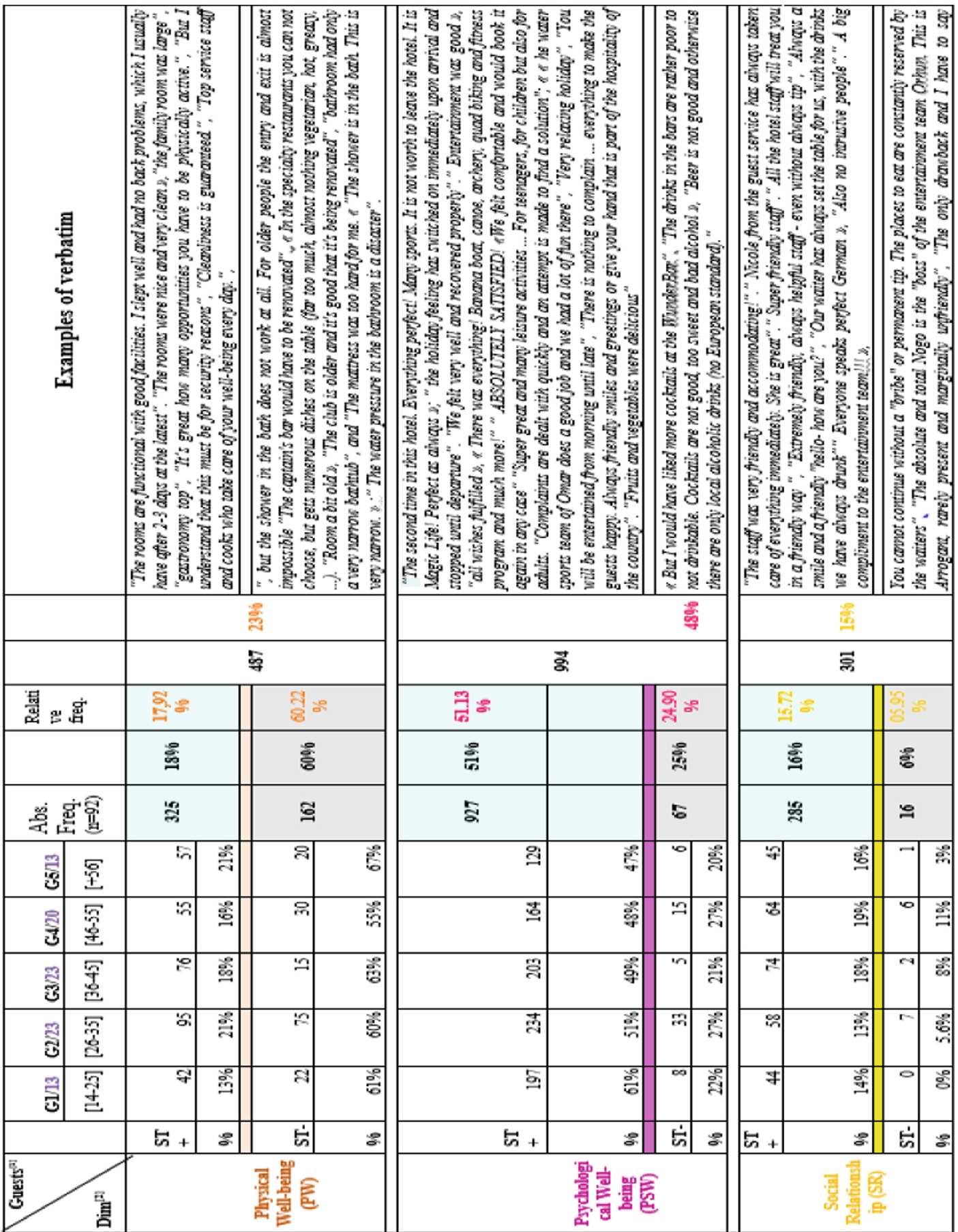 The table above illustrates how guest comments were categorized into positive (ST+) and negative (ST-) connotations across different age groups.
Key Insights: What do Guests Actually Mention?
The results reveal a stark hierarchy in guest perceptions:
- The Dominance of the Internal Experience: Psychological Well-being was the "star" of the reviews (48% frequency). Guests frequently mentioned "magical moments," "relaxation," and "feeling recovered."
- The Hygiene Factors: Physical Well-being (23%) was the second most cited. Interestingly, this dimension carried the most negative weight (60% of all negative comments), specifically regarding old furniture or water pressure.
- The Sustainability Paradox: Despite the global push for "Green Tourism," Environmental Orientation only appeared in 9% of the reviews. When it was mentioned, it was usually about "aesthetic" environment (garden, beach) rather than "systemic" sustainability (recycling, CO2 reduction).
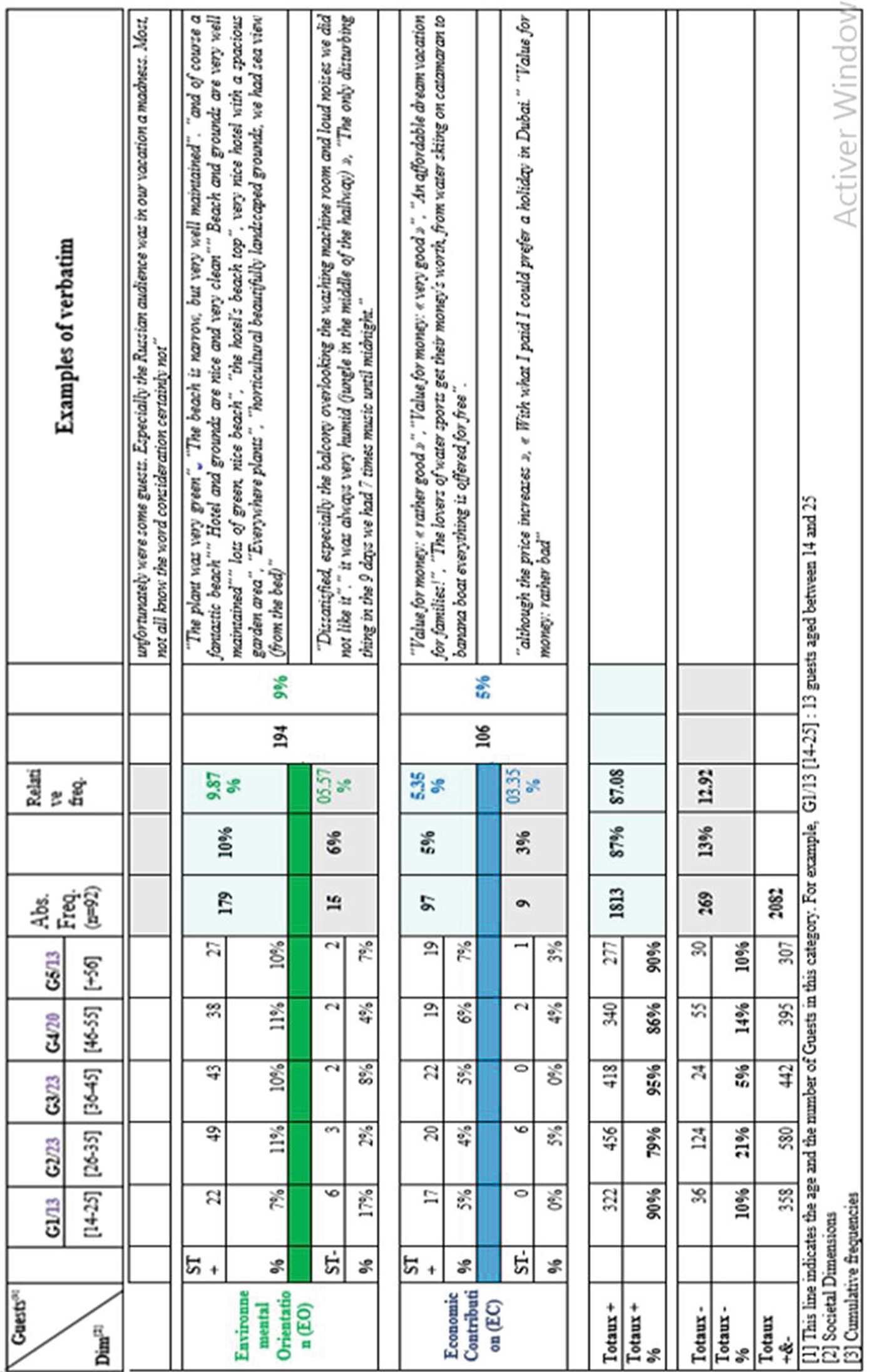 Distribution of societal dimensions in guest evaluations, highlighting the low visibility of economic and environmental factors.
Managerial Implications: Closing the Awareness Gap
The study provides a wake-up call for hotel managers:
- Communication over Implementation: Hotels might be doing great things for the environment, but if it doesn't impact the guest's psychological stay, it stays invisible. Managers need to translate "CO2 savings" into "guest well-being."
- The "Socialwashing" Risk: To avoid being seen as hypocritical, hotels must include credible societal commitments in their digital marketing, moving beyond just "nice photos" to "accountable actions."
- Targeting by Age: The study found that guests aged 36-45 were the most positive about societal orientation (95% positive sentiment), suggesting a prime target for sustainability-led marketing.
Critical Perspective & Future Outlook
While the study effectively uses netnography to bypass traditional survey limitations, its sample (92 reviews) is relatively small. However, it successfully identifies a critical "Sustainability Marketing Myopia": hotels are investing in things guests don't see, and failing to talk about them in ways guests value.
As we move into the era of Web 5.0, the ability to analyze "Social Big Data" in real-time will allow hoteliers to move beyond static sustainability reports and create personalized, "smart" experiences that satisfy both the guest's desire for luxury and the planet's need for care.
Takeaway: If you want a guest to care about your solar panels, make sure they feel "psychologically fulfilled" first.