
Leveraging Mainstream Social Networks for the Elderly: Beyond Specialized Senior-Apps
Social Networks: Technological and Social Aspects of Social Network-Mediated Interaction of Elderly People
This paper explores the integration of ICT-mediated social interaction for the elderly using established platforms like Facebook. It proposes leveraging robust, existing Social Network Sites (SNS) instead of niche, custom-built applications to combat elderly isolation and enhance well-being.
TL;DR
To combat loneliness in the elderly, researchers are shifting away from clunky, "specialized" apps in favor of mainstream platforms like Facebook. By mapping human interaction models (ICF) to digital features, this study demonstrates how familiar Social Network Sites (SNS) can host complex community activities, provided we solve the "Acceptability Gap."
The "Lone Island" Problem in Gerontechnology
For years, technological solutions for the elderly have suffered from a fundamental flaw: they are often designed as isolated silos. If an elderly person uses one app for food, another for health, and a third for basic chat, they lose the sense of being part of a unified social fabric.
Previous works often focused on "Simplified Interfaces" that ended up feeling patronizing or technically fragile. When a bug occurs in a custom-built niche app, an elderly user cannot distinguish between a software defect and their own procedural error, leading to a permanent loss of confidence.
Methodology: Mapping Social Needs to Digital Features
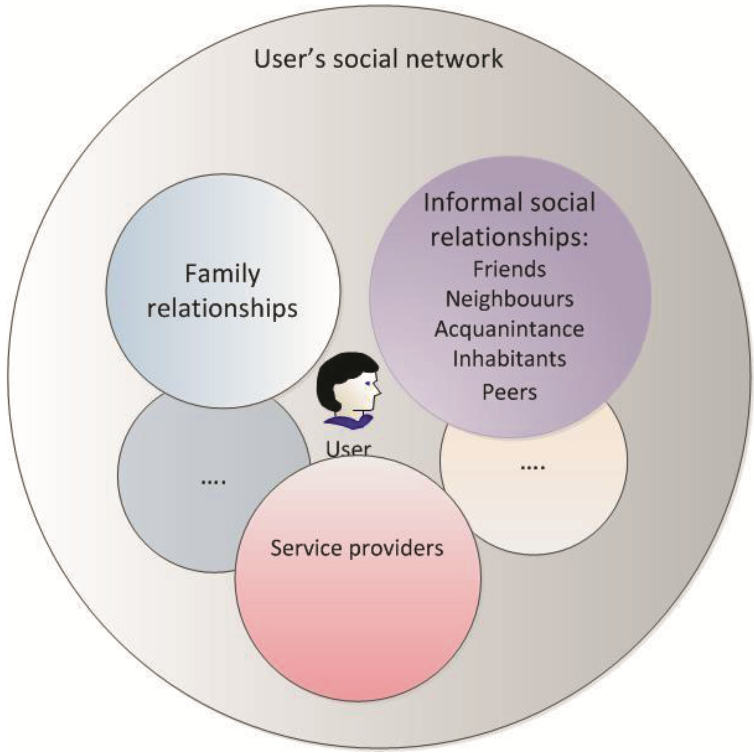
The researchers didn't just guess what seniors needed; they used the WHO ICF (International Classification of Functioning, Disability and Health) as a blueprint. They identified that "Family Relationships" (d760) and "Informal Social Relationships" (d750) are the core pillars of well-being.
Why Facebook?
The choice of a general-purpose platform like Facebook was intentional:
- Robustness: High stability eliminates the "is it me or the app?" anxiety.
- Accessibility: Established giants have dedicated teams for screen readers and high-contrast modes.
- Unity: It allows for a single interface for family, friends, and service providers.
Case Study: The FOOD Project
The authors implemented a practical scenario within the FOOD project, involving 30 families. The goal wasn't just "chatting," but task-oriented community interaction.
The workflow involved:
- Group Management: Creating private "Online Rooms" for neighborhood clusters.
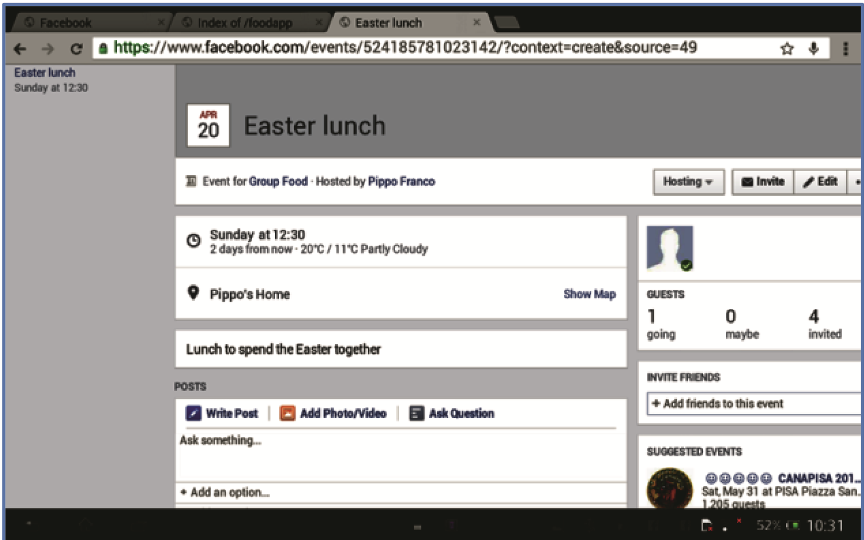
- Event Coordination: Using Facebook's event and poll features to organize a "Cooperative Lunch."
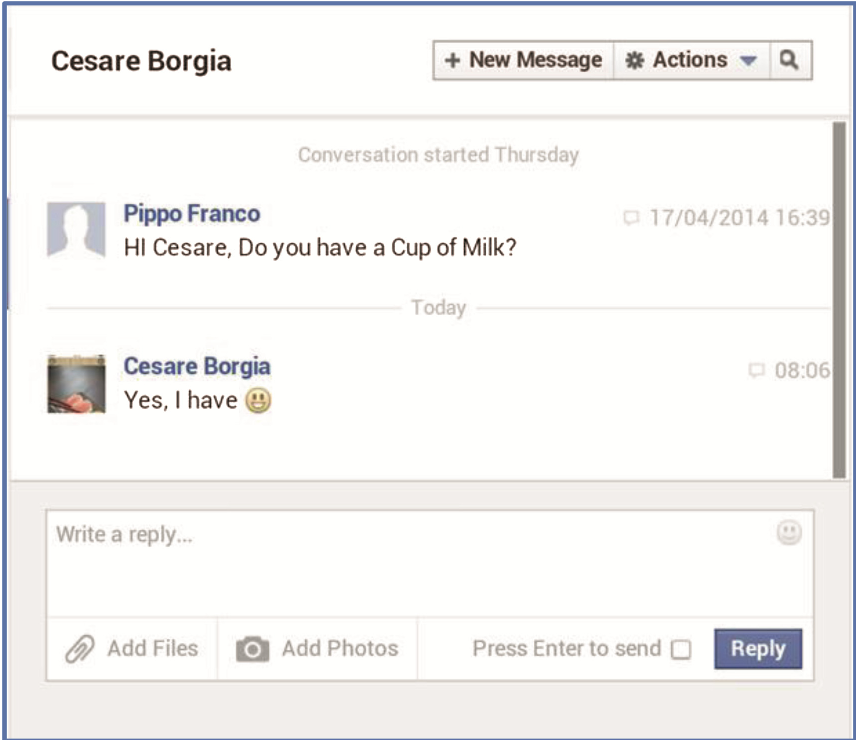
- Real-time Support: Using integrated chat to simulate "Cooperative Shopping," where a "chef" asks neighbors to check local markets for specific ingredients.
The Reality Check: The Acceptability Barrier
The most striking finding wasn't technical—it was sociological.
- Consortium Resistance: Paradoxically, the professional partners (researchers/developers) were the most skeptical, viewing SNS as "too complex" or "distracting" for seniors.
- User Sensitivity: Elderly users showed hesitation not because of the UI, but because of the stigma or perceived lack of security.
The paper emphasizes that Training (Section 3.1) is the bridge. We cannot simply give a senior a login; we must explain the concepts of digital privacy, profiles, and asynchronous communication before they ever touch the screen.
Deep Insight & Takeaways
The "senior-friendly" technology of the future isn't a separate device; it's a curated experience of the technology everyone else is already using.
- Mainstream is the New Niche: Leveraging billion-user platforms provides a level of reliability that academic prototypes cannot match.
- The Moderator is Key: For elderly social groups, having a "moderator" to manage criticism and facilitate discussion (as per ICF Chapter 7) is essential to prevent psychological withdrawal.
- Future Work: The focus must shift from "building the app" to "building the onboarding curriculum."
Conclusion: Inclusion isn't about giving specialized tools to the marginalized; it's about building bridges that allow them to walk on the same digital roads as the rest of society.