
The Personal Panopticon: Why Social Networks Are Actually Monitoring Systems
Social networks and ubiquitous monitoring: An application of the PSA-BI model
This paper explores social networks through the lens of Ubiquitous Monitoring (UM) by applying the Perception of System Attributes – Behavioral Intention (PSA-BI) model. It frames social networks as "personal panopticons" where data collection influences user behavior, potentially undermining service effectiveness.
TL;DR
Social networks are more than just communication tools; they are sophisticated Ubiquitous Monitoring (UM) systems. This paper applies the PSA-BI model to explain why users stop acting "naturally" when they feel observed by their own social circles. By viewing friends and family as "guards" in a digital panopticon, the research provides a framework to predict how system design influences user behavior and data authenticity.
The Observation Paradox: Problem & Motivation
The central problem of any monitoring system is the observer effect: the act of observation changes the subject's behavior. In the context of social networks, if a user modifies their posts or locations because they know a boss or a parent is watching, the platform's data becomes "polluted."
The author argues that contemporary social networks are suffering from "Social Network Creep," where monitoring features are bleeding into e-commerce (Amazon) and the real world (location tracking). This creates a Panoptic Effect, modeled after Jeremy Bentham’s 18th-century prison design, where the uncertainty of being watched forces continuous self-censorship.
Methodology: The PSA-BI Framework
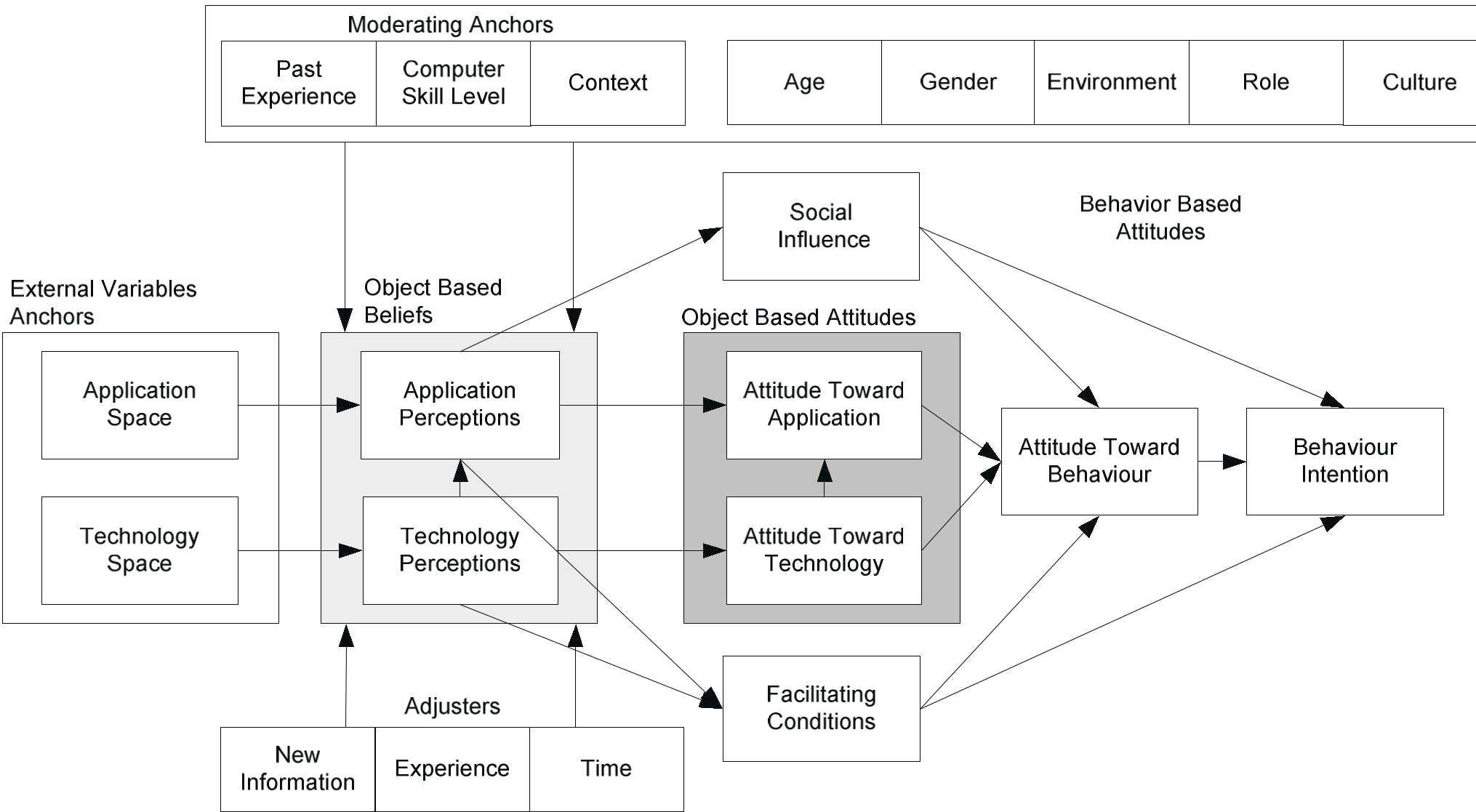
To analyze this, the paper employs the Perceptions of System Attributes – Behavioral Intention (PSA-BI) model. Unlike previous models that only look at privacy, PSA-BI connects controllable system design choices directly to user psychology and final behavior.
1. System Attributes (The Input)
The system is divided into technological and application spaces. In social networks, the "Application Space" is dominant, focusing on:
- Data Integration: Combining photos, locations, and tags to create a "virtual twin."
- User Informedness: How well the user understands what happens to their data.
- Application Control: The ability to manage who sees what (e.g., Google+ Circles).
2. User Perceptions (The Bridge)
These attributes are filtered through the user’s mind, creating:
- Perceived Privacy Invasion (PPI): "Is this too much?"
- Perceived Social Border Crossings: "Is my work life bleeding into my private life?"
Deep Insight: The Personal Panopticon
The most striking contribution is the concept of the "Personal Panopticon." In a traditional panopticon, an "elusive authority" is the observer. In social networks, the users choose their own observers ("guards"). However, this doesn't reduce the pressure; it often increases it. Social "punishment" (embarrassment, social exclusion) from important others is often more feared than punishment from a central authority.
Key drivers of behavior in this digital prison include:
- Asynchronous Observation: You post now, but you are observed later. You lose control over the timing of the gaze.
- Persistent Storage: Unlike a physical conversation, digital monitoring is permanent, exacerbating the panoptic effect over time.
Analysis of Social Network Characteristics
The paper breaks down how current social network features map to monitoring metrics:
| Attribute | Impact on User Behavior |
|---|---|
| Frequency | High interaction leads to more data, but permanent storage creates "forever-monitoring." |
| Data Integration | Services like PleaseRobMe show how integrated social data can have dangerous real-world consequences. |
| Social Borders | "Tagging" is a primary cause of unauthorized social border crossings, where information leaks from one social circle to another. |
Critical Analysis & Conclusion
The PSA-BI model provides a vital diagnostic tool for the "Tech Creep" era. By understanding that Perceived Usefulness can sometimes outweigh Privacy Concerns, developers can design systems that feel less invasive while remaining functional.
Takeaway: The success of the next generation of social platforms—or even "Mixed Reality" environments—will depend on minimizing the panoptic effect. If users feel they are in a prison of their own making, the "social" aspect of the network will eventually collapse under the weight of performance and self-censorship.
Future Work: The author suggests moving toward Structural Equation Modeling (SEM) to provide specific regression coefficients, turning this theoretical lens into a predictive engine for user behavior.