
Social Networks and the "Jumping the Gun" Problem: Why Labor Markets Unravel
Social networks and unraveling in labor markets
The paper investigates "unraveling" in labor markets—the phenomenon where hiring occurs prematurely—integrated with social network structures. It proposes a model where soft, non-verifiable information is initially shared only via connections (mentors), later followed by hard verifiable data, demonstrating how network topology influenced by market design determines the extent of early contracting.
Executive Summary
TL;DR: In top-tier labor markets—like federal clerkships or medical residencies—firms often "jump the gun," hiring candidates before their final qualifications are even clear. This paper demonstrates that this "unraveling" is deeply tied to the social networks (mentors/connections) that bridge firms and workers. By modeling the transition from "soft" connected info to "hard" public data, the author reveals that the topology of the network and the efficiency of the final match are the primary levers controlling market stability.
Positioning: This work moves beyond traditional quality-sorting models by introducing Network Topology as a first-class citizen in matching theory, bridging the gap between sociology (personal contacts) and market design (matching algorithms).
The "Locality" Paradox: Why Early Hiring is Different
Empirical evidence from gastroenterology fellowships and judicial clerks reveals a strange pattern: early hiring is significantly "more local" than late hiring. Prior work attributed this to worker preference for staying at their training institutions.
However, Fainmesser posits a different Insight: The locality isn't a preference; it's an informational constraint. Early in a student's career, data is "soft" (e.g., a professor's intuition). This information can only be transmitted credibly through trusted social connections. As the market nears graduation, "hard" data (grades, bar results) becomes verifiable to everyone. Unraveling occurs when firms use their early-access networks to snatch up talent, imposing a negative externality on others and forcing the whole market to move earlier.
Methodology: The Bipartite Network Model
The author models the market as a bipartite graph .
- Stage -1 (Early): Noisy signal . Only connected firms see it. Firms can issue "exploding offers."
- Stage 0 (Graduation): True quality revealed to all. Network becomes obsolete; general matching begins.
The Core Intuition: Density vs. Span
One of the paper’s most provocative findings is the distinction between Network Span (how many people have a connection) and Network Density (how many connections each person has).
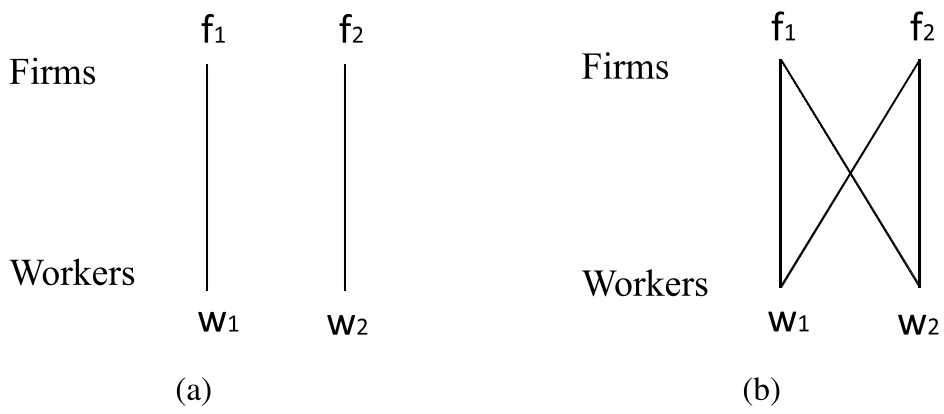 Figure 1: Comparison of Link Distribution. (a) Sparse Network vs (b) Dense Network.
The paper proves that:
- Span Increases Unraveling: More connections mean more firms hear "soft" signals, increasing early offers.
- Density is Non-Monotonic: Initially, higher density helps firms find high-quality candidates. However, extremely high density reduces unraveling. In a very dense network, firms "clash" by making offers to the same elite candidates, causing a coordination failure that makes early hiring less attractive than waiting for the formal match.
Experiments and Market Rules
The author parameterizes the efficiency of the "Post-Graduation Market" as (the expected utility of high-productivity workers).
Key Results:
- Centralized Matches Work: By proving that algorithms like Gale-Shapley (Deferred Acceptance) maximize , the paper explains why the introduction of a centralized clearinghouse (like the NRMP for doctors) successfully stops markets from unraveling.
- The Tipping Point: Markets often exhibit a "tipping point" structure. If enough firms believe others will hire early, the market collapses into a premature equilibrium. The centralized match acts as a coordination anchor to prevent this.
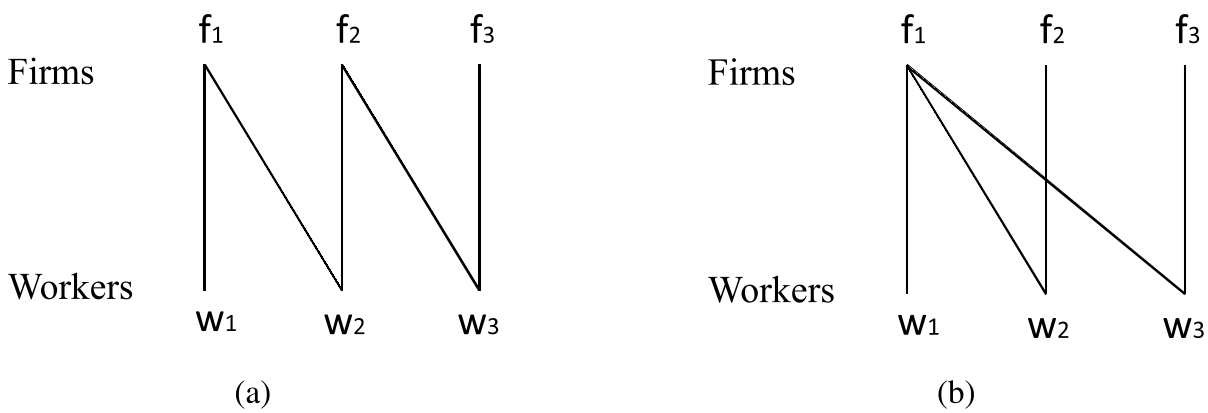 Figure 2: Impact of information accuracy () and matching efficiency on the unraveling level.
Critical Analysis & Takeaways
Summary: The paper successfully formalizes the role of social structures in market timing. It shifts the focus from "banning early offers" (which often fails) to "improving the formal match."
Limitations:
- The model assumes a "binary" signal (High/Low), whereas real-world talent evaluation is continuous.
- It uses a "large market" approximation, which may not perfectly capture niche markets with only a dozen elite participants.
Future Outlook: This research suggests that the "informational advantage" of elite mentors is a double-edged sword. While it helps their students get hired, it can destroy the efficiency of the broader market. Policy-making should focus on making Stage 0 more attractive via high-quality centralized platforms, reducing the panic-driven need to "jump the gun" at Stage -1.