
Social News Feed Recommender: Why Your Friends Matter More Than the News Itself
Social News Feed Recommender
The paper introduces a Social News Feed Recommender for Facebook that leverages implicit social trust and content-based filtering. The core contribution is a trust-based ranking mechanism combined with a novel decay factor that prioritizes recent interactions over static publication dates, achieving superior performance compared to traditional content-based methods.
TL;DR
This research tackles the "noise" in Facebook's News Feed by moving beyond simple content matching. By quantifying Implicit Social Trust through user interactions and applying a dual-track Time Decay Factor, the authors created a system where the "who" and the "when" of social engagement outweigh the "what" of the content.
Contextual Positioning
Published in the era of Facebook's massive growth (circa 2014), this work sits at the intersection of Community-based Recommendation and Information Retrieval. It challenges the efficacy of the Vector Space Model in social contexts, proving that social signals are the primary drivers of user engagement.
The Problem: The Failure of Content-Based Filtering
Most early recommender systems relied on Content-Based Filtering (CBF). If you like a post about "Technology," the system shows you more "Technology." However, in a social network, this fails for two reasons:
- Lack of Predictive Power: Users often interact with diverse content simply because a trusted friend shared it.
- Static Nature: CBF doesn't naturally account for the viral or "fading" nature of news.
Methodology: Trust and Decay
The authors propose a multi-layered approach to ranking.
1. Quantifying Asymmetric Trust
Trust isn't mutual; you might trust a news-savvy friend's shares, but they might not value your content. The authors calculated trust using a weighted sum of interactions (Likes, Comments, Shares) normalized by the volume of a friend's total posts:

2. The Interaction-Aware Decay Factor
Unlike the Reddit or Hacker News algorithms which primarily penalize age, this paper introduces a Dual Decay mechanism. It treats the published_date and last_interaction_date differently. If a post is 24 hours old but someone just commented on it, the decay slows down.
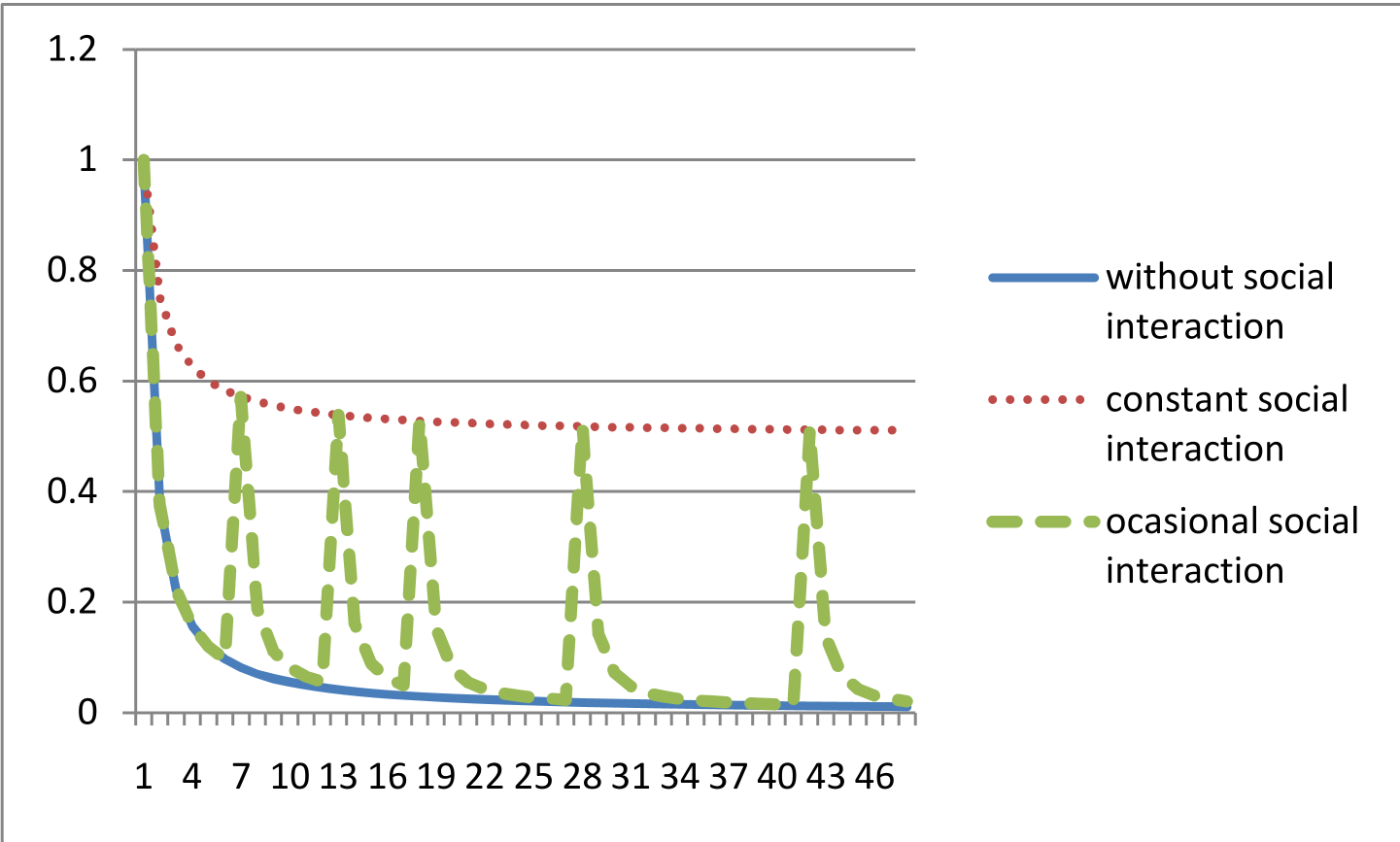 Figure 1: Comparison of score decay with and without social interaction.
Experiments & Results
The offline evaluation was a landslide victory for the Social Trust approach.
- Content-Based: Precision hovered around 0.1 (10%).
- Trust-Based: Achieved a precision of 0.8 (80%) when retrieving 30 objects.
The authors also tested a Hybrid method (). Interestingly, the Hybrid method only showed value in the "tail" of the recommendation list, suggesting that for top-tier results, Social Trust is the only metric that matters.
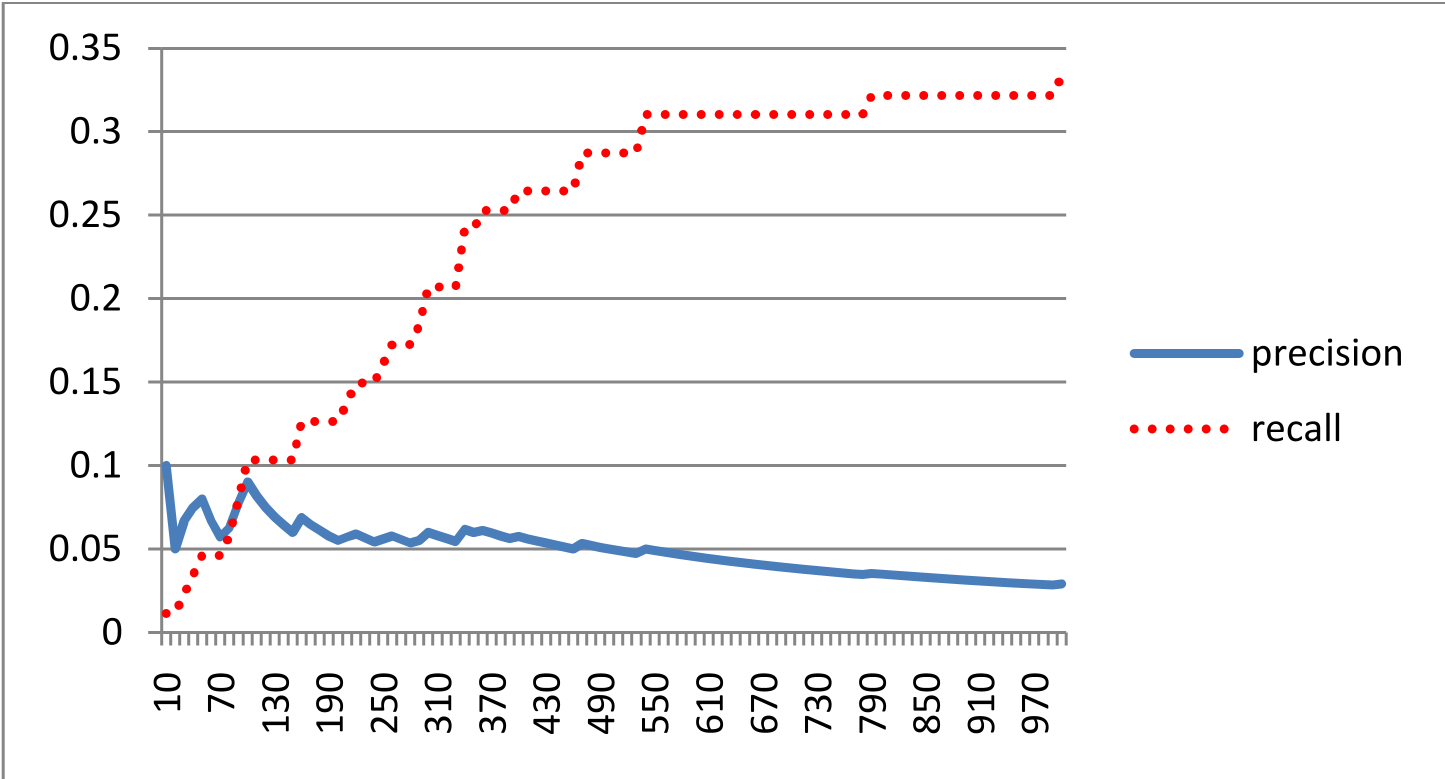 Figure 2: Performance comparison—Trust-based methods vastly outperform Content-based baselines.
Critical Insight & Future Outlook
Takeaway
The genius of this paper lies in its recognition that a Social Network is not a library; it is a conversation. By weighting comments and shares differently and allowing interaction to "resuscitate" old posts, the authors mirrored human social behavior.
Limitations
- Scale: The study was conducted on a relatively small cohort (25 users).
- Implicit Bias: The system relies heavily on existing interactions, which might create a "filter bubble" where only a few "trusted" friends' content is ever seen.
Conclusion
The "Social News Feed Recommender" demonstrates that in the hierarchy of social data, relationship strength is the king of features. Future iterations suggested by the authors—such as tracking "time spent" on posts—foreshadowed the high-frequency signal processing used by modern TikTok and Meta algorithms today.